Batchelor: A Castle and a Cold War
We first passed through Batchelor a couple of years ago, on our way to Litchfield like everyone else. We stopped, took plenty of photos, filled a notebook, and then, as happens, never got around to writing about it. The notes sat. But our recent visit to the old uranium ghost town of Mary Kathleen out in Queensland brought it all back, the strange Cold War history of uranium in this country, and with it the story of Rum Jungle and the quietly fascinating town it left behind. So here, at last, is Batchelor.
There is not a lot to Batchelor, and that is rather the point. Most people barrel straight through it on the way to Litchfield National Park, and never notice that this quiet little town has a stranger, richer story packed into its few streets than almost anywhere else on the way to Darwin. A Czech castle. A Cold War uranium mine. A wartime airfield where an American general first set foot on Australian soil. We stopped for a look and stayed a couple of days.
Batchelor sits about 98 kilometres south of Darwin, just off the Stuart Highway, and for most travellers, it is the last stop before the waterfalls and swimming holes of Litchfield. It is a green, orderly, slightly sleepy place, and nothing about the main street tells you what went on here. But Batchelor exists at all because of what came out of the ground just up the road, and the whole town is really a monument to a very particular slice of Australian history.
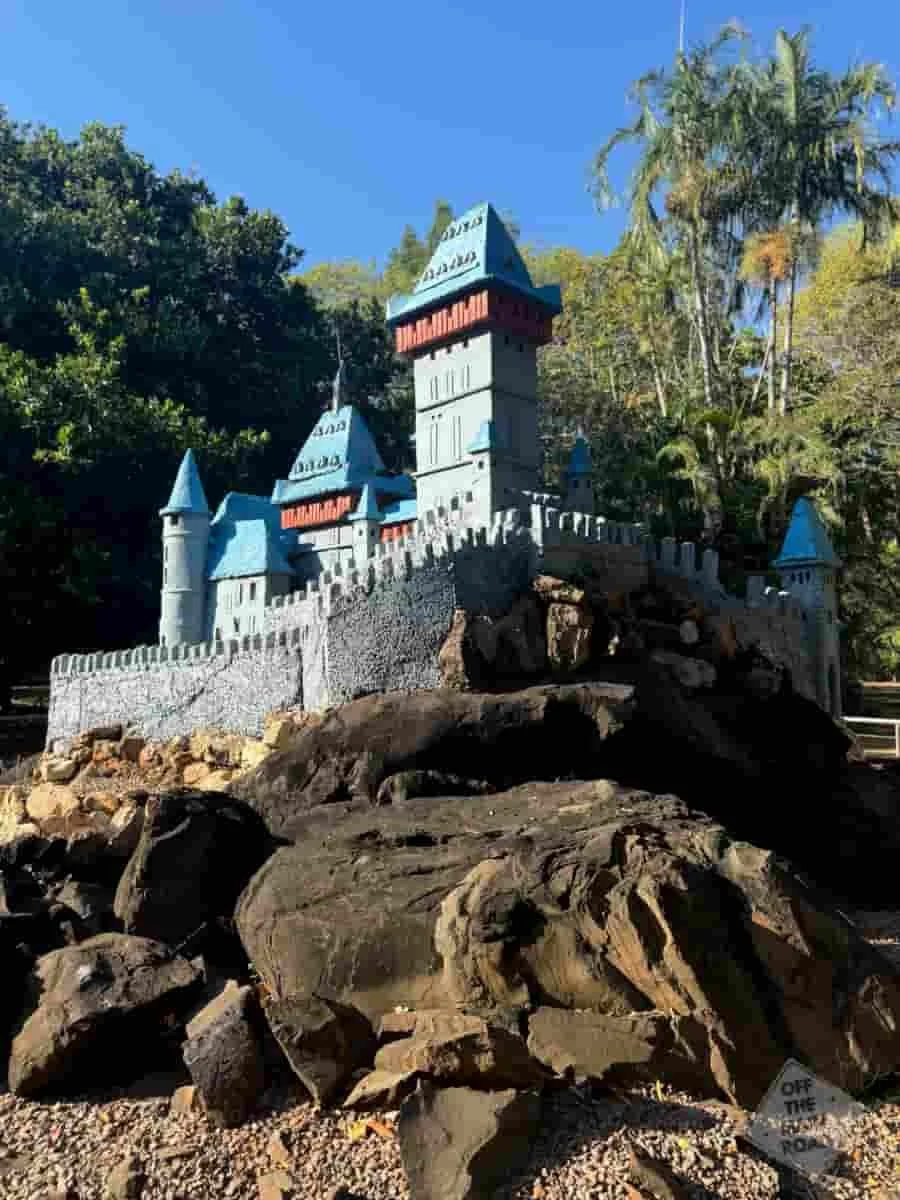
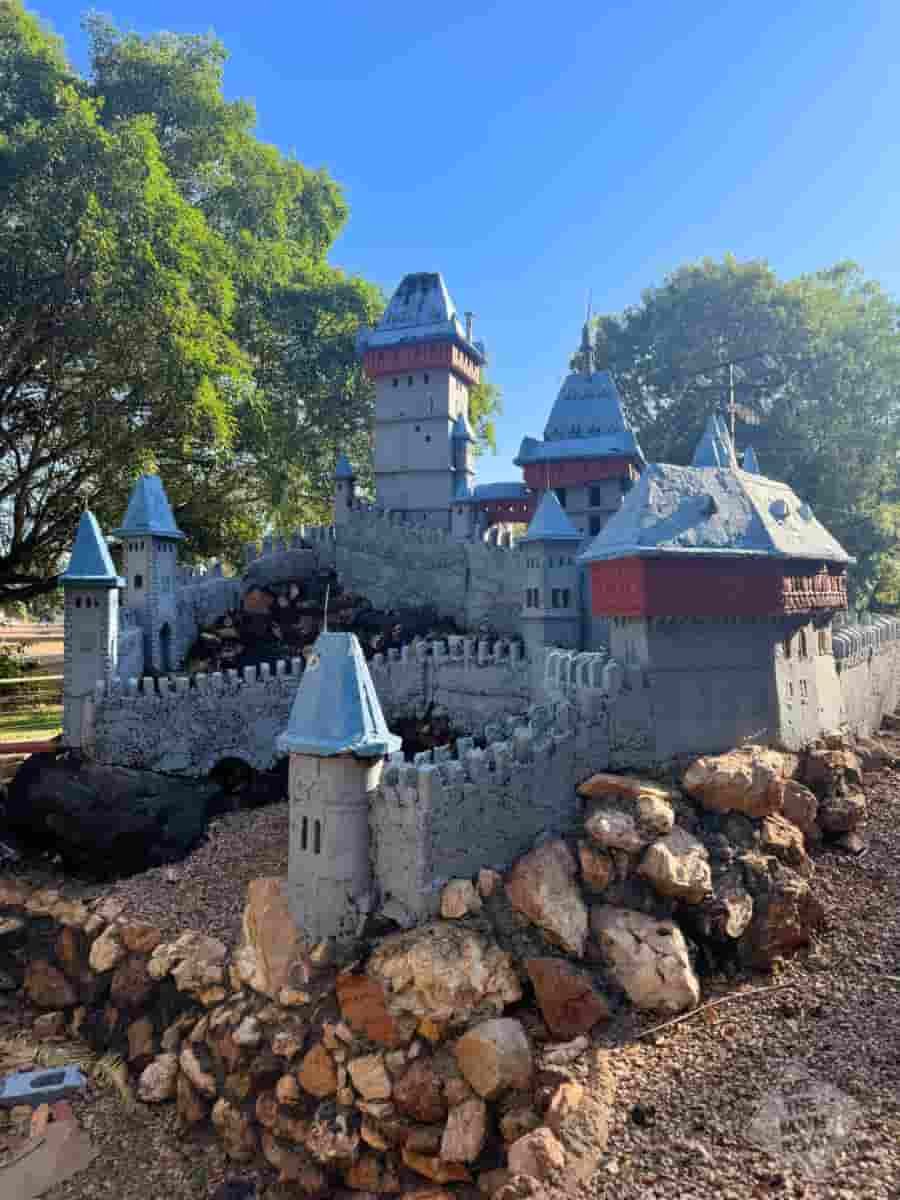
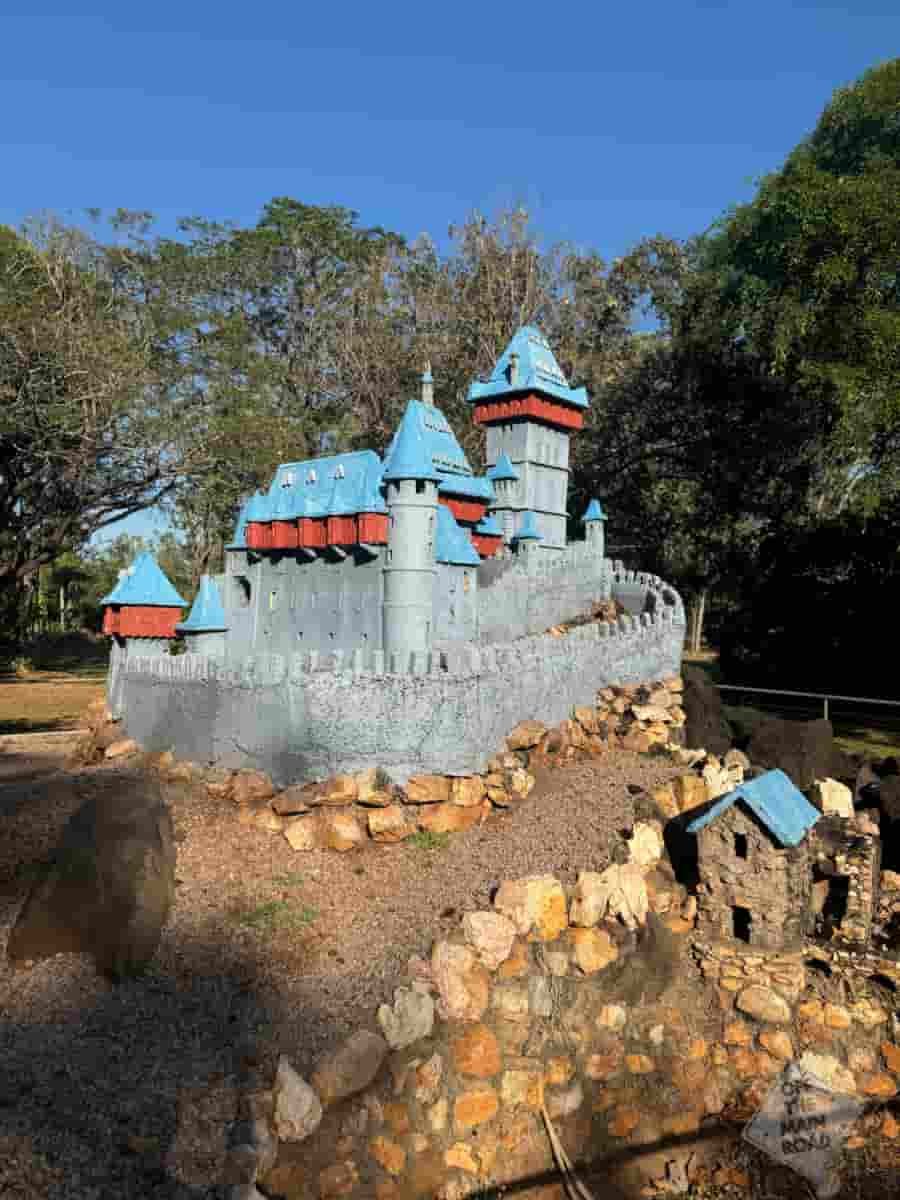
The first surprise is the castle. In the middle of town, in a park named for the man who built it, stands a five-metre replica of Karlstejn Castle, a Gothic fortress southeast of Prague that once guarded the crown jewels of the Holy Roman Empire. It is the last thing you expect to find in a small Territory town, and the story behind it is better than the castle itself. A Czech immigrant named Bernie Havlik came here to work in the uranium mine. When the mine closed, he joined the town gardening crew, and one particular rocky outcrop in the park defeated him. It was too big to move and impossible to keep tidy. So when he retired, he covered it, slowly and lovingly, with a miniature of a castle from home, working from nothing but old photographs. He started in the mid seventies and was still at it when he died in 1990. The story goes that a visitor from the old country, someone who had grown up near the real Karlstejn, took one look and said it was spot on. It is a quiet, homesick, generous thing, and it has become the symbol of the town.
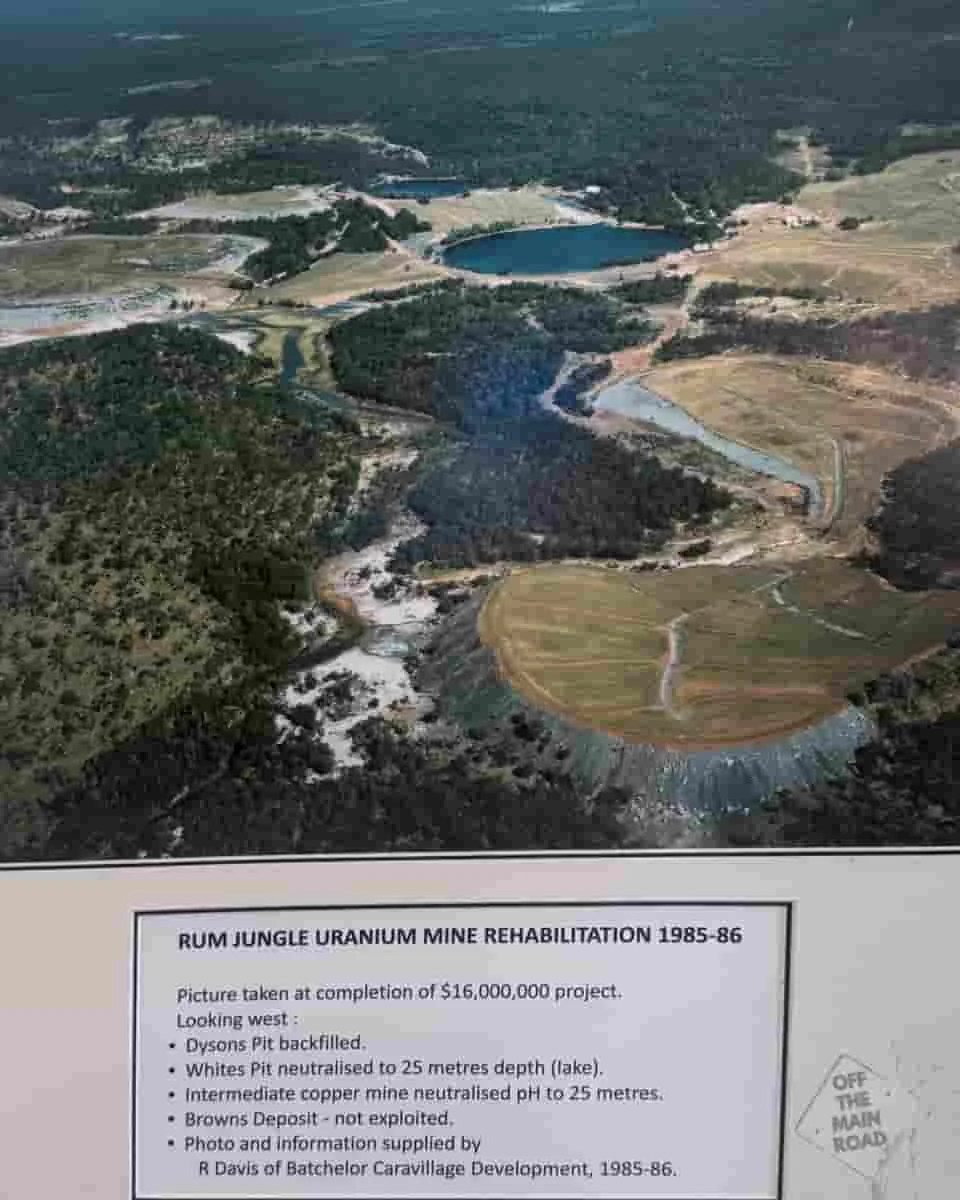
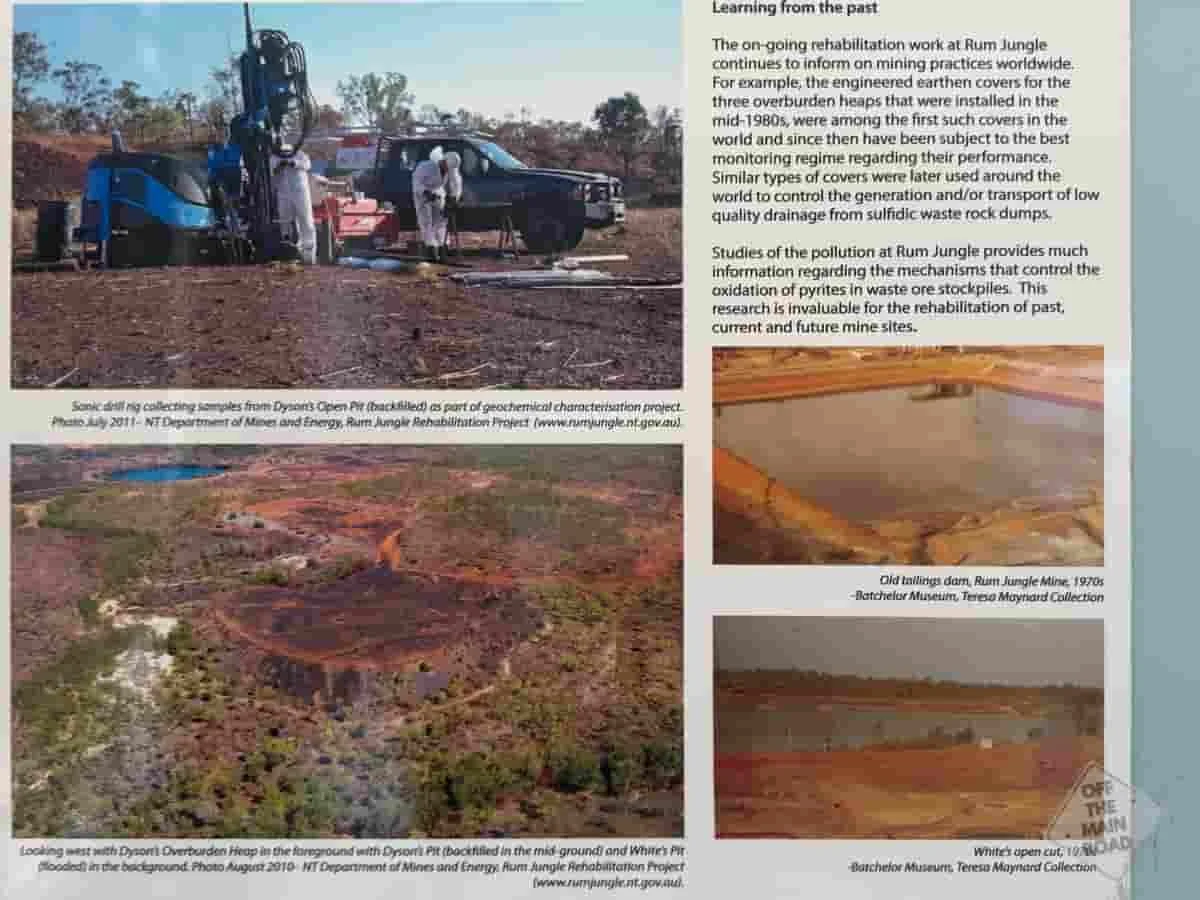
The second surprise, and the reason Batchelor is here at all, sits north-west of town at a place called Rum Jungle. You cannot visit it, and that is worth noting up front. The former mine is a contaminated legacy site, closed to the public and in the middle of a long, expensive government rehabilitation. But its story is everywhere in town, and it is a remarkable one. This was uranium country, and not in a small way. Discovered in 1949 and mined through the 1950s and 60s, Rum Jungle was the birth of Australia’s modern uranium industry, run by the government to supply the atomic programs of Britain and the United States at the height of the Cold War. For a while, it was the largest industrial enterprise in the Territory, and Batchelor was built to house its workers, becoming, for a time, the third-largest town in the NT after Darwin and Alice Springs.
The Batchelor Museum, housed in the town’s old nunnery, tells this story better than we can, and it is well worth an hour or more of anyone’s time. The walls are lined with the whole strange saga. The prospector Jack White, the uranium prospector who found the first deposit. The secrecy and the spies, the warning signs reading turn back if you are not authorised, the Cold War paranoia that surrounded a remote hole in the Territory bush. The official opening by Prime Minister Menzies in 1954, hailed as the birth of an atomic-age industry. And then came the reckoning. Rum Jungle became one of Australia’s worst mine pollution sites; the East Finniss River was poisoned for decades, and it took until the 1980s for a major clean-up to begin. It is a complicated, sobering history, the pride and the cost sitting side by side on the museum wall, and it is all the more affecting for being told in a converted nunnery in a town most people drive past.
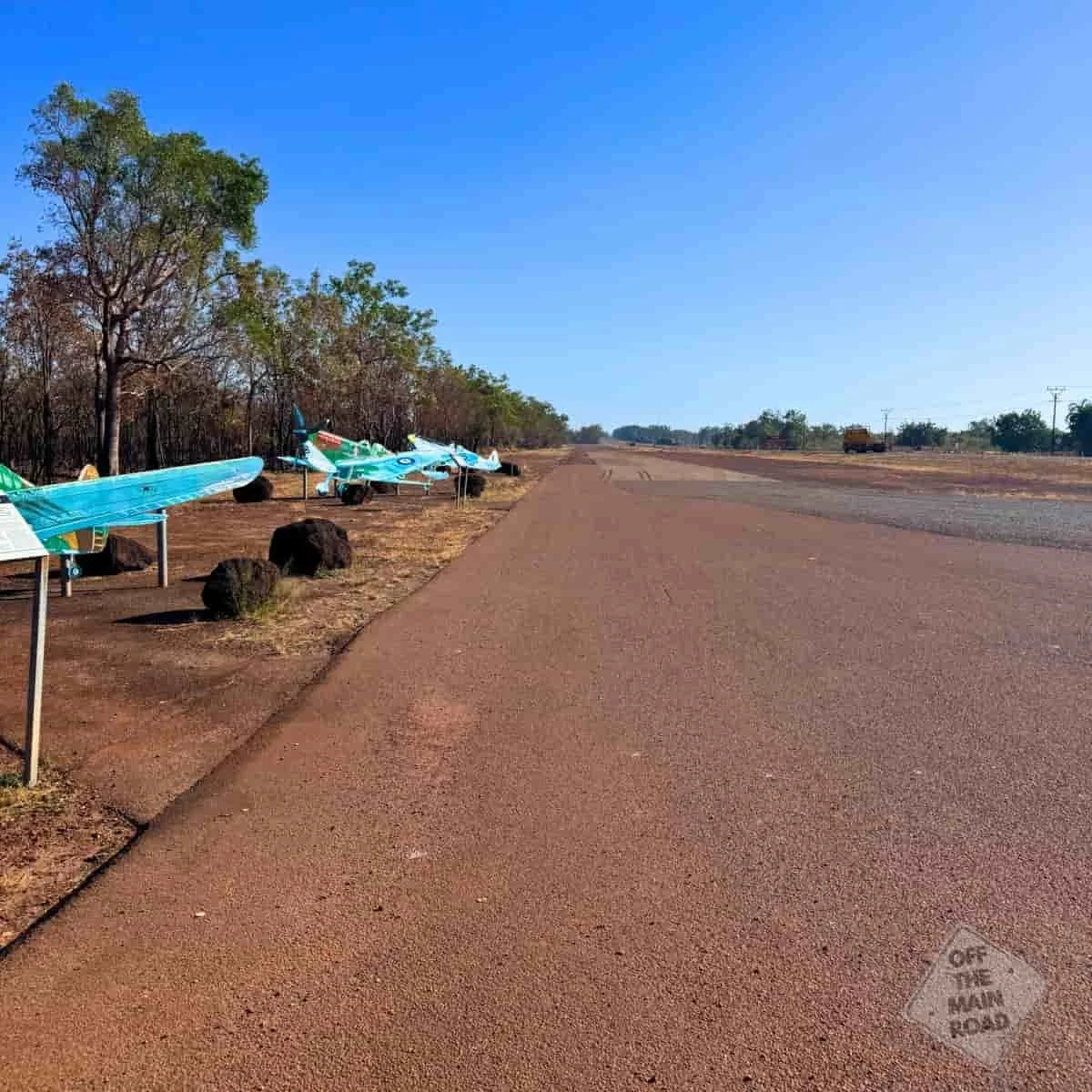
There is a third layer here too. During the war, Batchelor was a major airfield, and it holds a genuine footnote in history. It was here, in March 1942, that General Douglas MacArthur first set foot on Australian soil after the fall of the Philippines. From Batchelor, Allied aircraft flew bombing missions north against Japanese targets. The airfield is still in use today.
We came for a quick look at a castle and left having walked through the atomic age, the war, and one man’s homesick act of devotion, all in a town most people never stop in. That is the thing about the quiet places…they are almost never as quiet as they look.
If you like a town with more to it than meets the eye, our Travel Dispatch is full of them. You can sign up HERE
Batchelor
Batchelor is a small town about 98 kilometres south of Darwin, just off the Stuart Highway, best known today as the gateway to Litchfield National Park. It grew in the 1950s to house workers from the nearby Rum Jungle uranium mine and was briefly the third largest town in the Territory. Today it is a quiet, green place with a museum, a famous miniature castle, an active airfield with a wartime past, and an Aboriginal training college, the Batchelor Institute. This is the country of the Kungarakan and Warai people. For most visitors, it is the last stop for fuel and supplies before Litchfield.
How to Get There
Batchelor is an easy drive from Darwin, about 98 kilometres south on the Stuart Highway, then a short run west on Batchelor Road. The whole route is sealed and suitable for any vehicle, and the town is well signed as the main entrance to Litchfield National Park. There is fuel, food and accommodation in town. Most people visit on the way to or from Litchfield, and Batchelor makes a sensible base for exploring the park.
What to See and Do
What we did:
Visited the Karlštejn Castle replica in Havlík Park in the middle of town.
Spent an hour or more in the Batchelor Museum, in the old nunnery, learning the Rum Jungle story.
Read up on the town’s wartime airfield and its place in the war.
Visited the Batchelor Butterfly Farm, a long-standing local attraction.
Strolled the monthly market on the Batchelor Oval, on the third Sunday.
Other highlights nearby:
Litchfield National Park, with its waterfalls, swimming holes and magnetic termite mounds, right on Batchelor’s doorstep. Check out our Litchfield story
Rum Jungle Lake, a flooded former mine pit about 6km west of town (separate from the closed main mine site), is popular with locals for swimming, kayaking and fishing. It does carry occasional low-level radiation advisories, though, so check current local advice before you go in.
When to Visit
The dry season, from May to October, is the time to come, with warm days, clear skies and easy access to Litchfield next door. This is also when the town and the national park are busiest. The wet season brings heat, humidity, and heavy storms, and some parts of Litchfield can close due to flooding, though Batchelor itself stays accessible year-round. The museum and castle are fine any time of year, and early in the day is best for the drive to Litchfield’s waterfalls before the crowds arrive.
Final Thoughts
On the surface, Batchelor is a fuel stop on the way to the falls. Underneath is a fascinating story of uranium, the Cold War, a wartime airfield, and a lonely man building a castle from memory. We drove in expecting to fill the tank and drove out having found one of the more quietly moving small towns of the whole trip. Bernie Havlik never went home to Bohemia. But he brought a little of it here, and it is still standing.
What's Nearby
Batchelor is the gateway to Litchfield National Park, which is reason enough to come and easily a day or two on its own. Back on the Stuart Highway, the road runs north to Darwin and the coast at Dundee Beach, and south past the string of wartime airstrips toward Katherine and beyond. The whole area is thick with Top End history if you take the time to look.
We share the quiet corners and the odd little towns through our Travel Dispatch. If that is your pace, you can join us HERE

Litchfield, National Park, NT
📍 Approx 18km West from BatchelorExplore Litchfield National Park — Florence Falls, Buley Rockhole, Wangi Falls and Tolmer Falls. Short walks, clear pools, and shaded tracks make this Top End favourite a must-visit.

Berry Springs, NT
📍 Approx 54km North from BatchelorVisit Territory Wildlife Park at Berry Springs near Darwin. A spacious, walkable wildlife park showcasing Top End animals, ecosystems, and conservation in a calm, family-friendly setting.
Adelaide River, NT
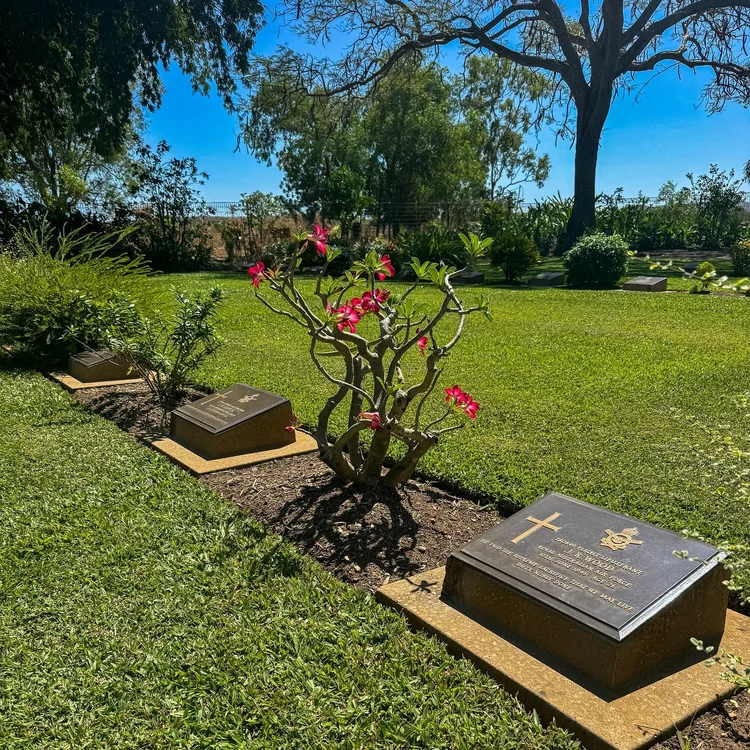
📍 32km South-East from BatchelorAdelaide River blends wartime history, weekly markets, and Top End quiet. We wandered the War Cemetery, chatted with locals at the dry-season market, and found a town that carries both stillness and life with ease.
Read the full story ->
Fast Facts
Location: Batchelor, Northern Territory, about 98km south of Darwin
Distance: Roughly a 1 hour 15 minute drive from Darwin by sealed road
Traditional Owners: Kungarakan and Warai people
Access: Sealed roads, all vehicles, well signed as the gateway to Litchfield
Facilities: Fuel, food, accommodation, museum, park. Full services in town
Don’t Miss: Karlstejn Castle replica in Havlik Park; the Batchelor Museum in the old nunnery
Best Time to Visit: Dry season, May to October
Dog Friendly: Town yes; note dogs are not permitted in Litchfield National Park
Things That Could Kill You (Probably Won’t)
A semi-serious guide to surviving Australia. Mostly common sense, occasionally luck.
Rum Jungle: The former uranium mine is a contaminated site closed to the public and under active rehabilitation. It is not a visitor attraction. Learn its story at the museum in town, not by driving out there.
The heat: Top End sun is fierce. Hat, water and shade, especially if you are walking Litchfield afterwards.
Litchfield’s water: Beautiful swimming holes, but always check current signage. Not every pool is croc-free year-round, and conditions change with the seasons.
The drive: Watch for wildlife and the odd road train on the highway run, especially at dawn and dusk.
If this post helped, you can support our work here.

Other updates you may like…






Most people drive through Batchelor on the way to Litchfield. Stop, and you find a miniature Czech castle built by a homesick miner, a Cold War uranium mine, and a wartime airfield with a famous visitor.