

Darwin Aviation Museum: B-52 and Beyond
The Darwin Aviation Museum made an easy half-day stop while we were working our way around the city. Tucked near the airport, it’s one of those places that looks modest from the outside until you step through the doors and into a huge hangar packed with aircraft and NT history.
The B-52 is the first thing you notice! Its wings stretch across almost the entire building. Seeing something that size indoors is a bit surreal, and standing underneath it gives you a proper sense of how heavy-duty these aircraft really are. Around it sits a mix of planes and helicopters from different eras, each with a story tied to Darwin, defence, or the Top End’s long relationship with the sky.
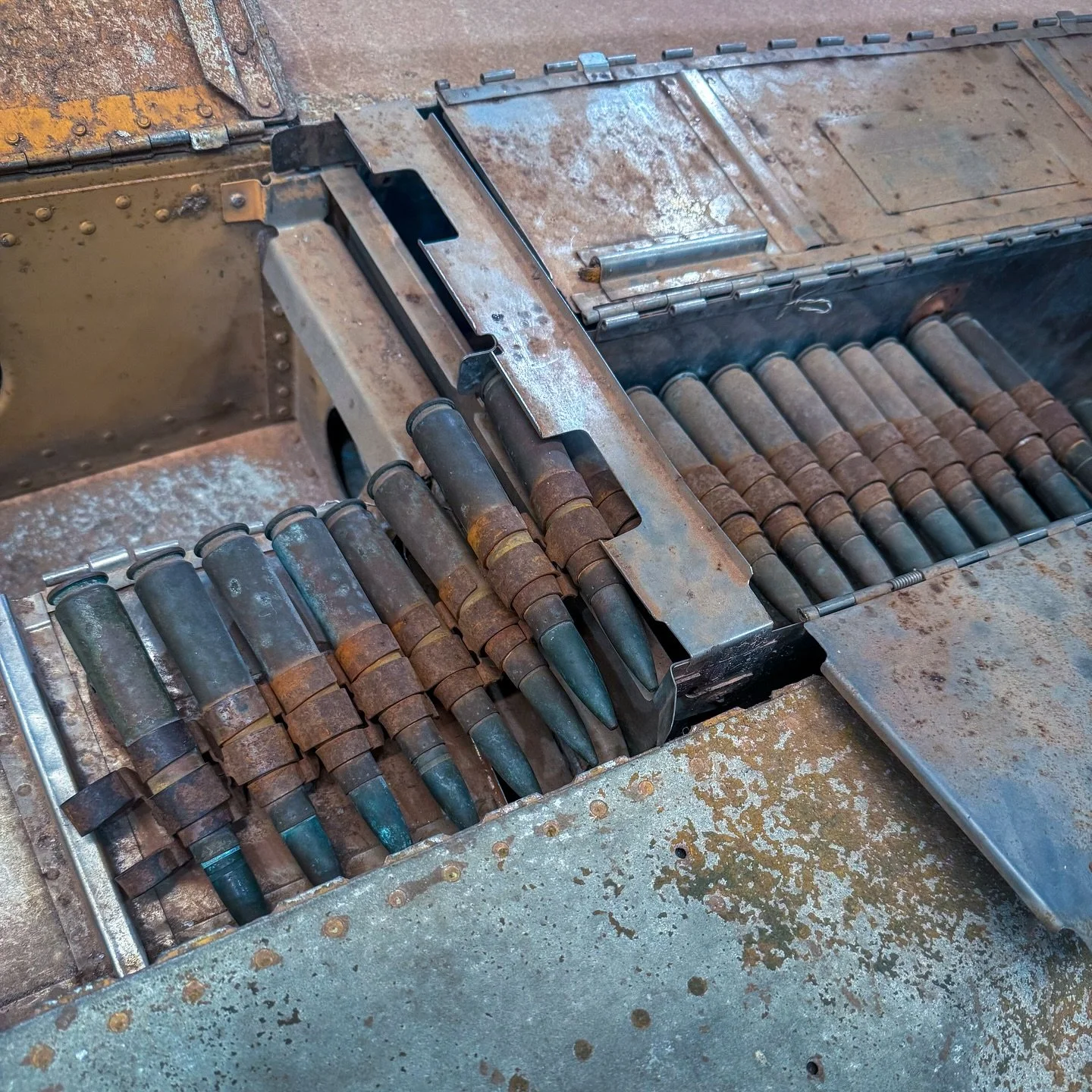
The museum covers Darwin’s aviation past, including its role in WWII and the bombing of Darwin. The displays are straightforward and clear, with plenty of real objects and photos that put the events into context. A few interactive elements help break up the information, and the volunteers were happy to share extra bits of history when we had questions.
It’s the kind of museum that suits both aviation buffs and travellers who enjoy learning how the NT fits into broader Australian stories. We left with a better sense of the region’s connection to aviation and how much has happened in these skies.
If you like these quieter, informative stops between the big NT sights, join our Travel Dispatch for more of our Darwin wanderings.




Darwin Aviation Museum
The museum houses one of only two publicly displayed B-52 bombers outside the United States and a broad collection of military and civilian aircraft, engines and aviation artefacts connected to NT history. The exhibits also cover Darwin’s strategic importance during WWII.
How to Get There
The museum sits along Stuart Highway in Winnellie, about 15 minutes from Darwin CBD. Access is fully sealed with on-site parking. Public transport options are limited.
What to See, Tours and Activities
What we did:
• Walked through the main hangar and stood beneath the B-52.
• Explored the WWII and bombing-of-Darwin exhibits.
• Checked out the range of aircraft and engines on display.
Other highlights you might explore:
• Short films and historical footage.
• Volunteer talks during peak periods.
• The nearby WWII Oil Storage Tunnels (Darwin CBD).
When to Visit
Open year-round. Mornings offer cooler temperatures, especially if you’re pairing it with other outdoor activities later in the day.
Final Thoughts
The Darwin Aviation Museum gave us a simple, informative break from the heat — a good mix of history and big machinery that adds context to the Top End’s past.
What’s Nearby
From here it’s a short drive to the Museum and Art Gallery of the Northern Territory or a loop down to East Point Reserve. Both pair easily with a visit if you’re exploring Darwin for the day.
For the stories that didn’t make the blog, and a few close calls with Territory wildlife, our Top Secret Travel Dispatch has the rest.
Fast Facts
Location: Winnellie, Darwin NT
Distance: 15 minutes from Darwin CBD
Traditional Owners: Larrakia People
Access: Fully sealed, on-site parking
Facilities: Toilets, gift shop, indoor exhibits
Walking Track: Easy indoor pathways
Dog Friendly: No
Best Time to Visit: Year-round; mornings are cooler
Things That Could Kill You (Probably Won’t)
A semi-serious guide to surviving Australia. Mostly common sense, occasionally luck.
Propeller Edges: They’re bigger than they look. Don’t test the theory.
Low Wings: Mind your forehead — the planes don’t move.
Heat: The NT sun is always the silent villain. Hydrate early.

Other updates you may like…
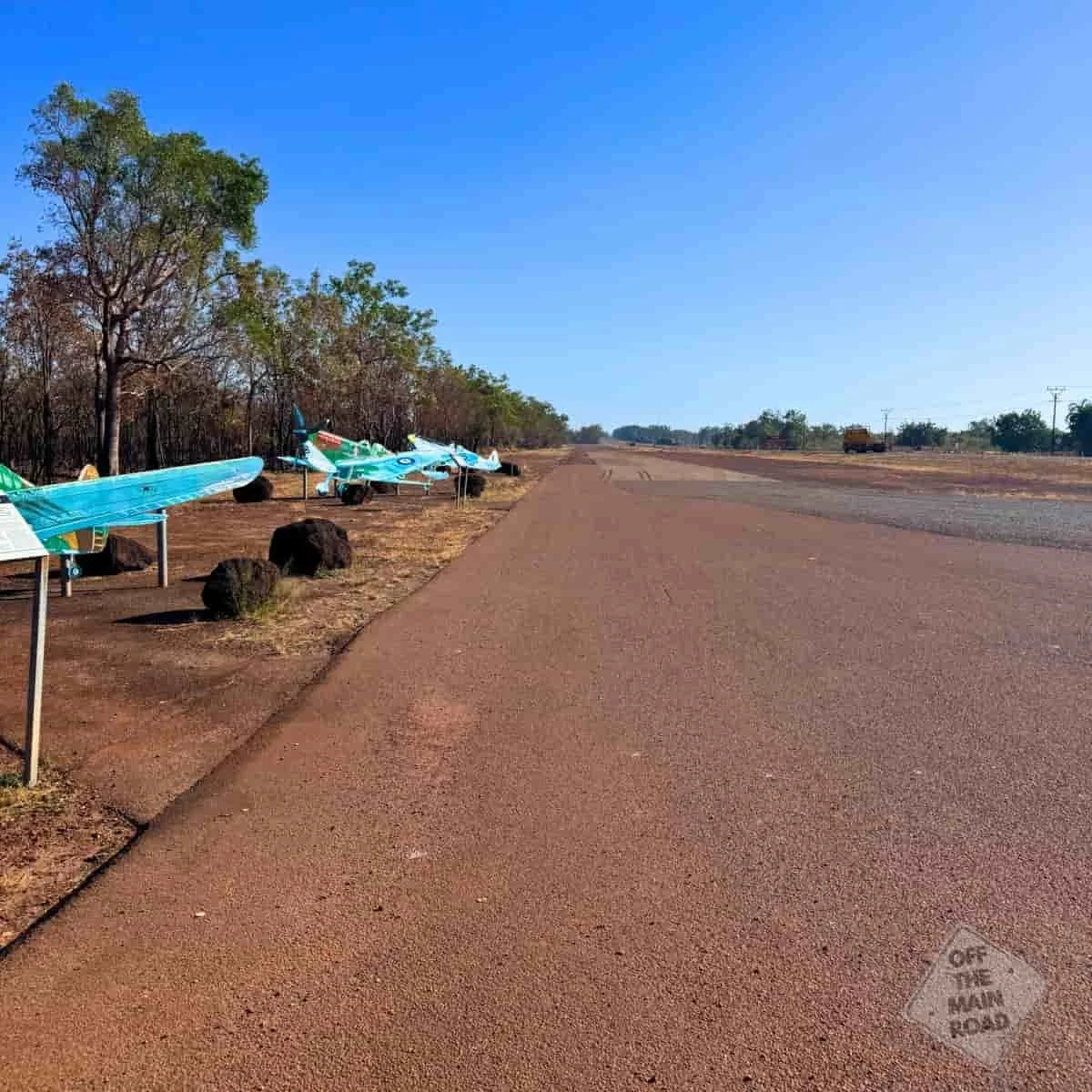










Most people drive through Batchelor on the way to Litchfield. Stop, and you find a miniature Czech castle built by a homesick miner, a Cold War uranium mine, and a wartime airfield with a famous visitor.