Dundee Beach: Close to Darwin & Why You Can't Swim
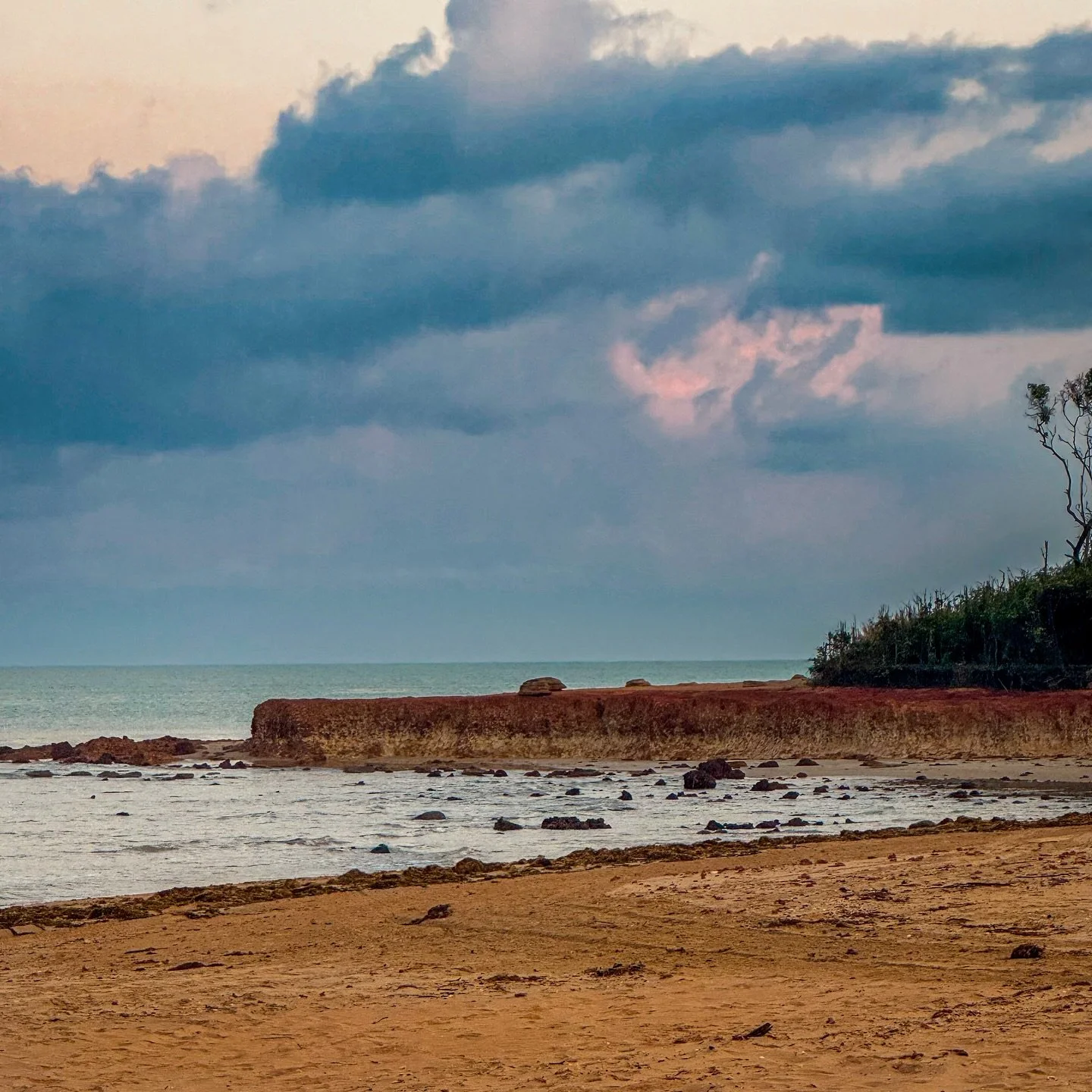
There is a moment, standing on the sand at Dundee Beach with the Timor Sea going gold in front of you, when every part of your body says go on, get in. The water is warm and clear, and the day has been hot. And every part of your brain, if you have any sense up here, says absolutely not.
We had come to Dundee for a breath of coastal air after months inland, chasing red dirt and dry riverbeds. Somewhere in there, you start to miss the sea. Dundee sits southwest of Darwin on the Cox Peninsula, a small holiday-home sort of place that swells in the dry season and empties again when the wet rolls in. It is famous for its fishing, its sunsets, and its crocodiles, and it is very upfront about the order of those things.
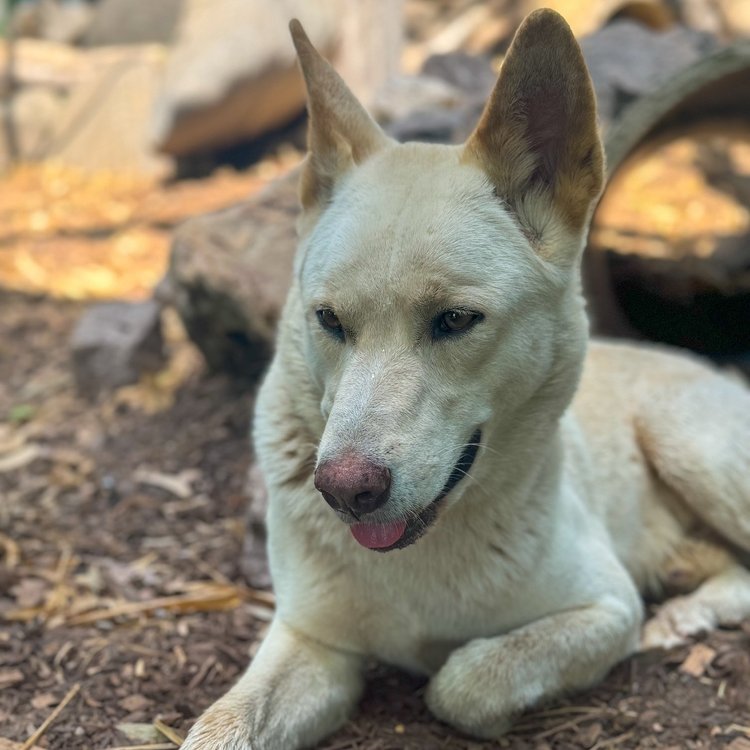
Because this is not a swimming beach. Dundee is deep in saltwater crocodile country, and the warnings are not subtle. Signs line the access points, and the locals give you the same short advice. Look, don’t enter. We did not even think about going near the water. Zoe, on the other hand, was bitterly disappointed. She stood there staring at the crystal-blue shallows with that hopeful just one paw expression, completely unconvinced by our explanation that the water bites back up here. She has strong opinions about being kept from perfectly good water. We had a stronger opinion about crocodiles.
The thing about the crocs is that you rarely see them, and that is exactly the point. A saltie does not announce itself. People here will tell you a croc walked through the holiday park one night, and that they turn up along the Finniss River mouth where everyone fishes for barramundi. You do not swim, you do not clean fish at the ramp, you keep the dog close and the kids closer. Be croc-wise, as the signs say. It becomes second nature fast.
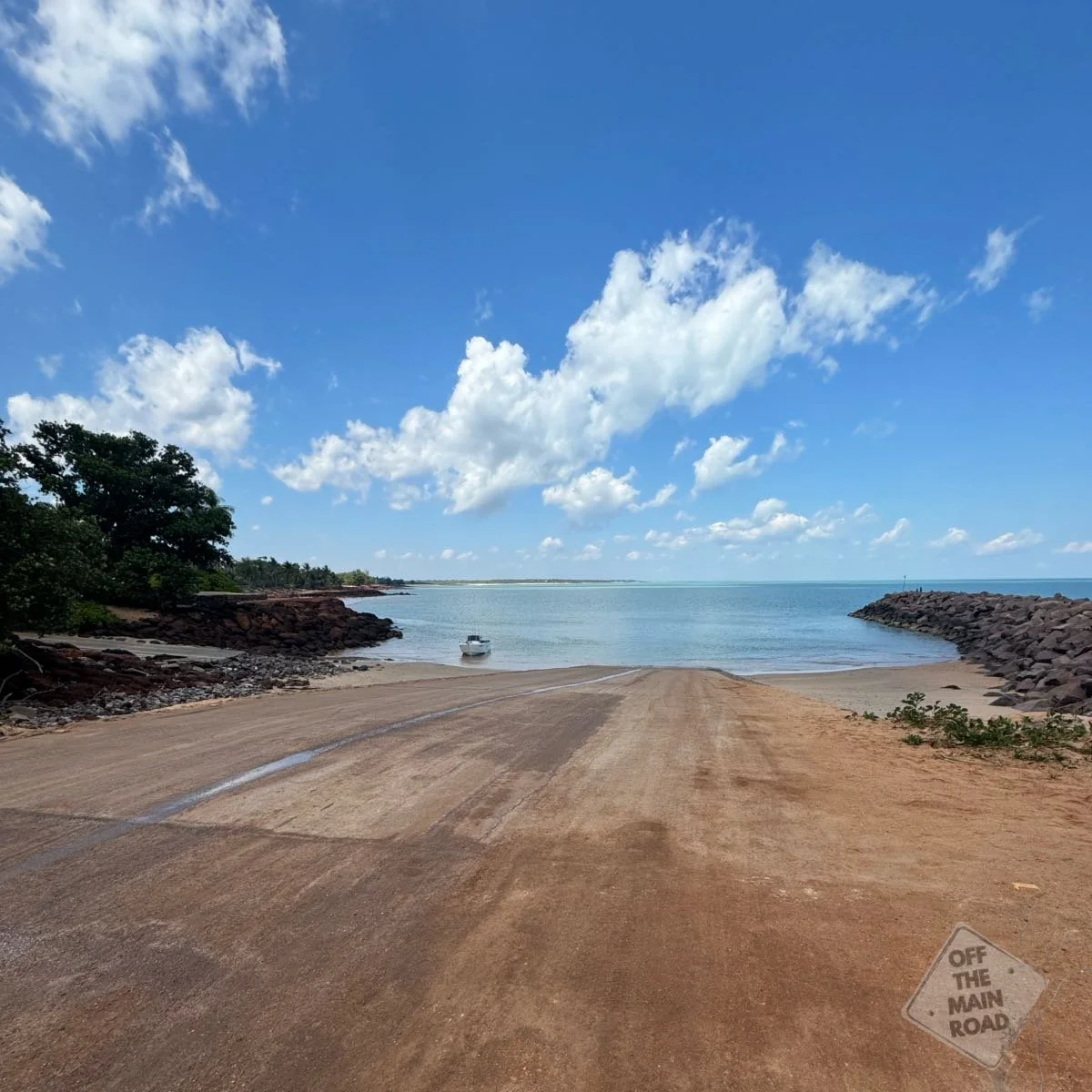
With swimming off the table, the beach settles into something slower. We walked. We watched a few fishers backing boats down the ramp in that unhurried Territory way, and got a good sense of how productive these waters must be from the gear they were loading. Dundee is one of the Top End’s best-known fishing spots, all barramundi and mud crabs and reef fish, and it is a place people come to for the fishing first and everything else a distant second. We were there for everything else, and there was plenty of it.
And then the sunset, which is the whole reason the tavern faces the way it does. The sun goes down over the Timor Sea, the sky does that long tropical burn, and the deck at the Dundee Beach Tavern fills up with locals and travellers watching the same show. We sat with a cold drink and a plate of fish and watched the light go. No swimming, no rushing. Just space, a sea breeze, and one of the better sunsets the NT has handed us.
While we were in the area, we detoured to Crab Claw Island on our adventure bikes for lunch, an easy add-on, since the turn-off comes straight off Fog Bay Road on the way to Dundee. The last stretch in is about fifteen kilometres of dirt, which is one thing in a car and quite another on two wheels. The resort sits right on the edge of Bynoe Harbour, with all walkways elevated through the palms and an open-air restaurant overlooking the water. It becomes an island only during the biggest tides. We pulled the helmets off, ate with the harbour in front of us, and were in no hurry to get moving again. This is fishing and crabbing country through and through, and like everywhere up here, the water is for looking at, not swimming in. Crocs and sharks both call Bynoe home. Crab Claw Island is also an easy day trip from Darwin.
If you want more honest write-ups of Top End stops like this one, the good and the croc-infested alike, our Travel Dispatch is where we send them. You can sign up HERE



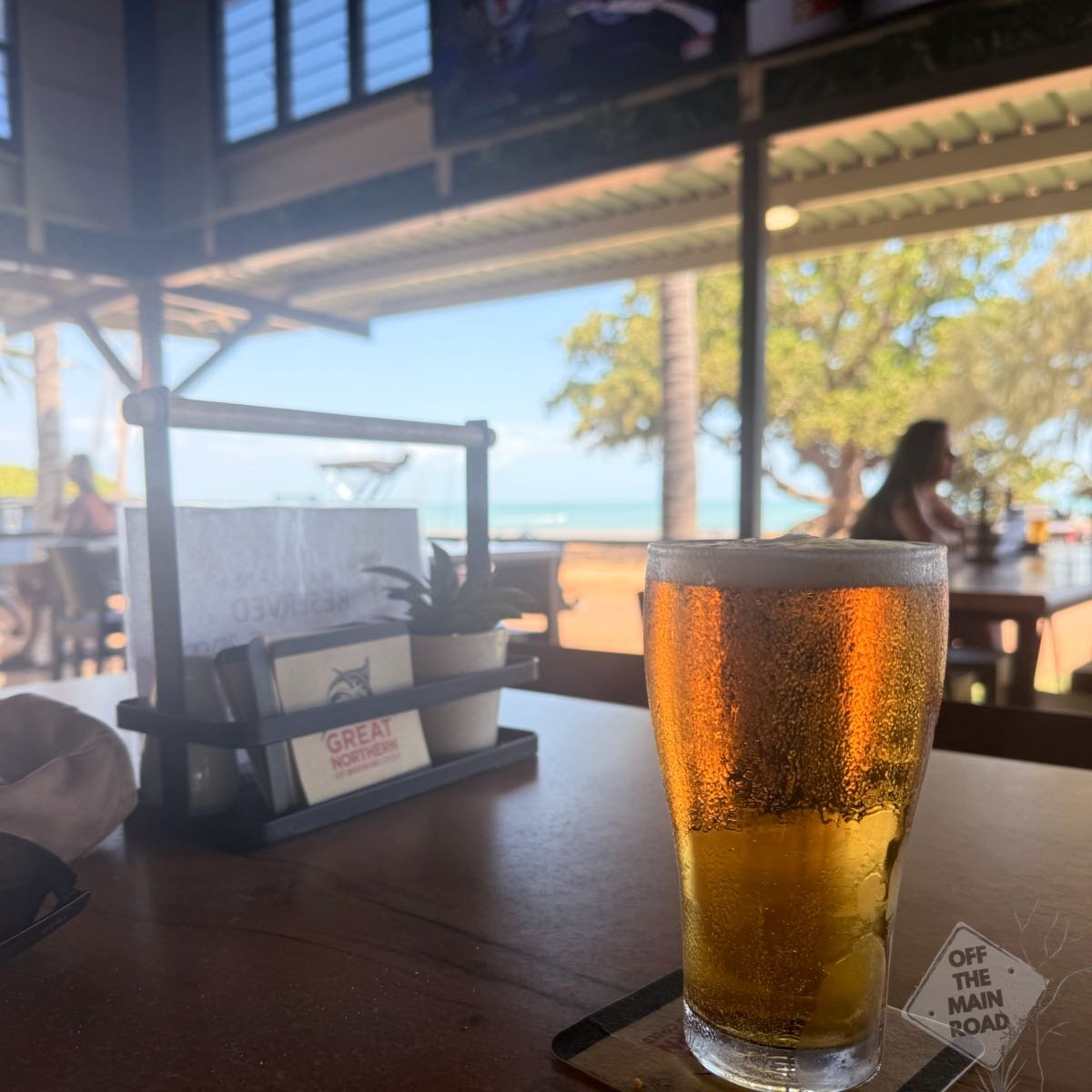
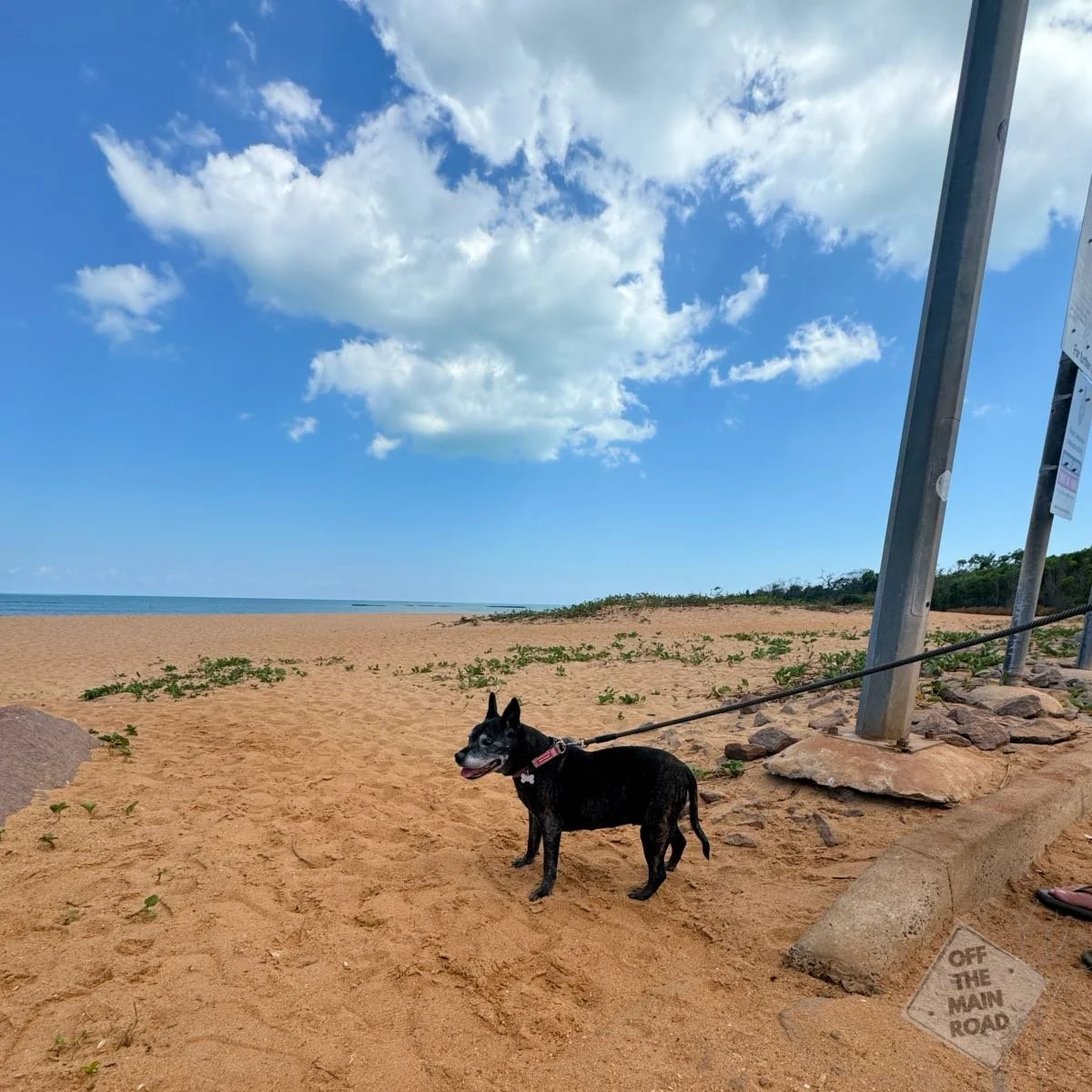
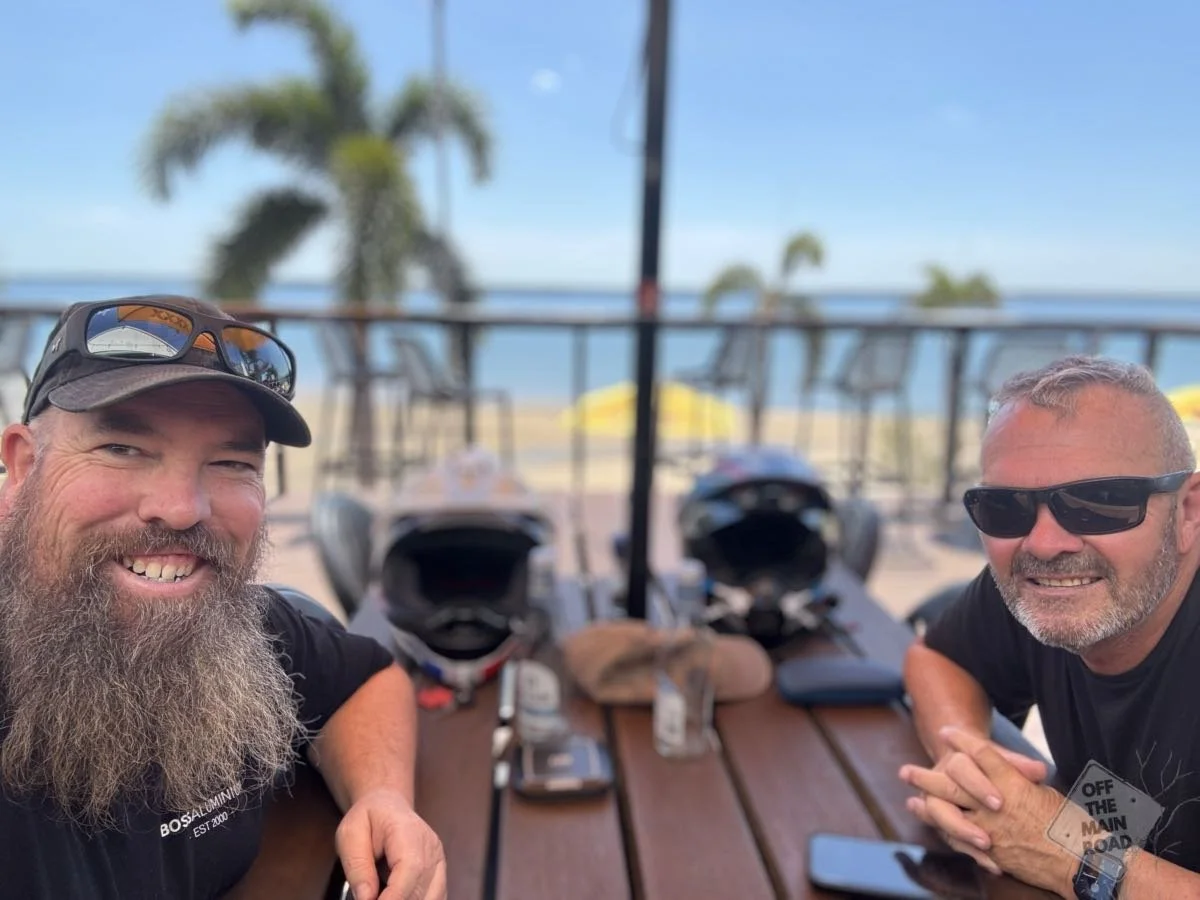
Dundee Beach
Dundee Beach is a small coastal community on the Cox Peninsula, facing the Timor Sea southwest of Darwin. It grew up as a fishing and holiday-home spot and still runs that way, busy through the dry season and quiet in the wet. The heart of it is the boat ramp, the tavern and the beach itself, with the Finniss River region and its barramundi water just up the road. It is a working fishing town first and a scenic one second, and the sunsets are a genuine drawcard in their own right.
How to Get There from Darwin
Dundee Beach sits roughly 130km south-west of Darwin. You leave the Stuart Highway and head west onto Cox Peninsula Road, then turn onto Fog Bay Road and follow the signs the rest of the way in. The road is sealed and suitable for all vehicles, with the final stretch upgraded in recent years, so you do not need a four-wheel drive to reach the town itself in the dry season. There is no public transport, so it is drive-in only. Fuel and a limited range of groceries are available at the tavern, but it is worth stocking up in Darwin before you leave, as the choice out here is thin. If you are flying in, picking up supplies on the way out of Darwin is the smart move.
What to See and Do
What we did:
Walked the beach and took in the Timor Sea coastal views.
Watched the local fishers launching boats at the ramp.
Stayed well back from the water and enjoyed a dry-season sunset from the tavern deck.
Had Lunch at Crab Claw Island Resort
Other highlights nearby:
Dundee Beach Tavern for bistro meals and a sunset with a sea view.
The boat ramp and fishing charters, if you want to get out on the water properly.
The Finniss River region and quiet bush tracks for a wander.
The Saturday Dundee Beach Markets, on through the dry season, for local food and craft.
A Note on the Crocodiles
You cannot safely swim at Dundee Beach, or anywhere else in Top End tidal water. The NT is home to the world’s largest wild saltwater crocodile population, and Dundee is croc country in every direction. You will not always see them, and that absence is not safety.
The rule locals live by is simple. Never enter the water, salt or fresh. Keep children and dogs away from the edge. Don’t clean fish at the ramp or leave scraps in the water. Camp back from the banks. Follow this advice, and Dundee is a wonderful place to spend a few days. Ignore it, and the Territory is unforgiving.
When to Visit
The dry season, roughly May to October, is the time to come. The roads are easy to drive, the weather is stable, the fishing is on, and the sunsets are reliable. This is also when the town is at its liveliest, with the markets running and the tavern deck busy. The wet season, from about November to April, brings storms, heat and the chance of road and travel disruption, and the town goes quiet. For fishing specifically, the run-off from around February to May and the build-up months of October to December are the ones anglers plan their trips around.
Final Thoughts
We came to Dundee to smell the sea again, and we left having done exactly that, minus the swim we would have loved. There is something clarifying about a beautiful beach you are not allowed to enter. It makes you slow down, sit on the sand, and just watch the water do its thing from a respectful distance. Zoe still disagrees. But the sunset won us both over in the end.
What's Nearby
Dundee is an easy add-on to a Top End loop from Darwin. Litchfield National Park and its genuinely swimmable waterholes are within reach for anyone craving a dip the crocs can’t spoil, and Berry Springs and the Territory Wildlife Park sit on the same side of town for a day out of the sun. Any of them pairs well with a night or two watching the Timor Sea sunset.
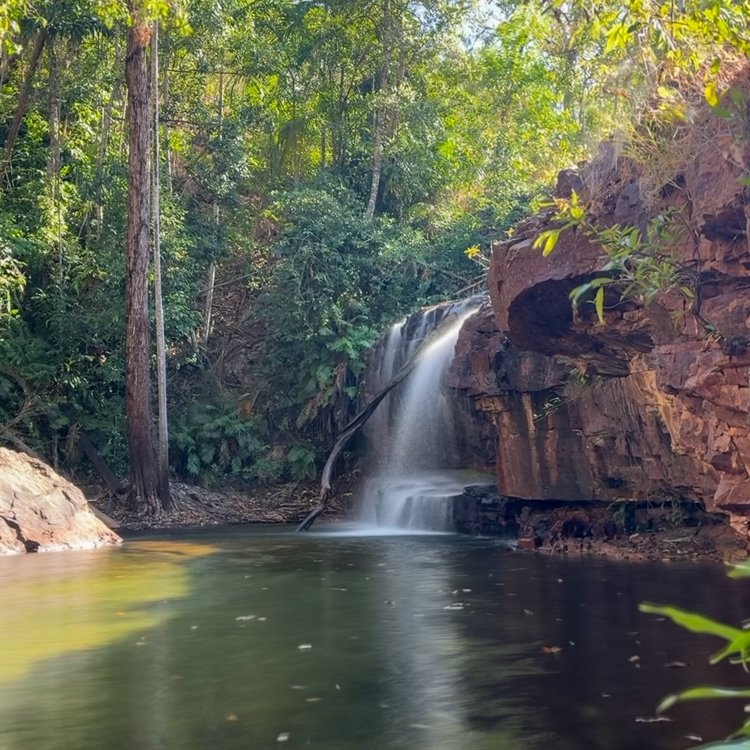
We send our honest take on Top End stops through the Travel Dispatch, sunsets, crocs and all. If that is your pace, you can join us HERE
Fast Facts
Location: Dundee Beach, Cox Peninsula, Northern Territory
Distance: Approx. 130km southwest of Darwin (1.5 hours by sealed road)
Traditional Owners: Larrakia Country; nearby coast and rivers (Finniss River, Peron Islands) also under Wadjigan and Kiyuk custodianship
Access: Sealed roads via Cox Peninsula Road and Fog Bay Road; suitable for all vehicles in the dry. No public transport
Facilities: Tavern (meals, fuel, limited groceries), boat ramp, holiday park, fishing charters
Swimming: No! This is saltwater crocodile country
Best Time to Visit: Dry season, May to October
Dog Friendly: in Town, yes (on lead, kept well away from water); check individual accommodation
Things That Could Kill You
A serious guide to surviving Australia. Mostly common sense, occasionally luck. Actually, this one’s serious!
Saltwater crocodiles: The genuine article here. Never enter the water, keep back from the edge, and take every sign seriously. This is the one that actually could.
Complacency: No croc in sight does not mean no croc. The empty-looking water is the dangerous assumption.
The sun: Little shade on the beach. Hat, water, sunscreen.
Other updates you may like…
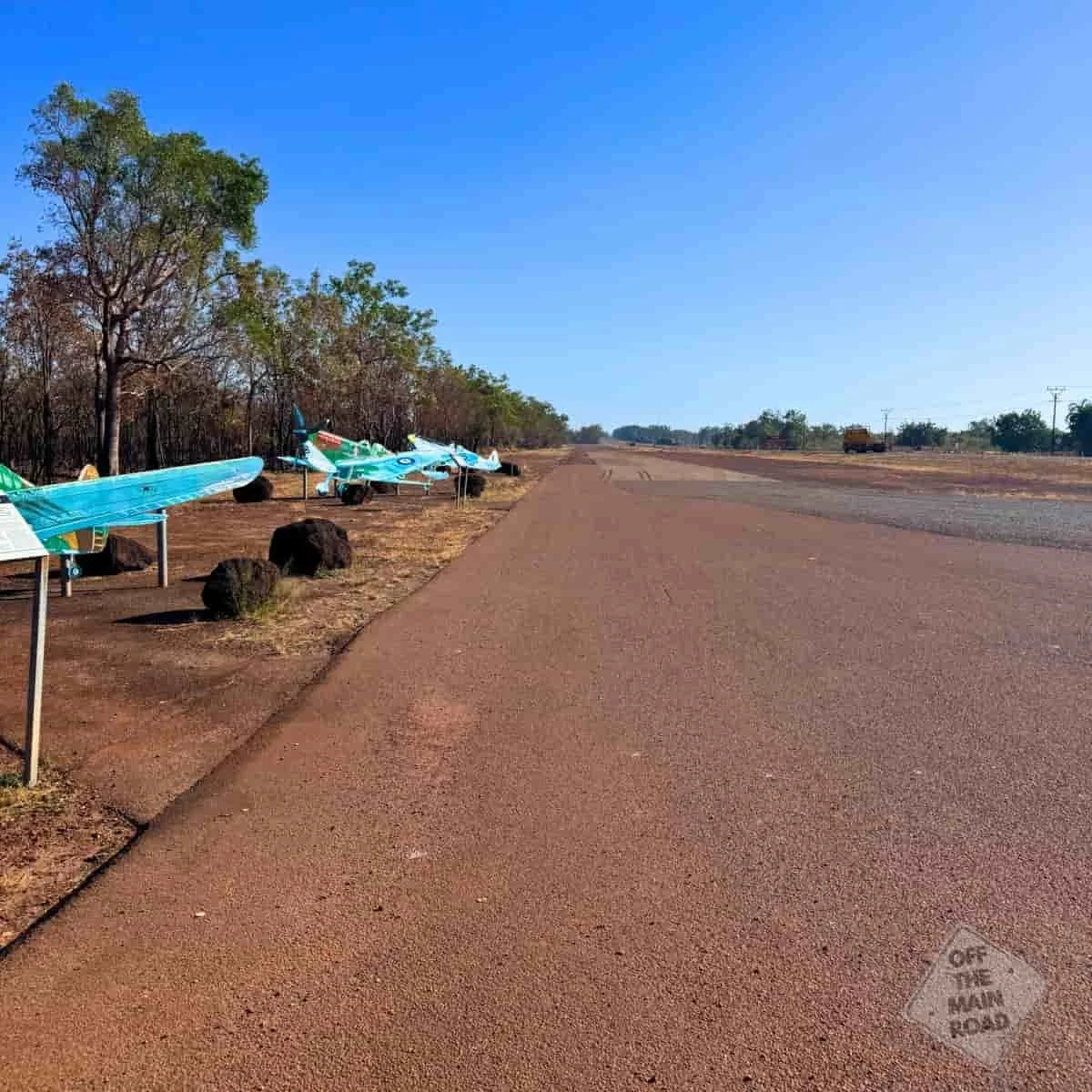








Most people drive through Batchelor on the way to Litchfield. Stop, and you find a miniature Czech castle built by a homesick miner, a Cold War uranium mine, and a wartime airfield with a famous visitor.