Fogg Dam: Birds, Crocs and Breakfast
We drove out to Fogg Dam expecting a quiet look at a bit of water and a few ducks. We came away having seen more birds than we could name, two saltwater crocodiles, a sleepy freshwater croc, and a pair of tourists we are fairly sure we saved from becoming breakfast. Not a bad haul for a morning.
Fogg Dam sits on the Adelaide River floodplain, out past Humpty Doo on the road toward Kakadu. It was built in the 1950s to water a grand rice-growing scheme that never quite worked, and when the rice failed, the wetland quietly took over. What was meant to be a paddock is now one of the best birdwatching spots in the Top End, with a couple of hundred species recorded and one of the highest predator-to-prey ratios of anywhere on earth, thanks to a famous population of water pythons and the dusky rats they live on. Nature, it turns out, made much better use of the place than we did.
We headed out early, which is the only sensible way to do it. The birds are busiest in the cool of the morning, the light is soft, and the tour buses have not arrived yet. Zoe stayed home for this one, having a lie-in back at the moho with the air con going, which was the right call. Dogs are not permitted in the reserve, and in any case, a wetland full of crocodiles is no place for a curious staffy!
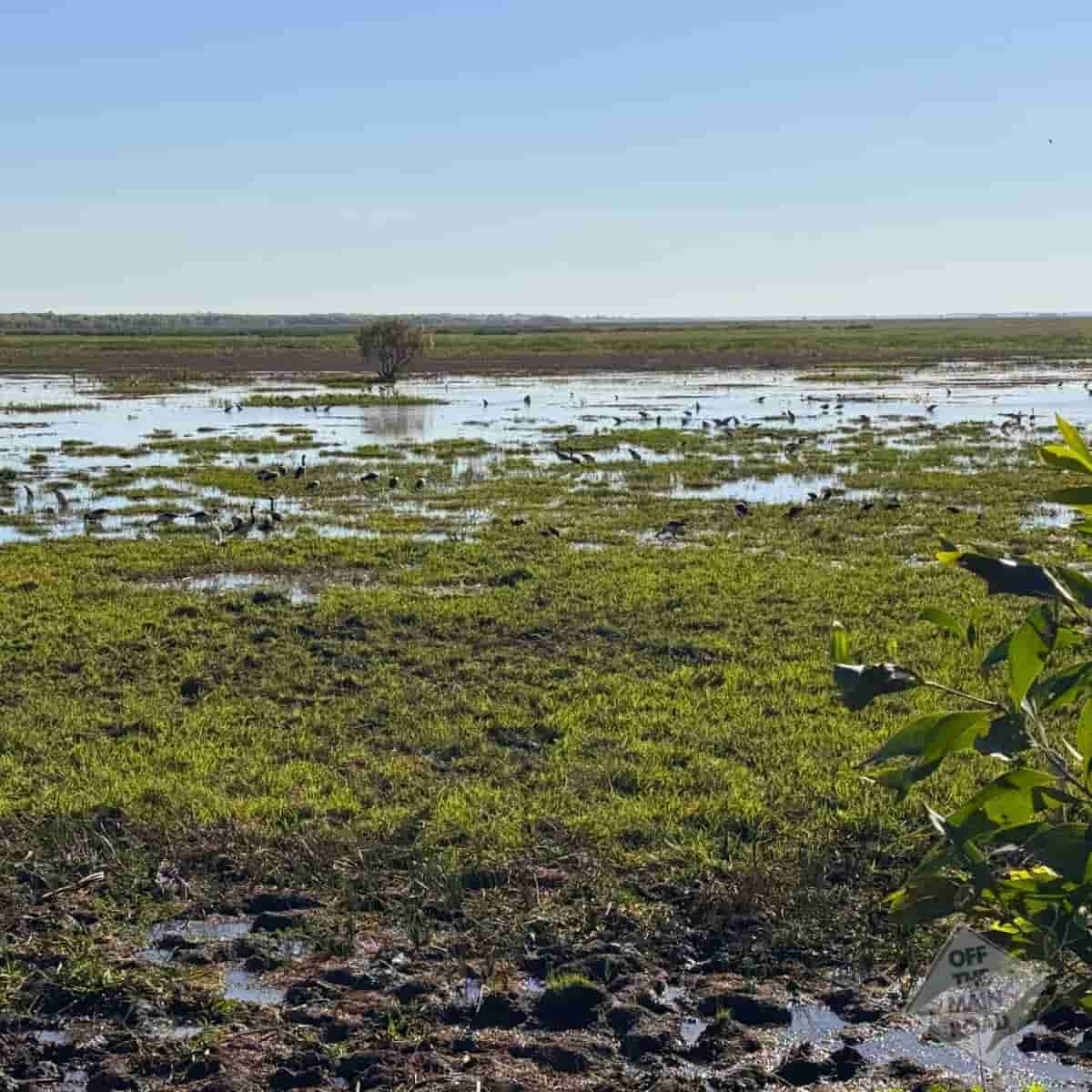
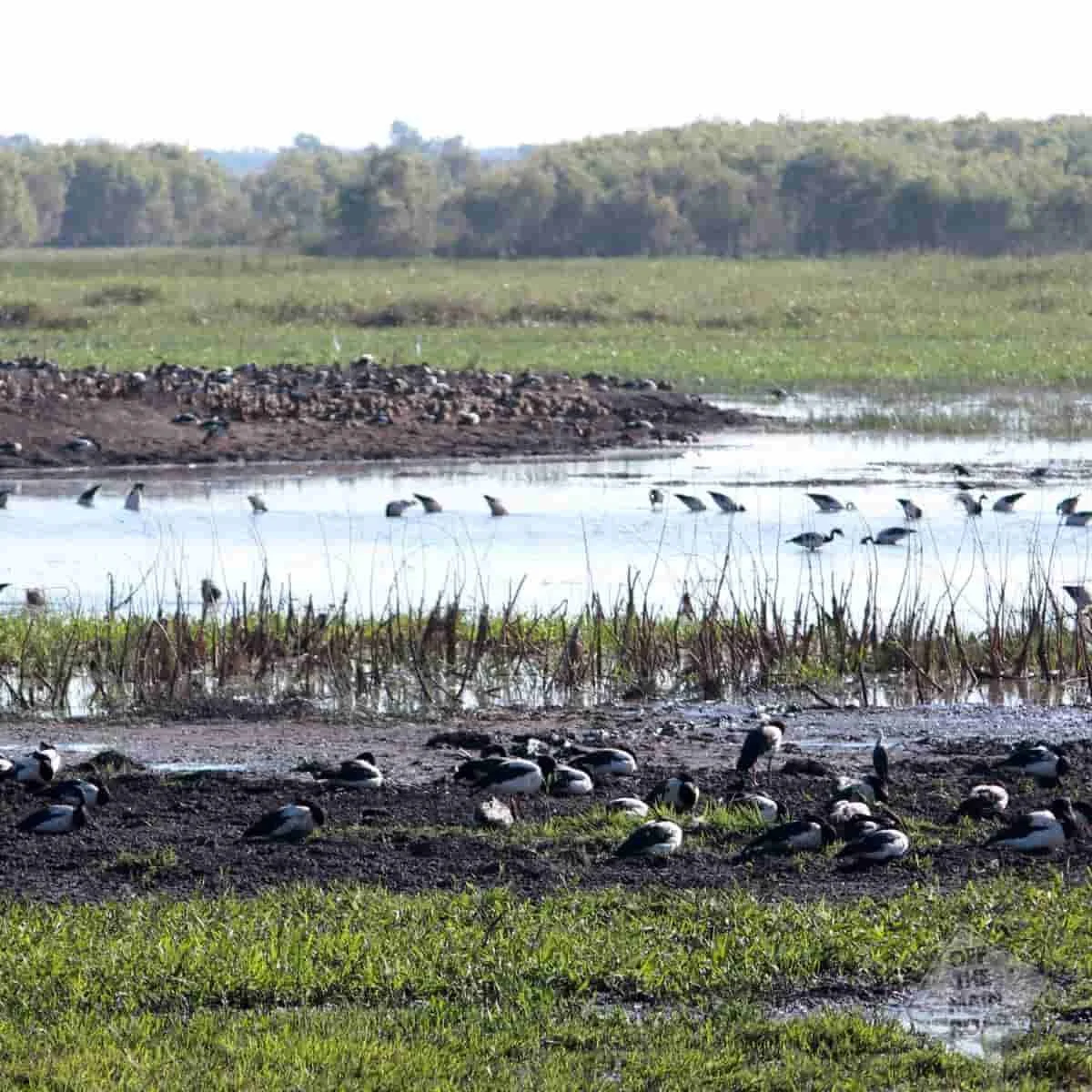
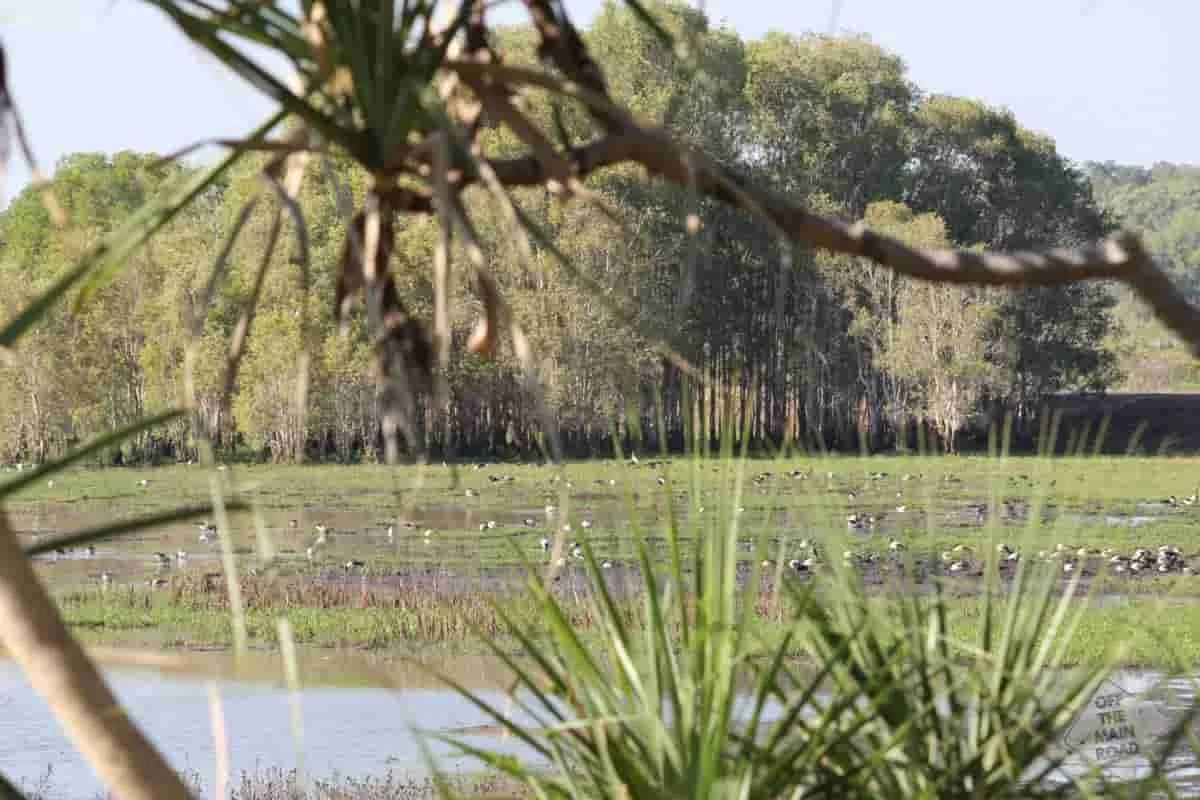
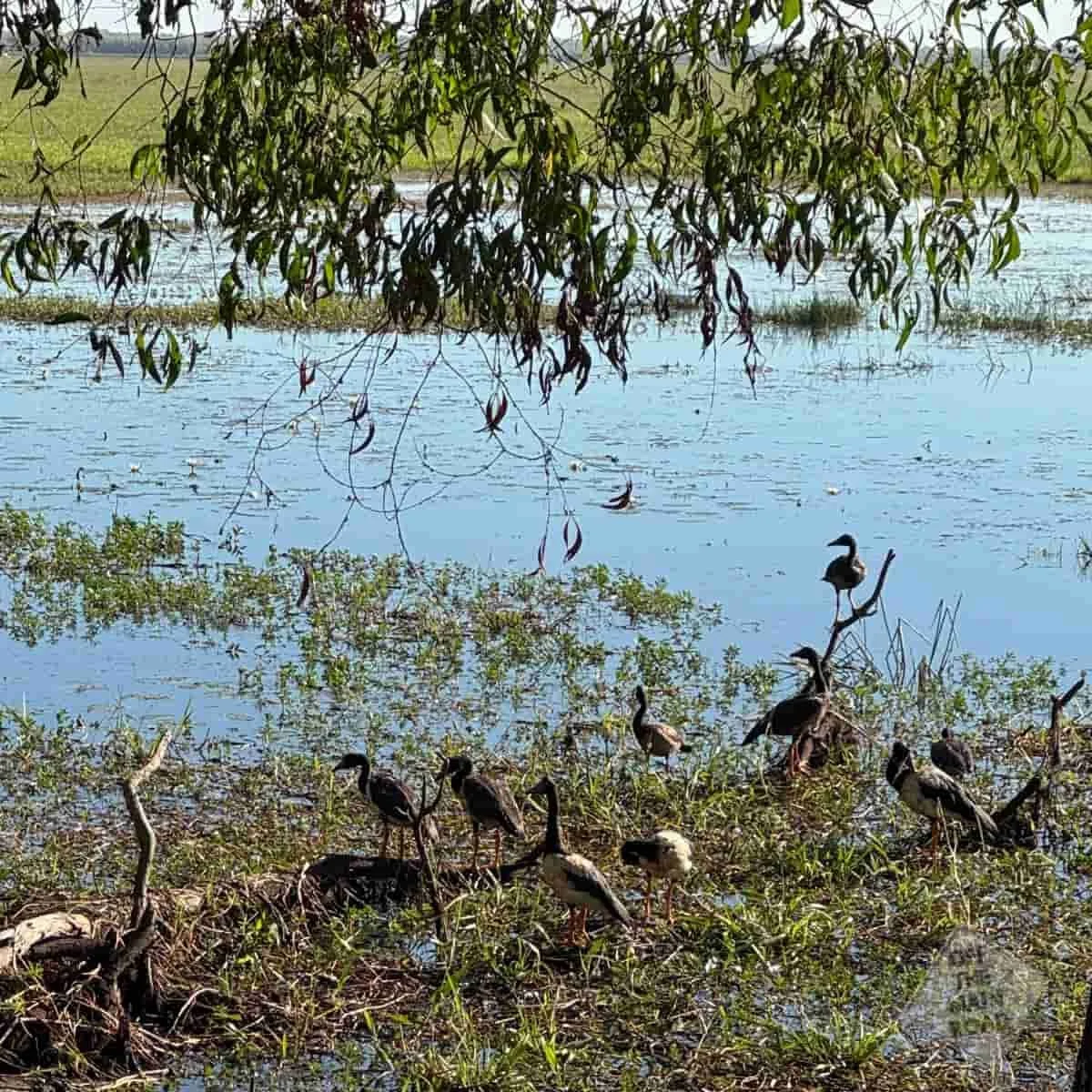
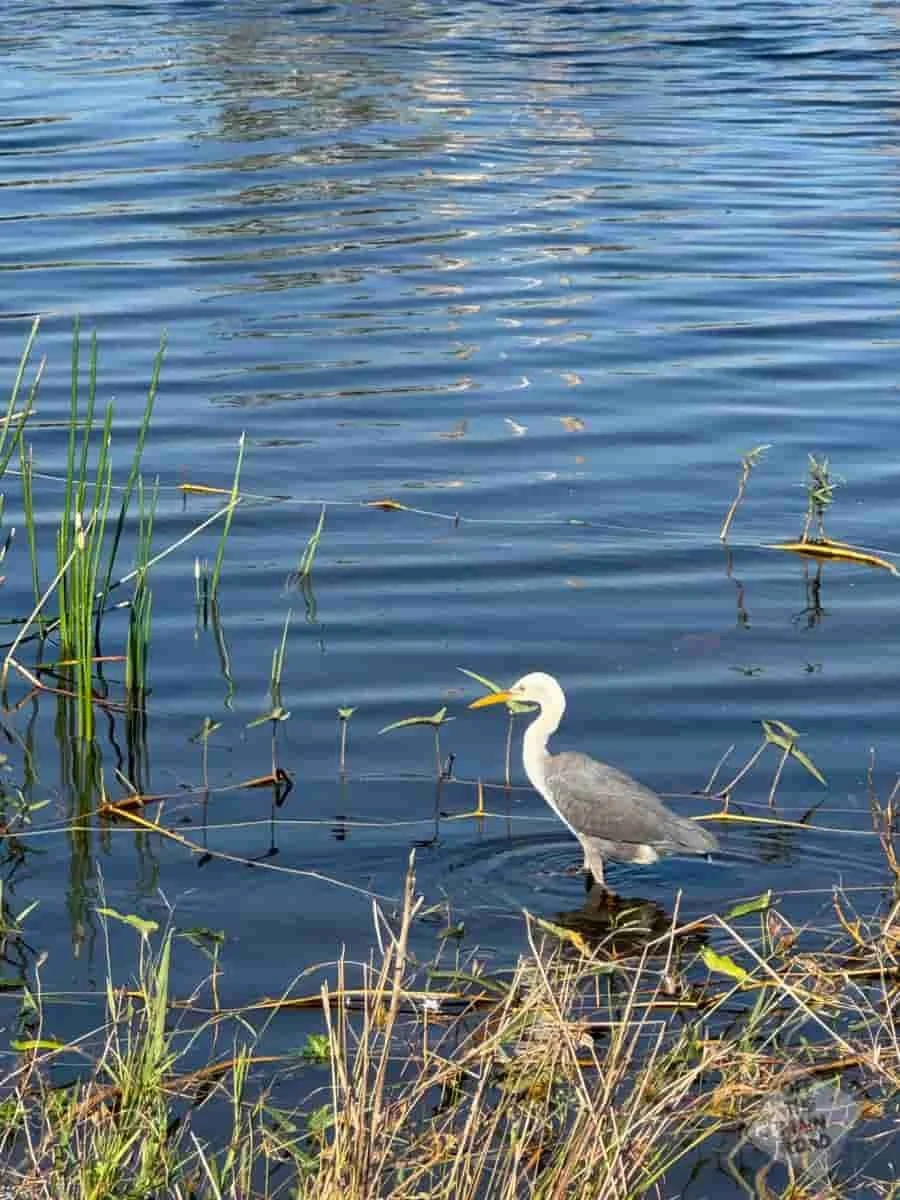
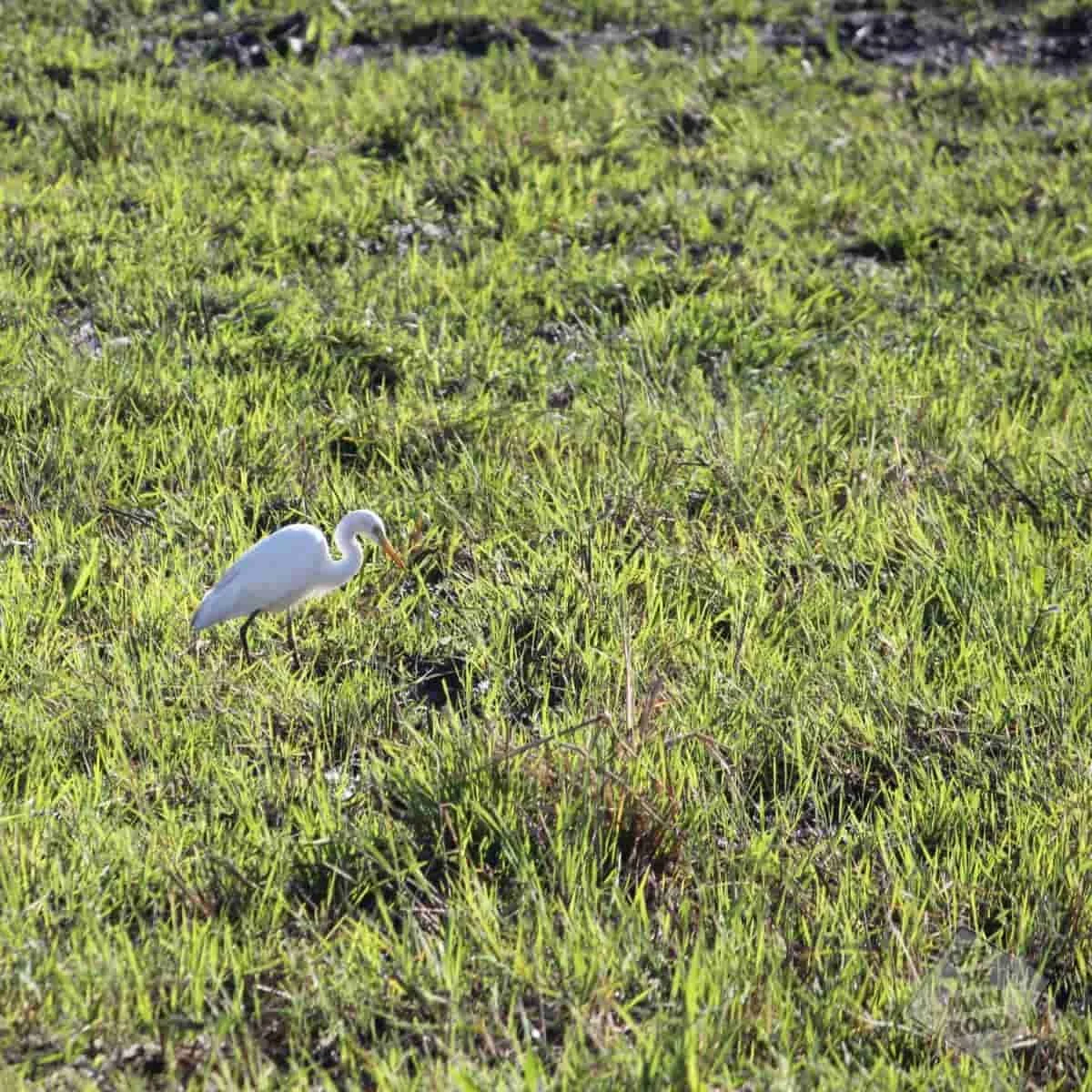
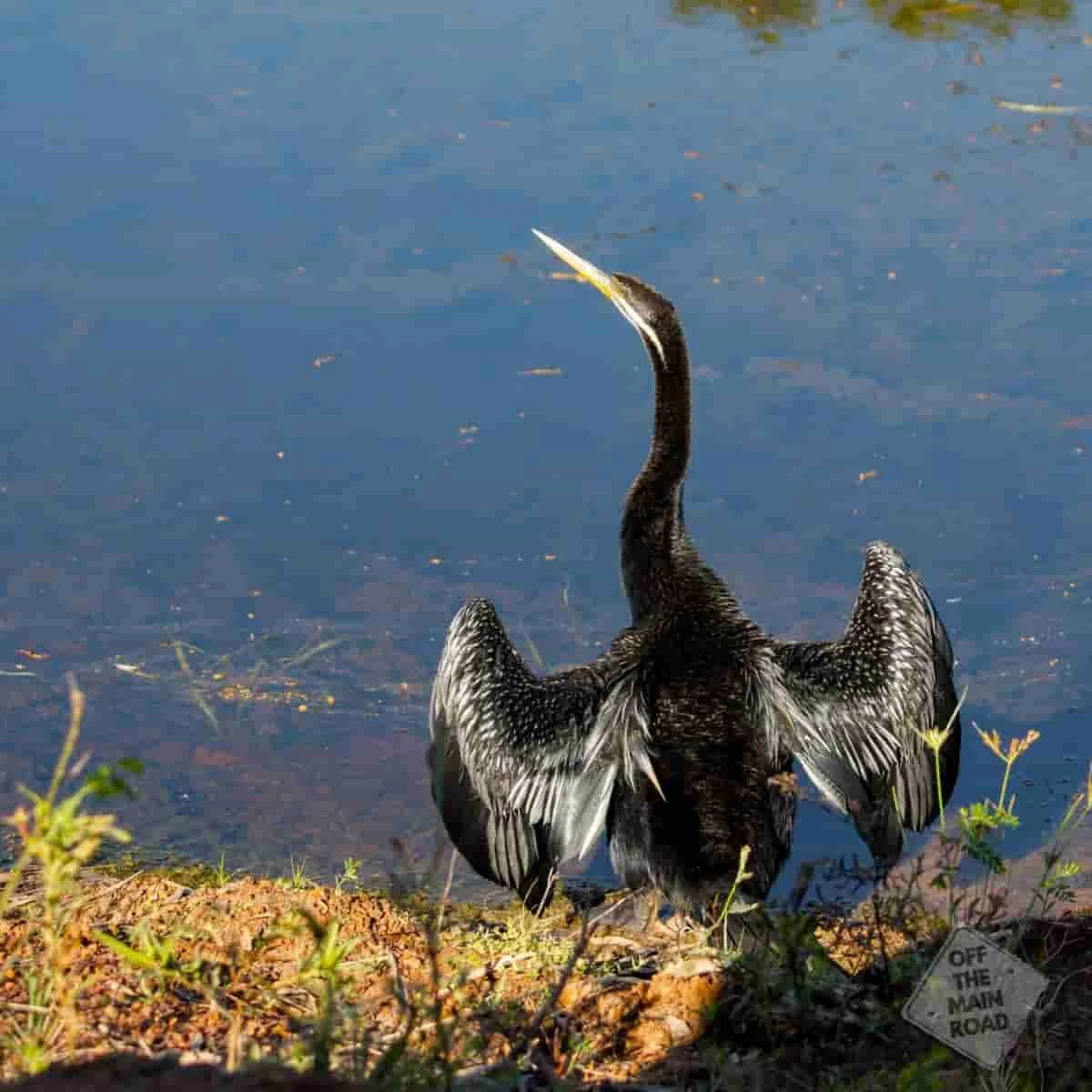
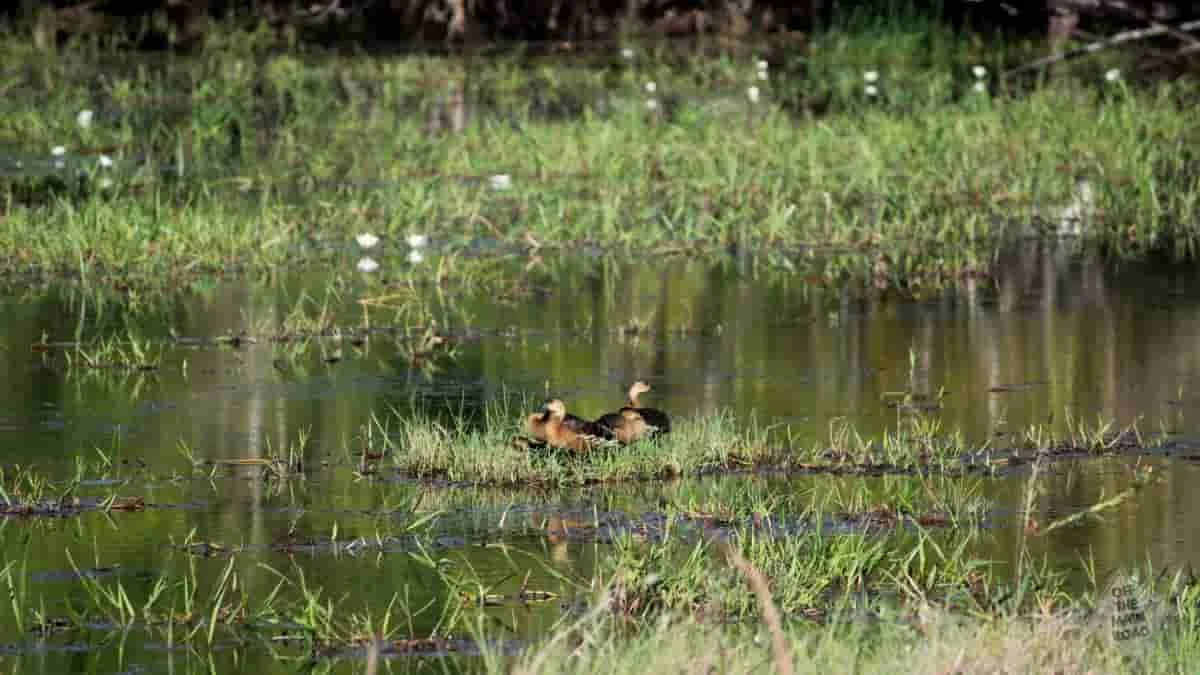
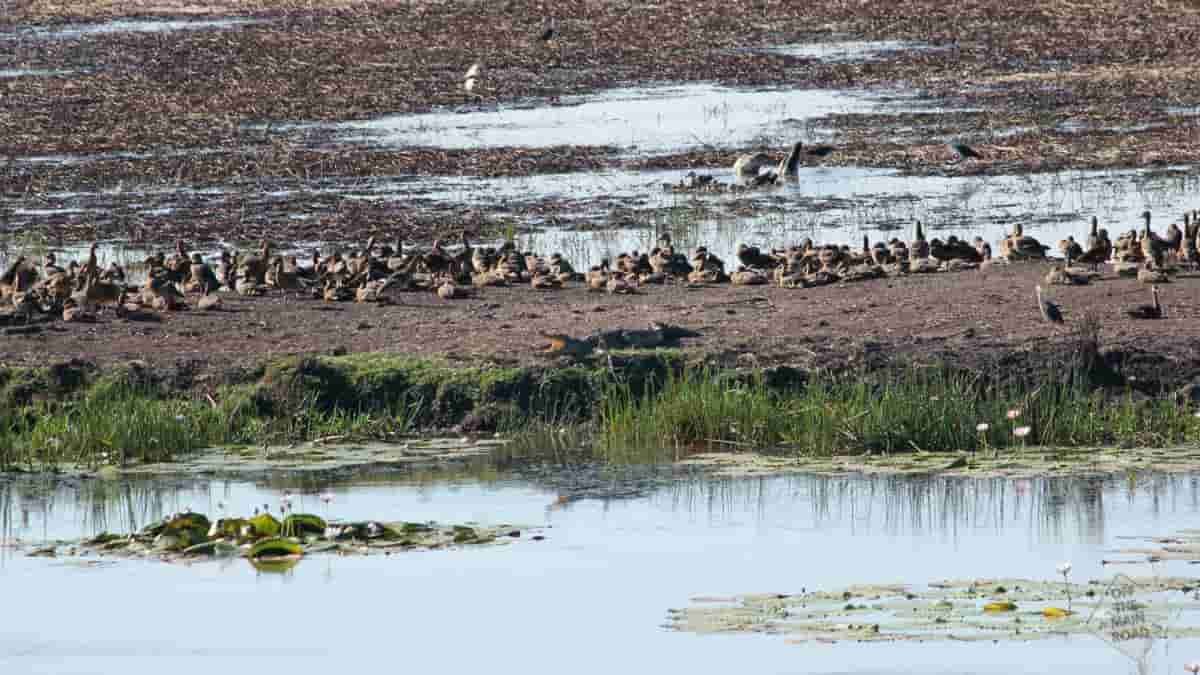
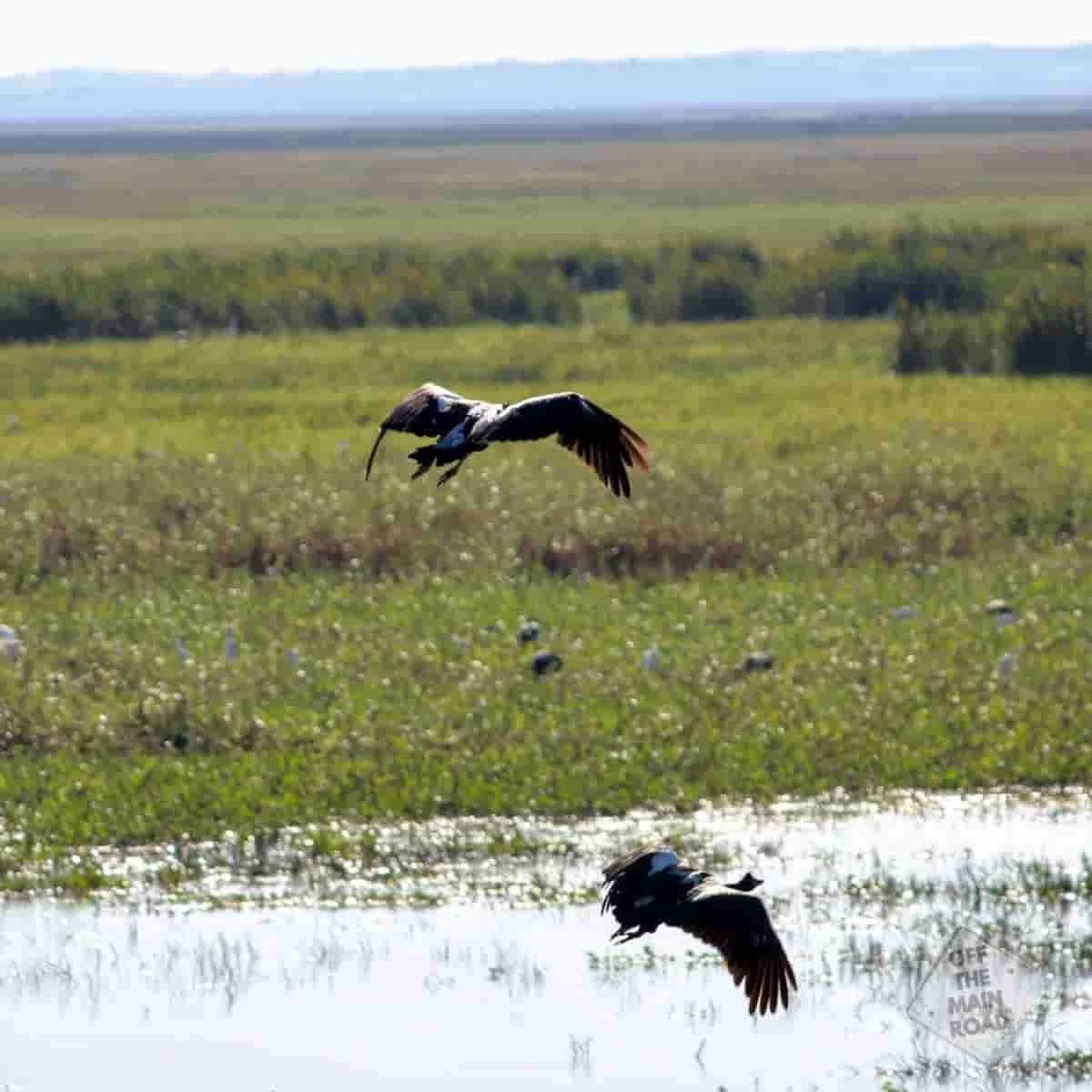
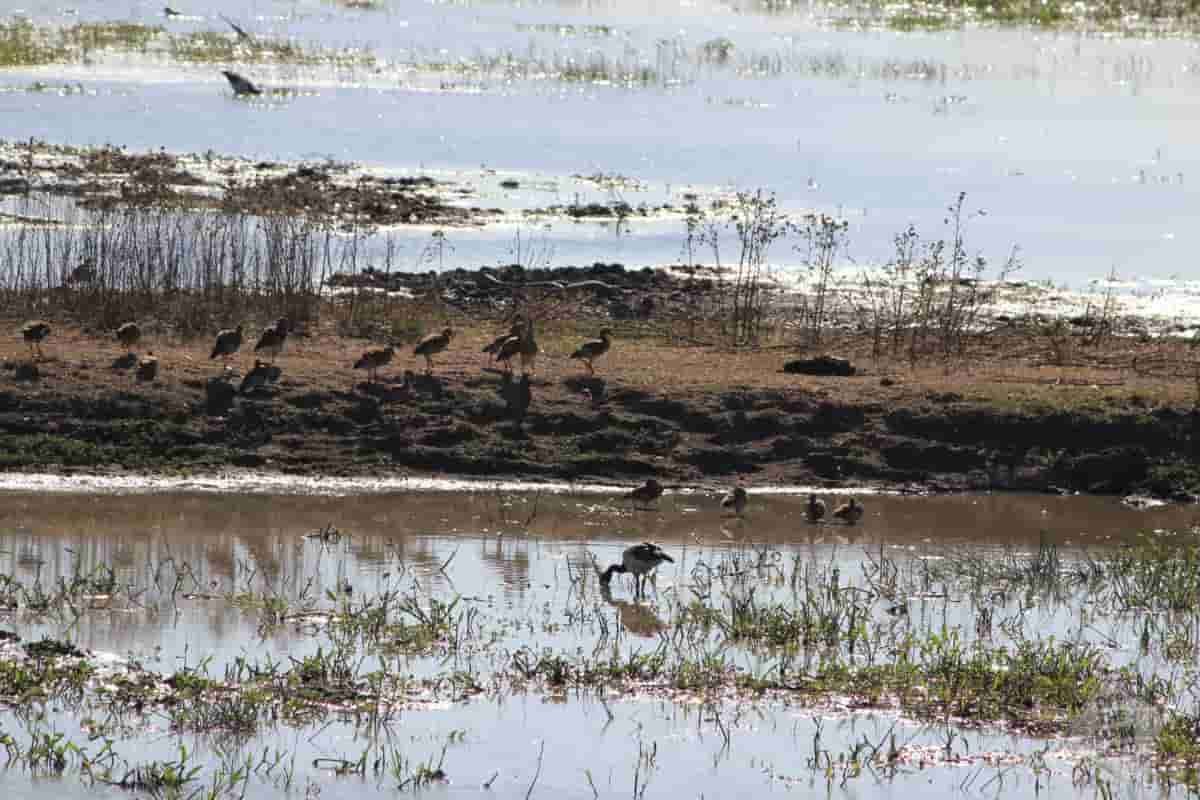
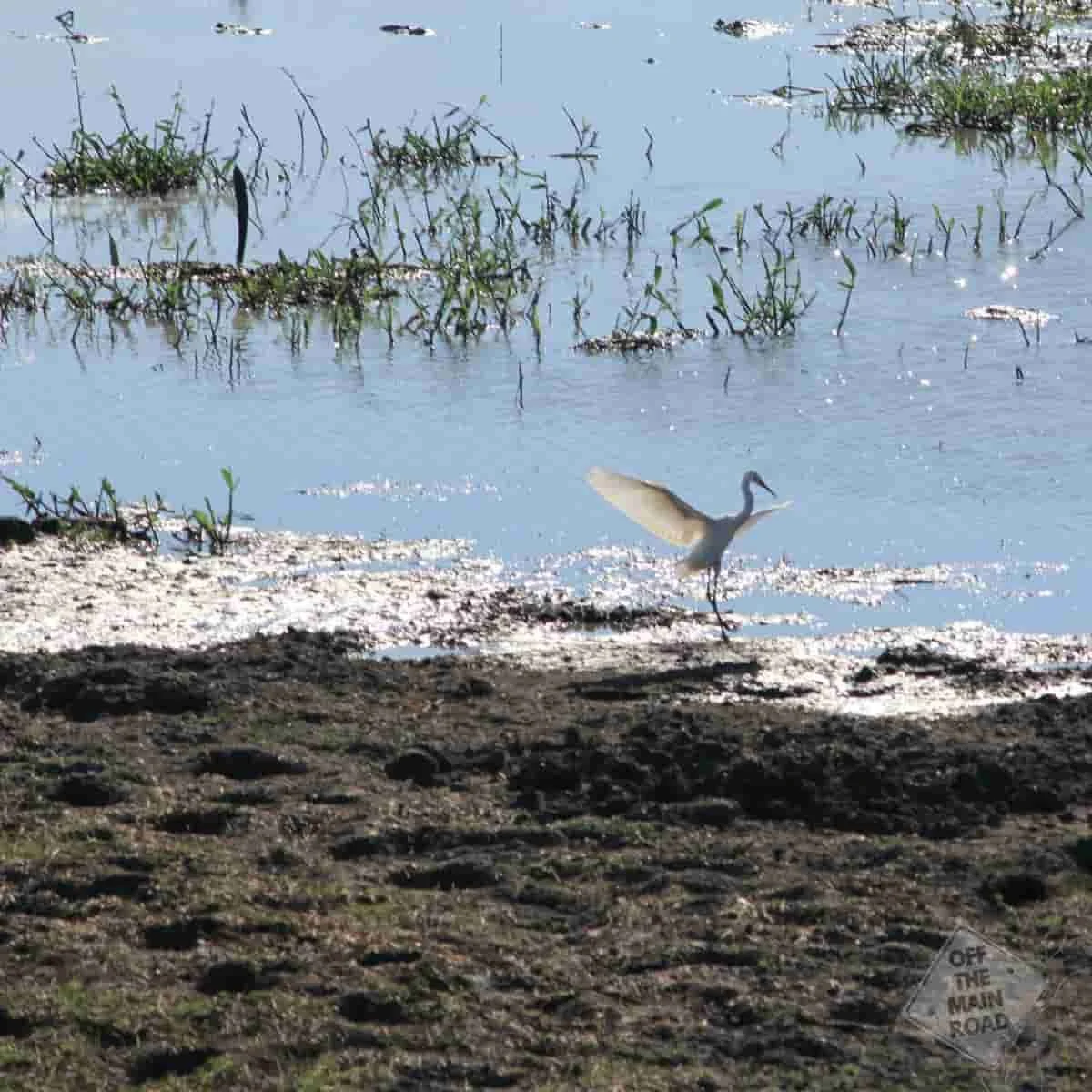
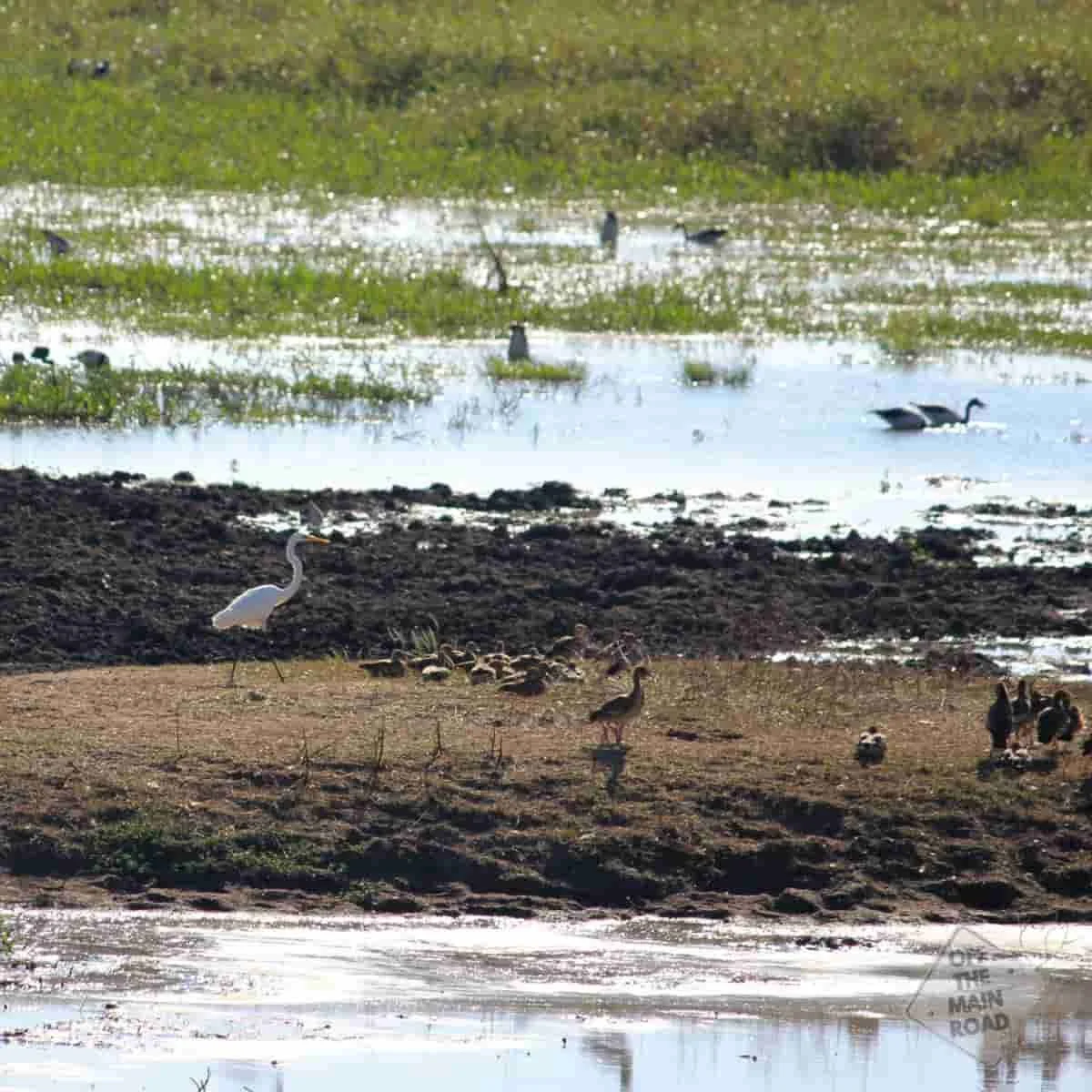
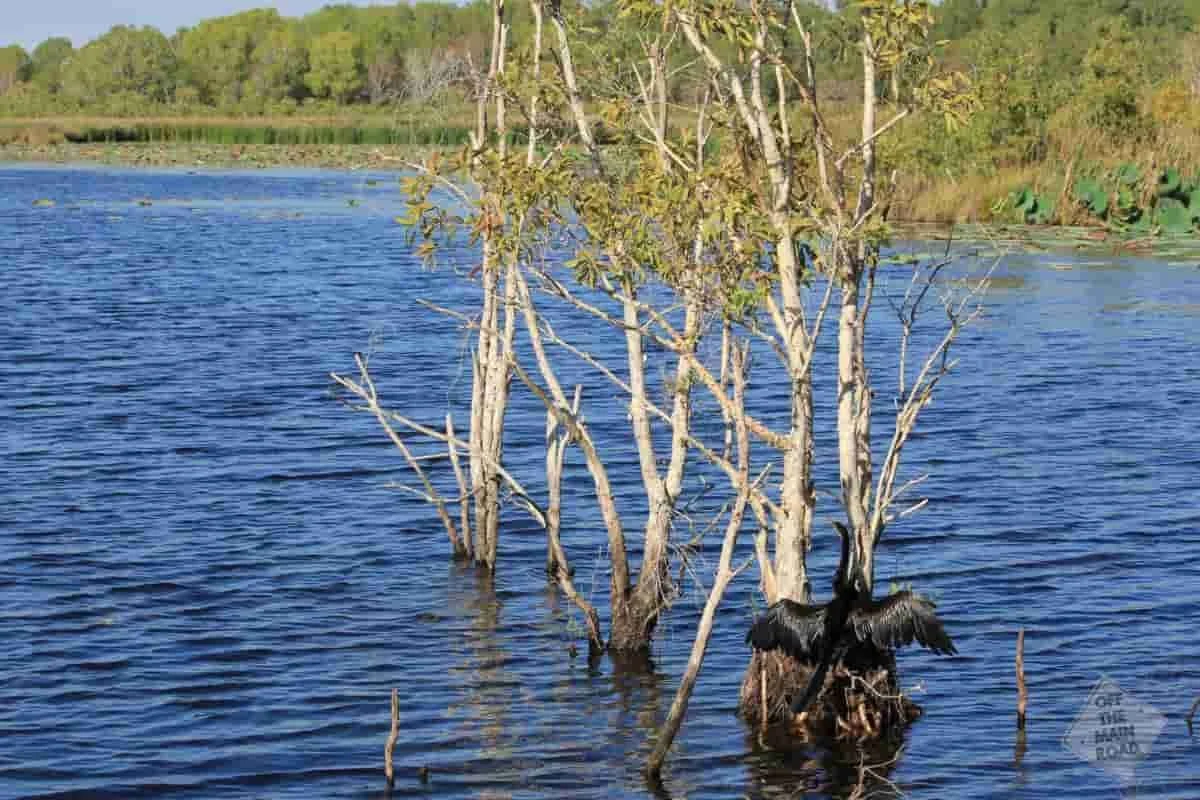
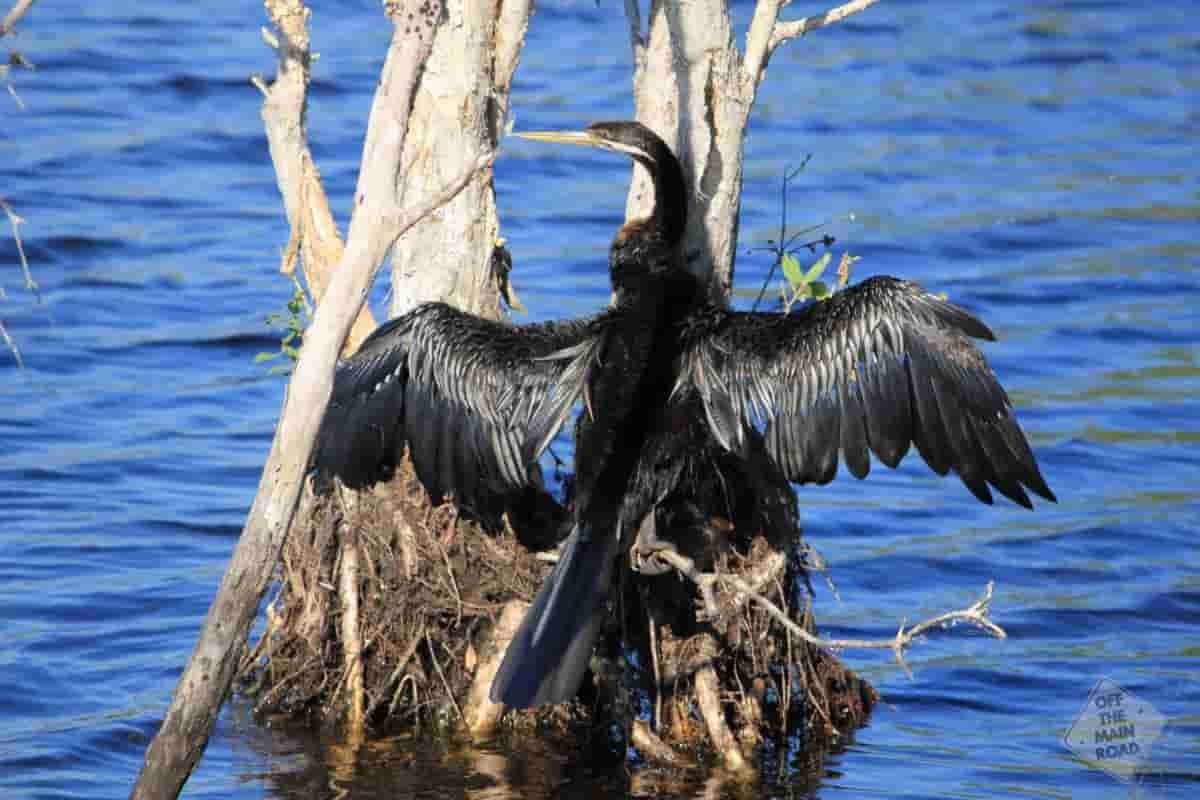
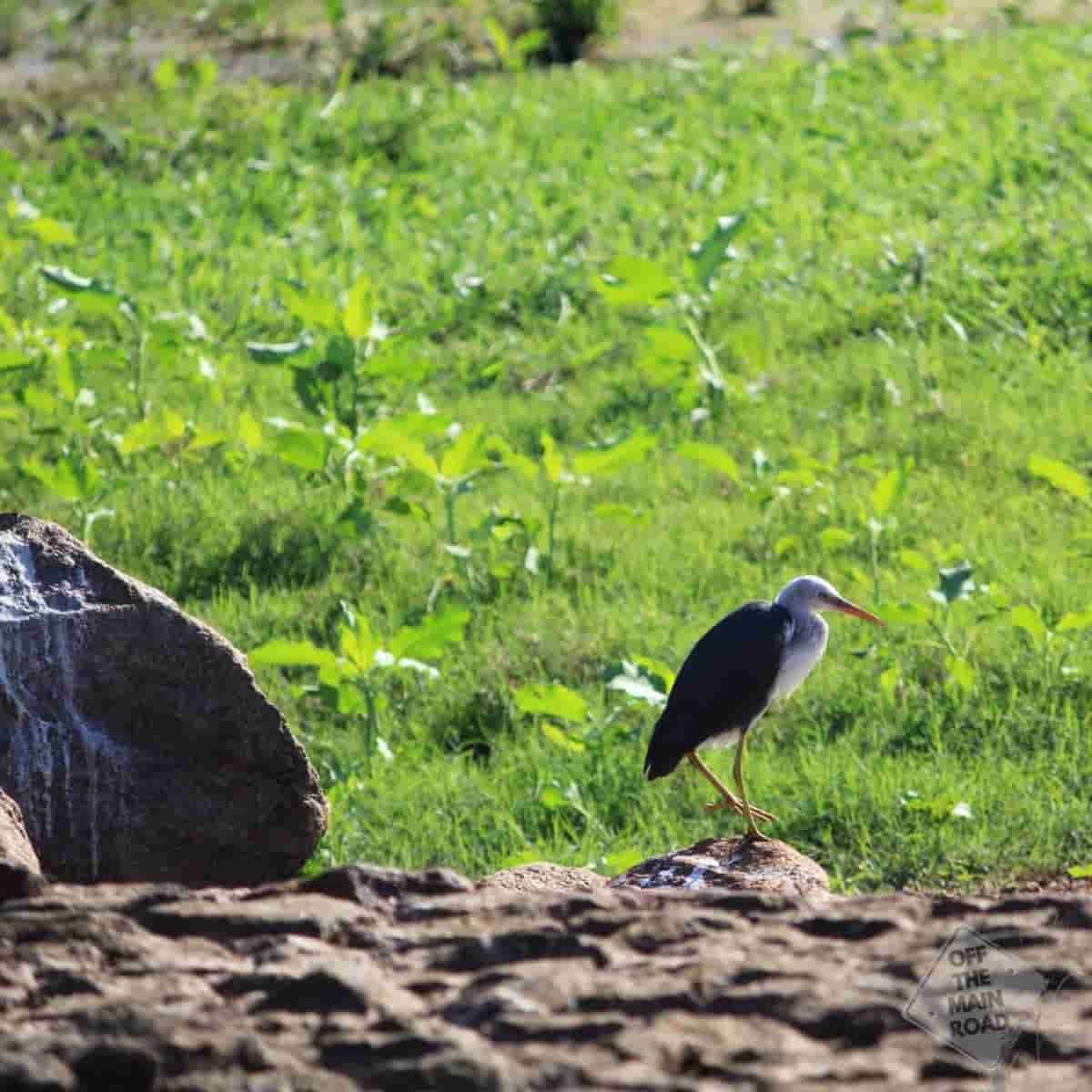
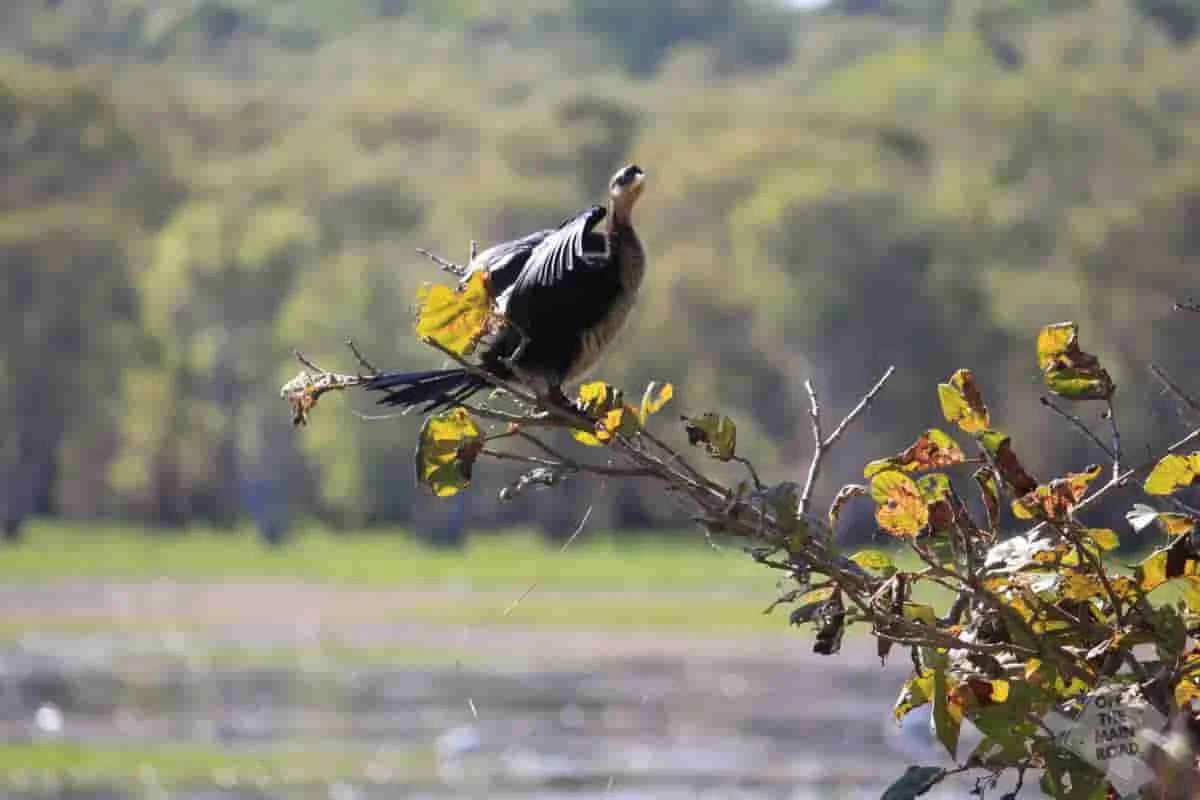
The birdlife was the first thing to stop us. Egrets and herons stalking the shallows, jacanas trotting across the lily pads on those ridiculous long toes, ibis, cormorants, and, somewhere out over the floodplain, hidden from us, a jabiru, Australia’s only stork. Cameron’s new copy of Birds of Australia earned its place in the day, coming out every few minutes as we tried to put names to what we were seeing. There is a particular satisfaction in flipping to the right page and going, there, that one, that is what that is.
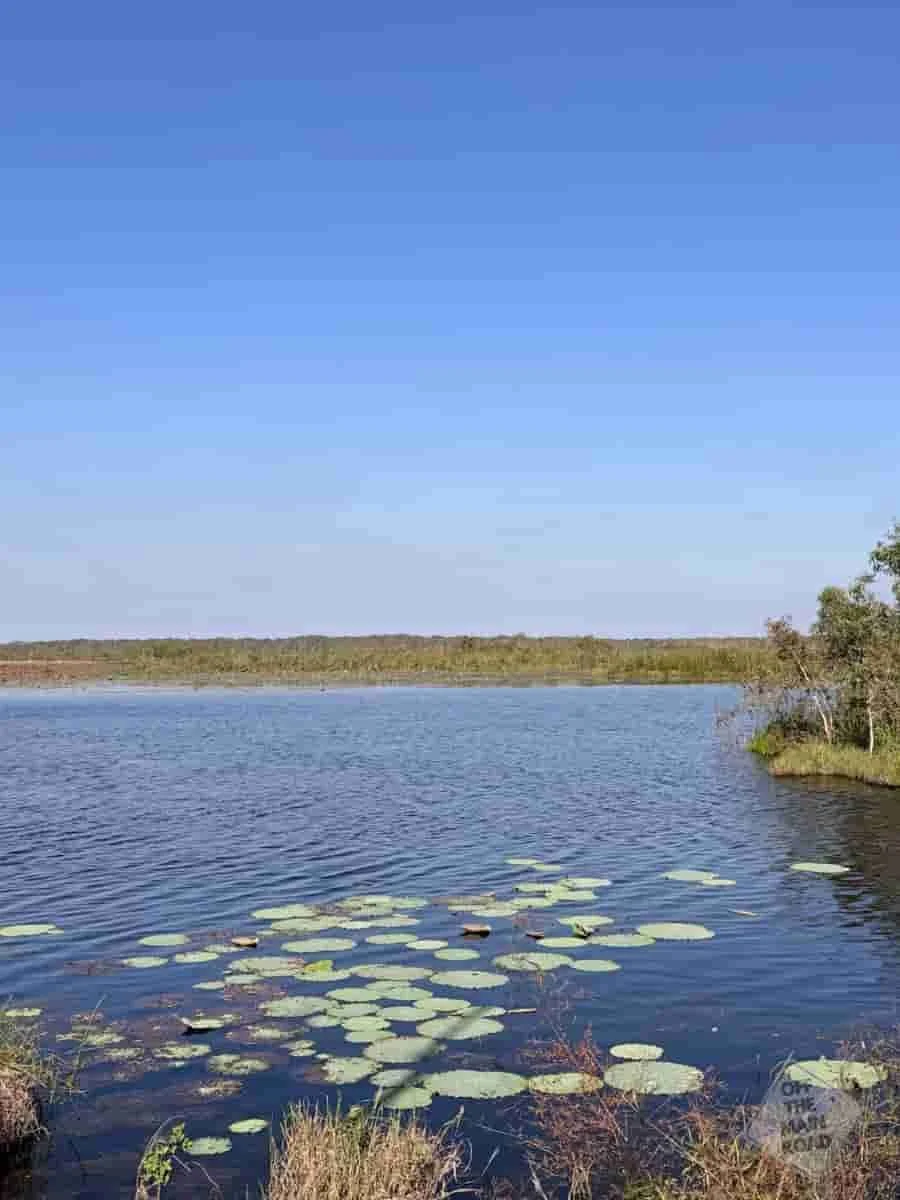
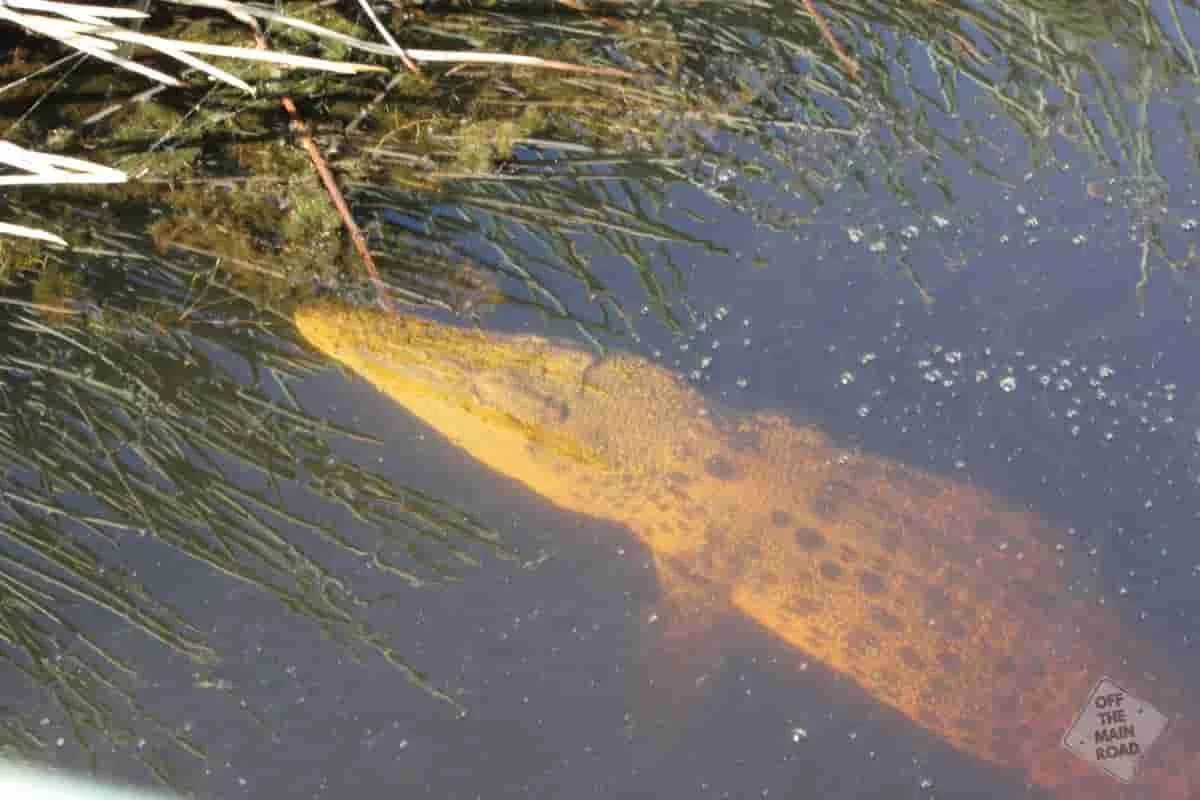
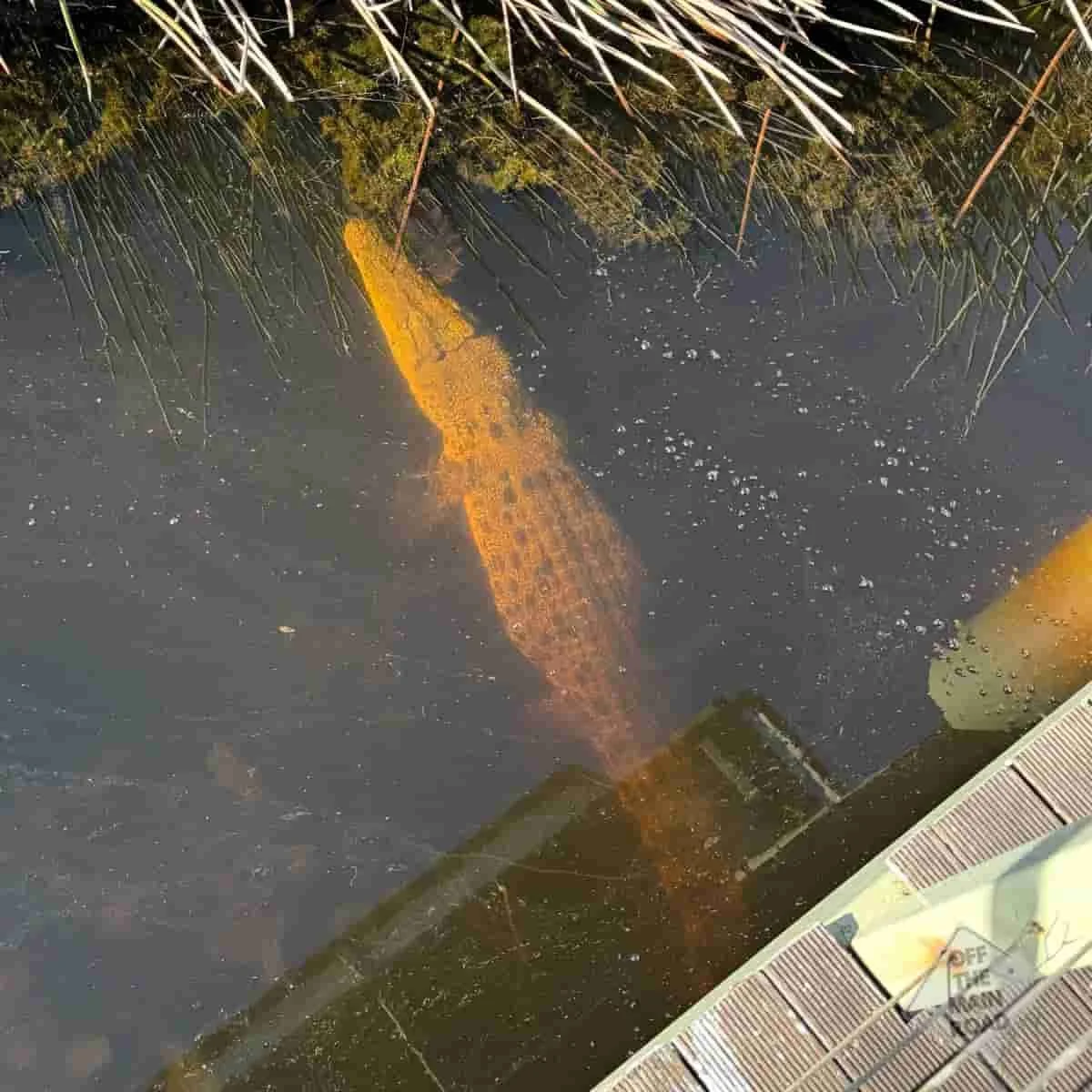
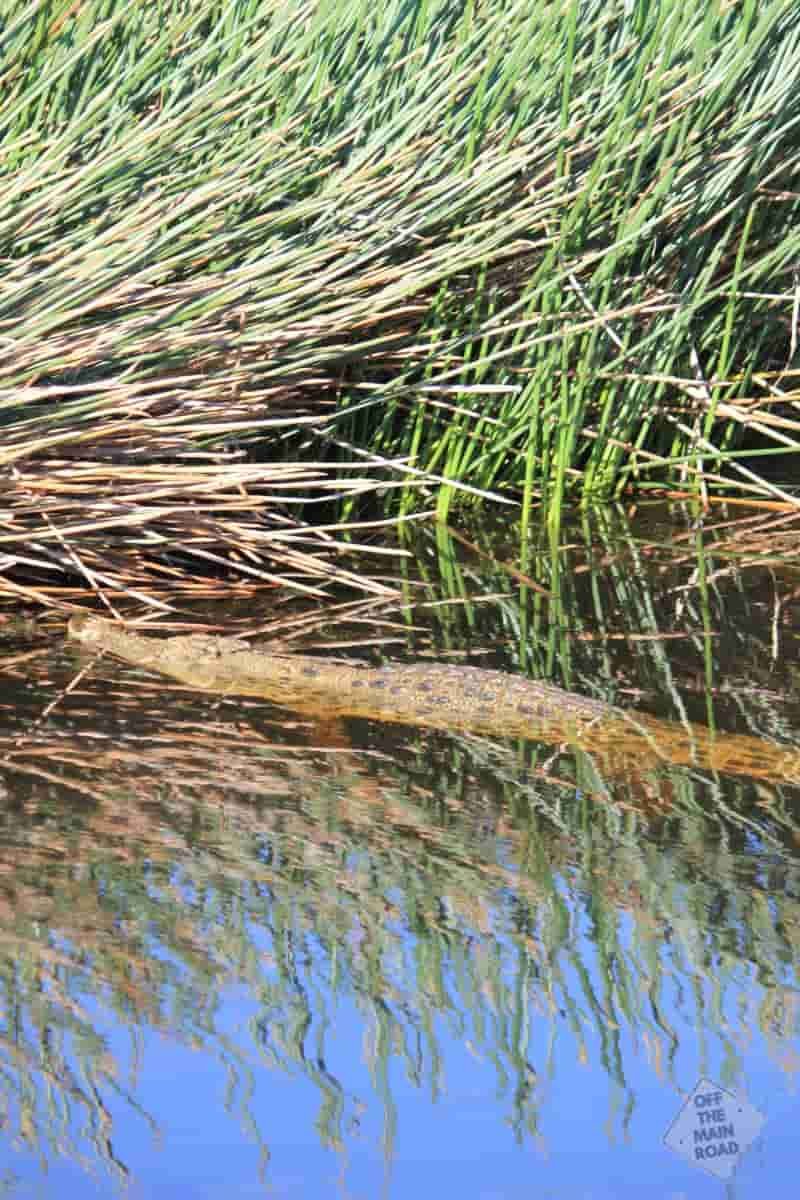
And then the crocodiles, which is where Fogg Dam stops being a gentle birdwatch and reminds you where you are. We spotted a freshwater croc first, small and sleepy, chilling just under the water, the sort you can look at with mild affection. The two salties were another matter. You do not look at a saltwater crocodile with affection. You look at it with respect and a firm intention to stay in the vehicle. The dam wall here is officially closed to walking for exactly this reason, and the signs are not subtle about it.
Which brings us to the tourists. Partway along, we came upon a couple who had decided the closed dam wall looked like a nice spot for a stroll, out on foot, right beside the water, precisely where the salties live. We pulled up and had a quiet word, pointed out the closure signs and the very good reason for them, and turned them gently back toward their car. They had no idea. We would rather be the ones who told them than read about it later. Consider it a public service, delivered before nine in the morning.
We had timed our run well right up until the moment three tour buses arrived at once, and the quiet morning became a car park. That is the risk out here, and the argument for getting in early. We had already had the best of it, so we were happy enough to hand the place over and move on.
There was one more thing that caught our Neil’s attention on the way. Out along the Arnhem Highway near Humpty Doo stands a great circular array of radio masts, the Humpty Doo transmitting station. Neil, who cannot drive past an antenna farm without wanting to know what it does, had questions, so we looked it up. It turns out to be a Navy site, built in 1982 after Cyclone Tracy wrecked the old transmitting station closer to Darwin. It is still going, still owned by Defence, and it is the transmitting half of a high-frequency communications system that reaches out across the north. All those masts, humming away in the scrub, sending signals over the horizon while the egrets fish in the shallows next door. The Top End is full of these odd overlaps if you keep your eyes open.
If you like a stop where the wildlife outnumbers the people, our Travel Dispatch is full of them. You can sign up HERE
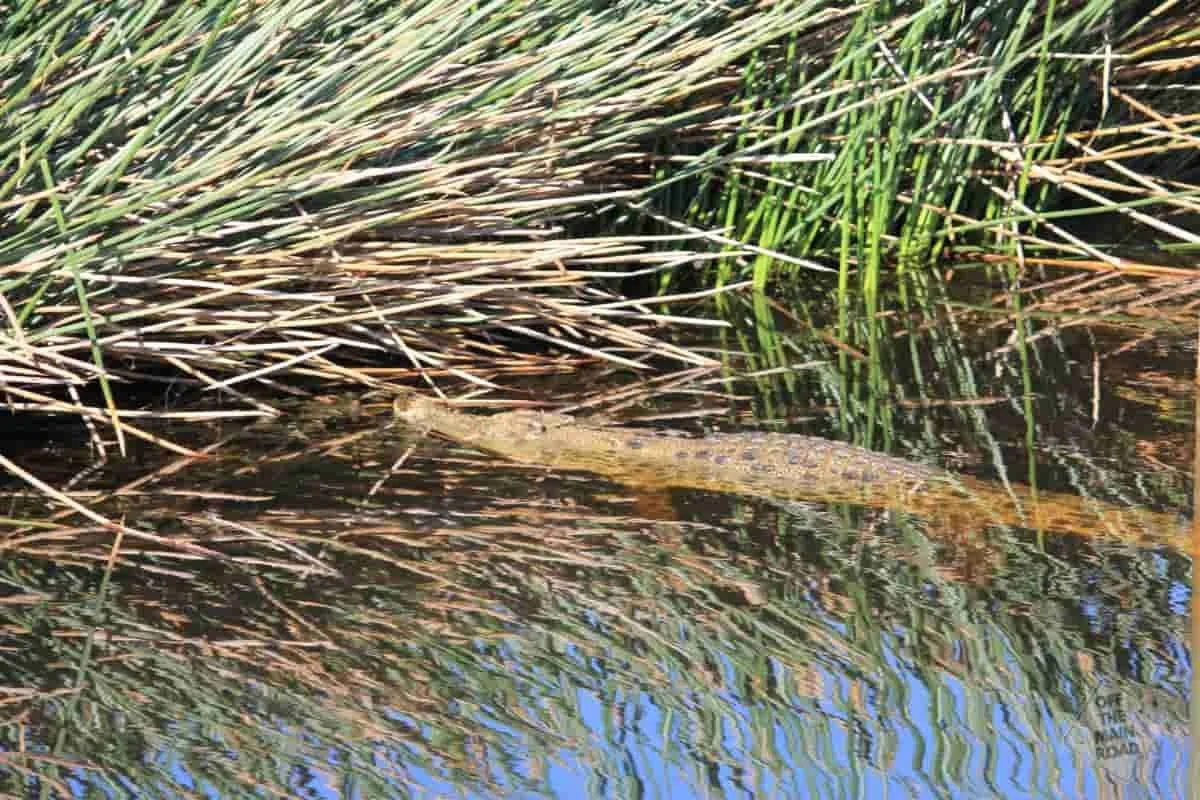
Fogg Dam Conservation Reserve
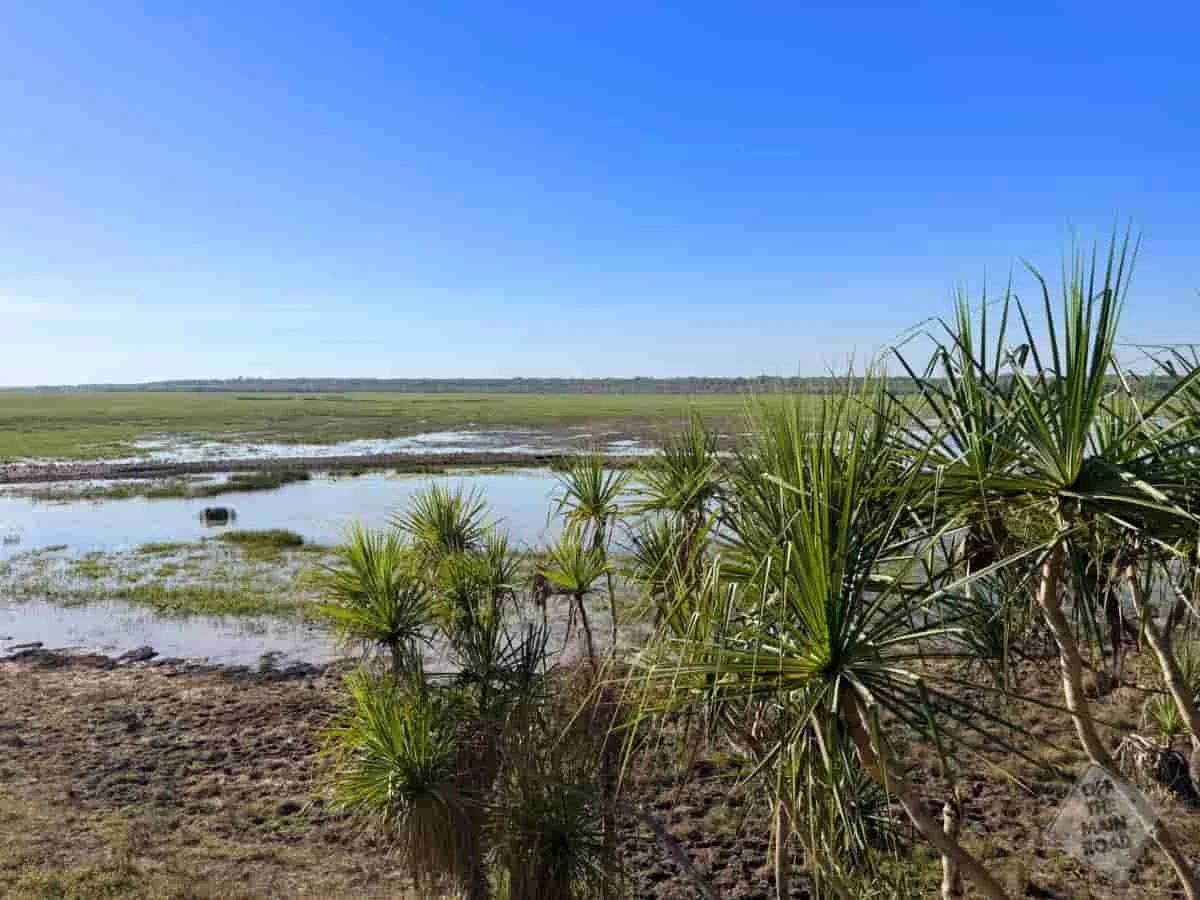
Fogg Dam is a wetland reserve on the Adelaide River floodplain, about 70 kilometres east of Darwin and a short run past Humpty Doo. Built as part of a failed 1950s rice project, it is now one of the most accessible wetlands in the Top End and a renowned birdwatching site, open all year. The reserve sits on the traditional lands of the Limilngan-Wulna people, who are active in its management. A causeway runs across the dam with viewing platforms and bird hides, and there are walking trails through the surrounding monsoon forest and floodplain. The dam wall itself is closed to walking because of crocodiles.
How to Get There
Fogg Dam is an easy day trip from Darwin, roughly 70 kilometres and under an hour by sealed road. Head east out of Darwin on the Arnhem Highway, through Humpty Doo, then turn off onto Fogg Dam Road and follow the signs. The roads are sealed and suitable for all vehicles, and the reserve is open year-round with all-weather access. There is no public transport, though several Darwin-based tour operators include Fogg Dam on wetland and wildlife day trips. An NT Parks Pass is required.
What to See and Do
What we did:
Arrived early to catch the birds at their most active and beat the tour buses.
Watched egrets, herons, jacanas and ibis working the shallows and lily pads.
Spotted a freshwater croc and two saltwater crocodiles from the safety of the vehicle.
Turned a pair of tourists back off the closed dam wall before the crocs got a look at them.
Other highlights nearby:
The Monsoon Forest Walk and the Woodlands to Waterlilies Walk, easy flat trails through the forest and onto the floodplain.
Pandanus Knoll Lookout, excellent at sunrise or sunset over the wetlands.
The Humpty Doo transmitting station, the Navy radio array visible from the Arnhem Highway.
The Adelaide River jumping crocodile cruises, further along the highway.
A Note on the Crocodiles
Fogg Dam is home to both freshwater and saltwater crocodiles, and the saltwater ones are the reason the dam wall is closed to walking. This is not a technicality or an overcautious sign. Salties move silently, travel long distances underwater, and can remain submerged and unseen for extended periods.
The water looks calm, and the lily pads look lovely, and that is exactly the trap.
Stay in your vehicle where the signs tell you to;
Do not walk the closed dam wall;
Keep well back from the water's edge on the viewing platforms;
Do not let children wander toward the water. Be crocwise!
The birds are worth the trip. Becoming a cautionary tale is not.
When to Visit
The birds are at their best from around the end of December through to July, when the water lilies are in bloom and the wetland is full. The dry season, from May to October, gives you easy access and stable weather. Whenever you come, early morning is the golden window: the birds are active, the light is beautiful, the heat is bearable, and you will have the place largely to yourself before the tour buses roll in around mid-morning. Bring binoculars, a bird field guide, insect repellent and dull-coloured clothing, and go slowly and quietly so as not to startle the birds.
Final Thoughts
We turned up at Fogg Dam expecting very little and left thoroughly won over. There is something about a place that was meant to be one thing, a rice farm, and quietly became something far better, a wetland alive with birds and crocs and the low hum of insects. We drove out feeling rather pleased with ourselves, both for the bird spotting (who knew we liked birds!) and for the two people who will never know how close they came to a very bad morning.
What's Nearby
Fogg Dam sits in the rich wetland country east of Darwin, an easy pairing with a run out along the Arnhem Highway. To the west, the road runs back into Darwin and out to the coast at Dundee Beach. Keep heading east and you are on the road to Kakadu. Closer at hand, the Adelaide River cruises and the pubs of Humpty Doo make an easy add-on to a morning at the dam.
We share stops like this one, the wildlife and the quiet corners, through our Travel Dispatch. If that is your pace, you can join usHERE

Berry Springs, NT
📍 Approx 55km West from Fogg DamVisit Territory Wildlife Park at Berry Springs near Darwin. A spacious, walkable wildlife park showcasing Top End animals, ecosystems, and conservation in a calm, family-friendly setting.

Dundee Beach, NT
📍 Approx 137km West from Fogg DamDundee Beach is beautiful — and absolutely not for swimming. Timor Sea sunsets, the tavern, fishing, and what to know before the 120 km drive from Darwin.
Fast Facts
Location: Fogg Dam Conservation Reserve, Adelaide River floodplain, near Humpty Doo, Northern Territory
Distance: About 70km east of Darwin, under an hour by sealed road
Traditional Owners: Limilngan-Wulna people, active in the reserve’s management
Access: Sealed roads, all vehicles, open year-round. NT Parks Pass required
Facilities: Causeway, viewing platforms, bird hides, walking trails, picnic areas. No camping
Wildlife: 200+ bird species, saltwater and freshwater crocodiles, water pythons
Swimming: No. Crocodile habitat
Best Time to Visit: Birds best December to July; early morning any time of year
Dog Friendly: No. Pets are not permitted in the reserve
Things That Could Kill You (Probably Won’t)(or Might)
A semi-serious guide to surviving Australia. Mostly common sense, occasionally luck.
Saltwater crocodiles: The real reason the dam wall is closed. Stay in the vehicle where signed, keep back from the water, and do not walk the wall. This one genuinely could.
Complacency: The water looks calm and pretty. That is the point. No croc in sight does not mean no croc.
Mosquitoes: The wetland teems with them, worst at dawn and dusk. Cover up and use repellent. They carry more than an itch up here.
The heat: Little shade on the causeway. Hat, water, and go early before it bakes.
If this post helped, you can support our work here.

Other updates you may like…




A solo flight to Lady Elliot Island brought a famously short grass runway, an hour in the lagoon, guano mining history, a 150-year-old lighthouse, a communal buffet, and an afternoon among turtles, manta rays and coral gardens.