

The Runways You Drive Past
Most people do a hundred and thirty past them without a second glance. We have done it ourselves, more than once. (Well, 100 in the moho!) You are watching the road, the fuel gauge, the shimmer up ahead, and a flat strip of old bitumen slides by in the scrub with a faded sign and maybe a cut-out aeroplane standing where a real one used to. Then it is gone, and you are thinking about the next fuel stop.
But once you know what they are, you cannot unsee them. Strung along the Stuart Highway up to Darwin is a chain of WWII airstrips, the front line of the air war over northern Australia, and most of them sit close enough to touch as you drive north.
We had passed them a few times before we finally started stopping. This is the story of the two we explored, and the ones we still pass by, adding to our ‘must stop one day’ list.
Why are they here?
After the Japanese bombed Darwin on the nineteenth of February 1942, the thinking was simple and urgent. Keep the aircraft in one place, and one raid could destroy the lot. So the RAAF spread them out. Under the Aerodrome Development Program, strips were carved into the bush all the way down the highway, far enough apart that no single attack could take them all.
They did not mess about. Between 1942 and 1944, more than forty airstrips were built along the North-South road, most of them in the Top End. At first, they were named plainly by their distance in miles from the Port of Darwin. The 27-Mile. The 34-Mile. Later, one by one, the numbers were traded for names, and almost every name belonged to a pilot who had been killed. Drive the highway today, and you are reading a roll call of the dead, dressed up as roadside stops.
Two of them we have properly stopped at. The rest we have watched slide past, meaning to pull over one day, the way you do.
Strauss, the 27-Mile
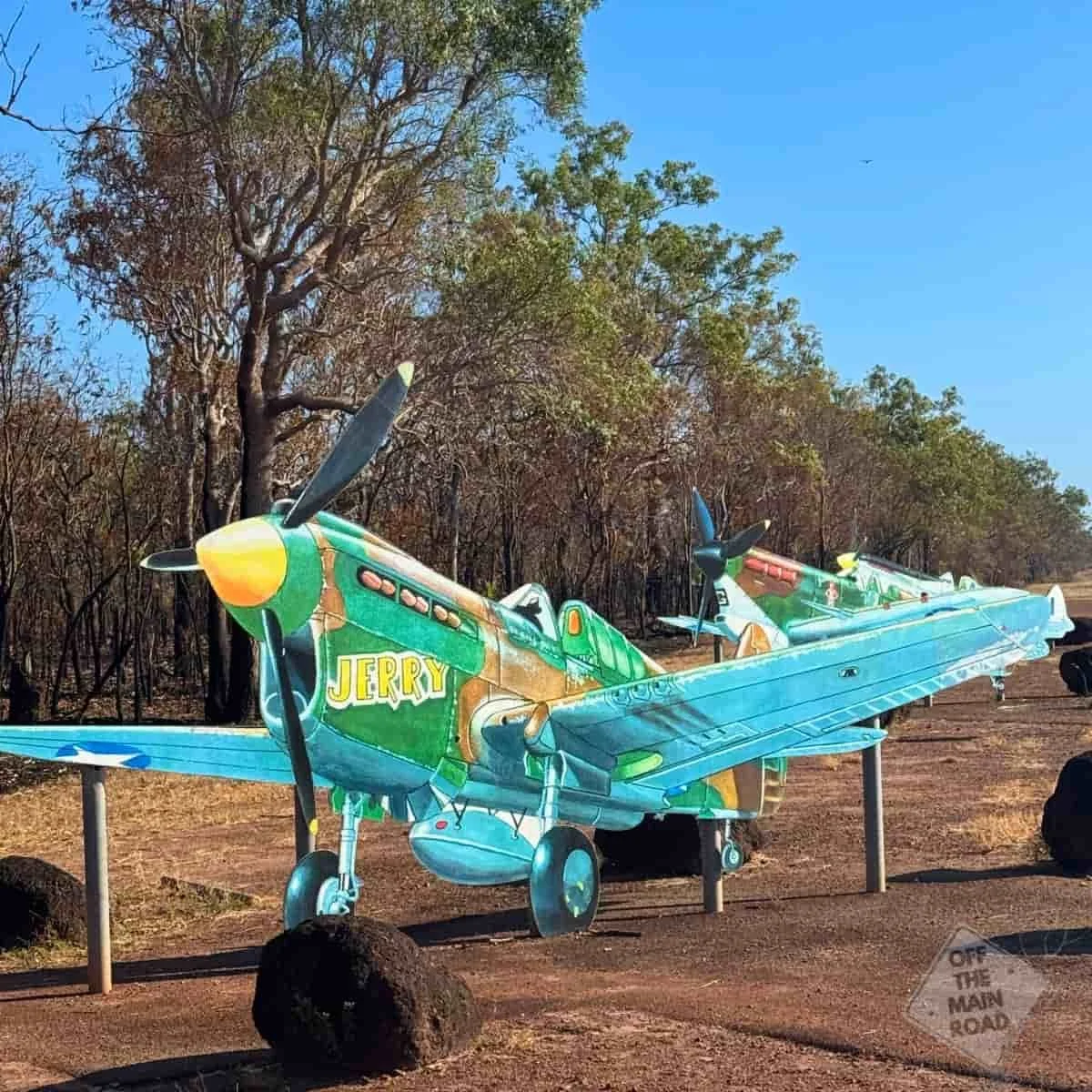
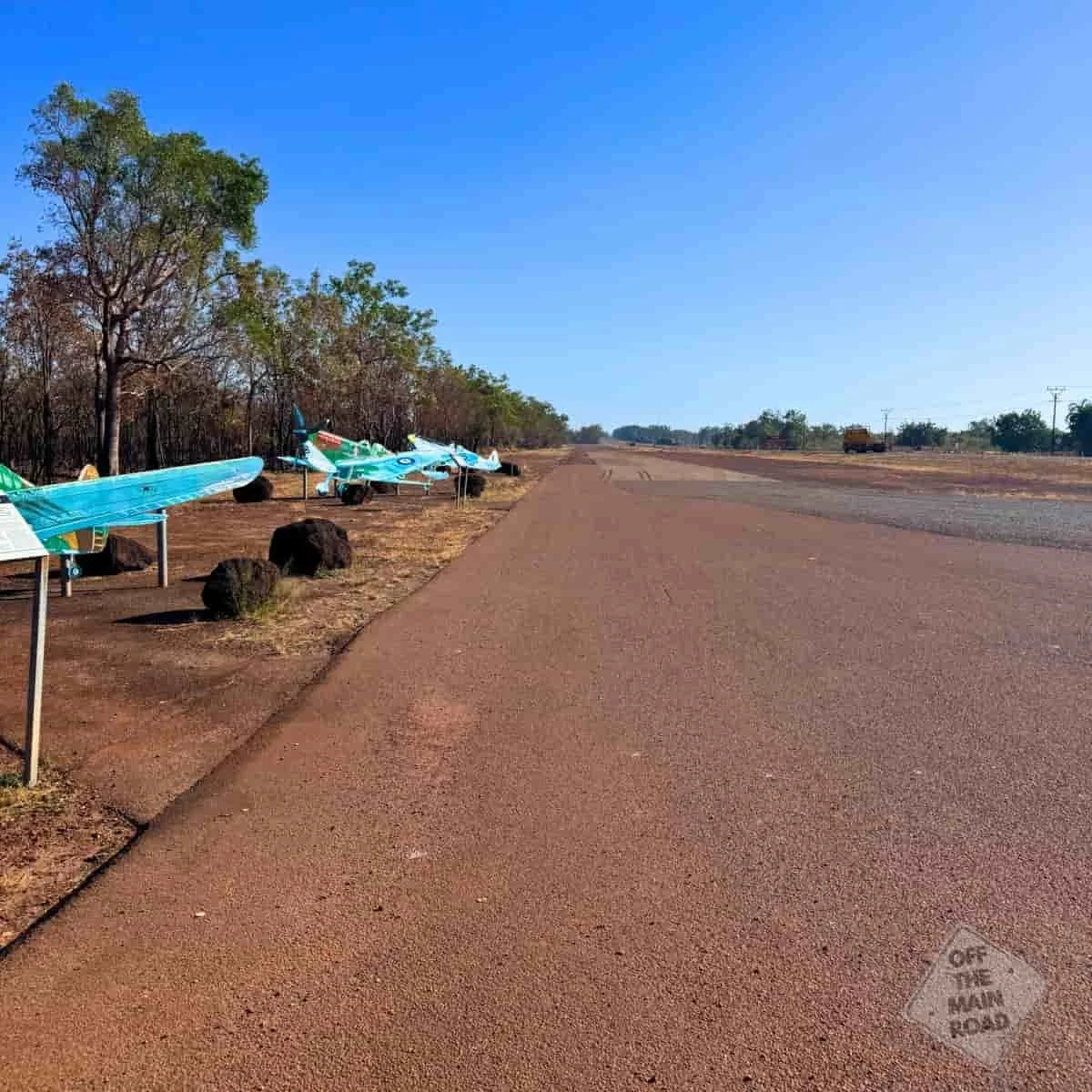
Strauss is the most intact of the roadside fighter strips, and it sits right beside the highway, a short run south of Noonamah, with cut-out planes on the old runway and interpretive boards that are genuinely worth a read.
It was built in a hurry, between March and April of 1942, by the United States Army’s 808th Engineer Aviation Battalion. A single runway, five thousand feet long, with taxiways and dispersal bays scratched out of the bush beside it. It flew American P-40 Kittyhawks first, then RAAF and RAF Spitfires later in the war. Locals also knew it as the 27-Mile, or the Humpty Doo Strip.
The name it carries is Captain Allison Strauss, an American Kittyhawk pilot of the 8th Pursuit Squadron. He was killed over Darwin Harbour during a raid on the twenty-seventh of April 1942. He was twenty-something, a long way from home, and the strip has worn his name ever since. Standing on that quiet bit of bitumen with the road noise behind you, it is hard not to feel the weight of that.
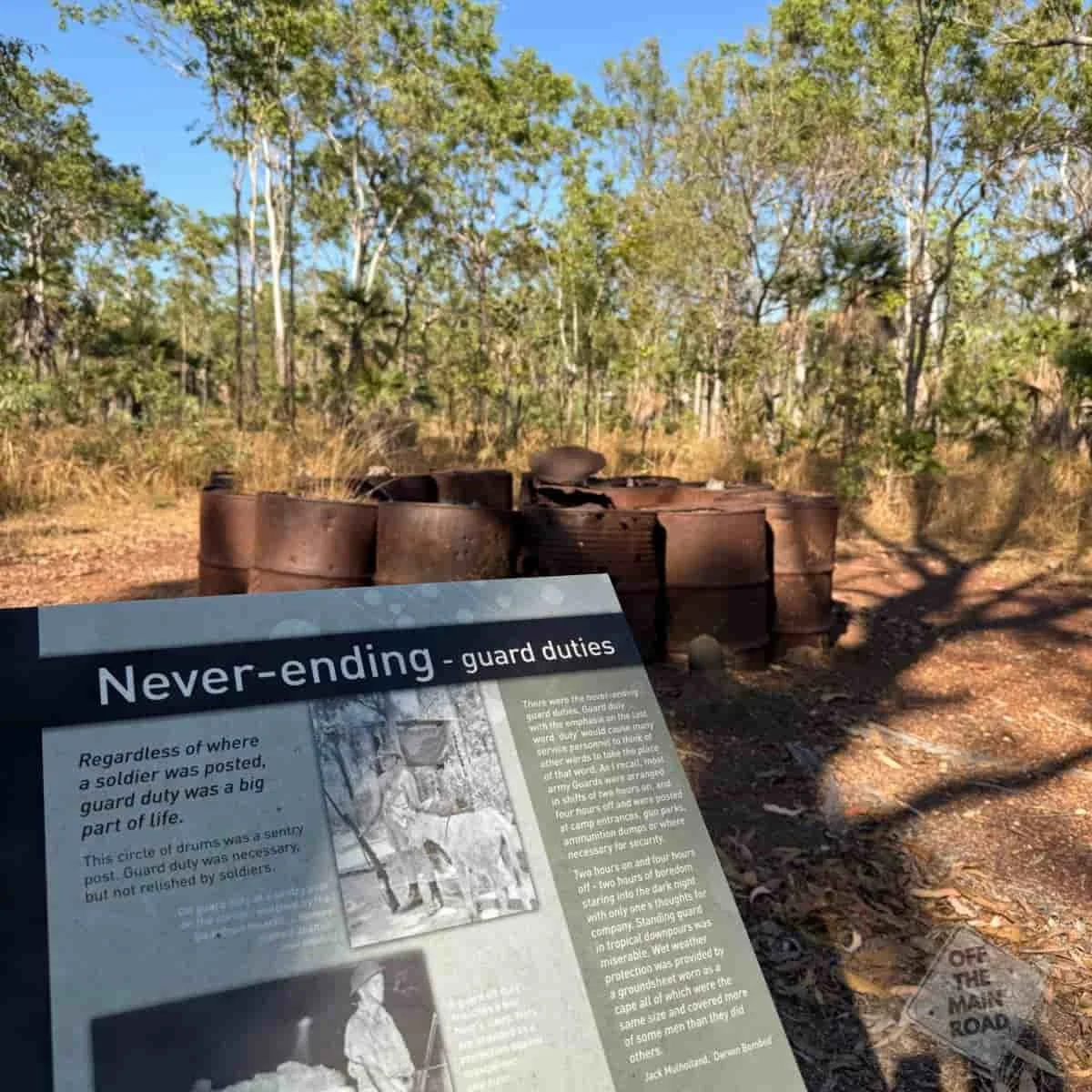
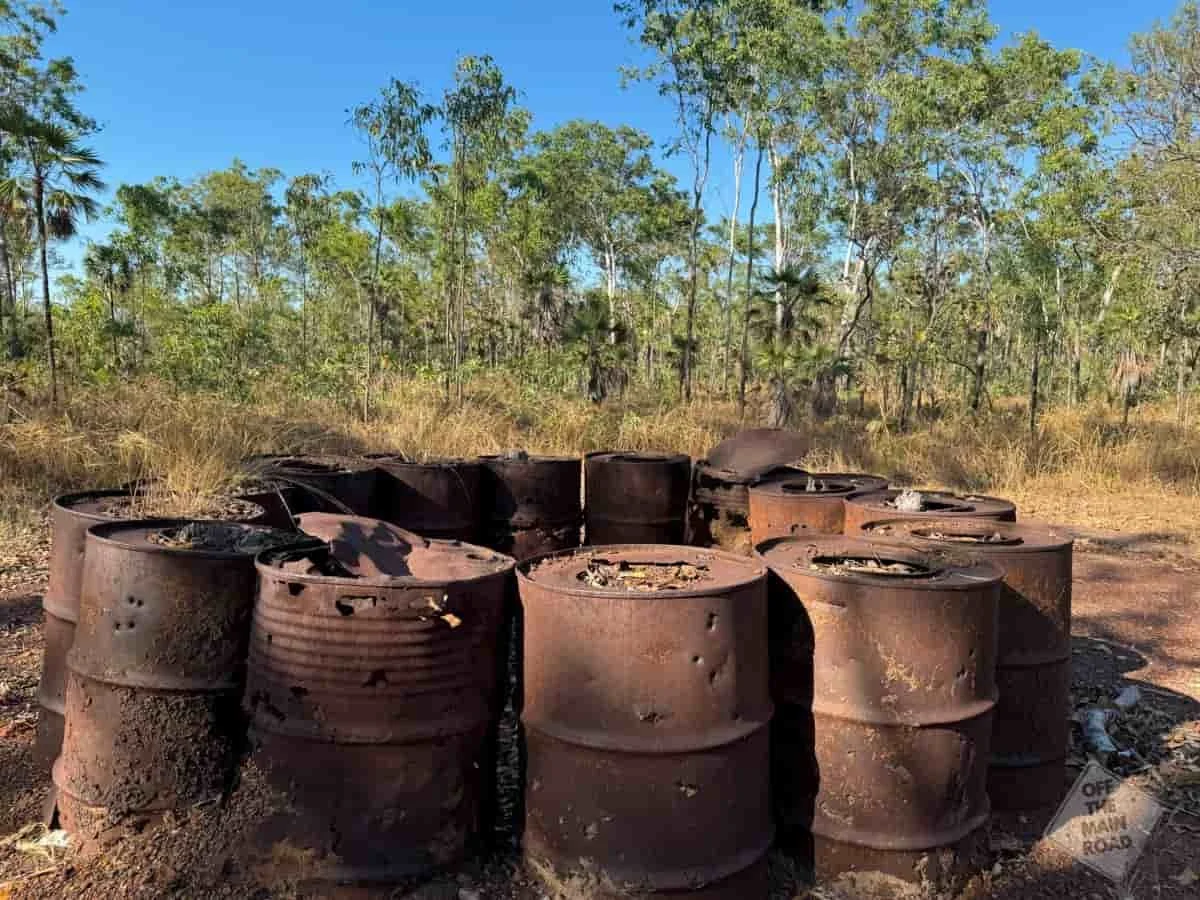
Wander off the strip, and you find the war has not entirely been cleared away. Rows of rusting fuel drums still sit in the scrub, slumped and holed and sloww the colour of the dirt around them, with an interpretive sign nearby explaining the endless guard duty that came with a place like this. It is a small thing, a heap of old drums, but it does more to conjure the war than the cut-out planes do. Someone stacked those, once, and stood watch over them.
Gorrie Airstrip
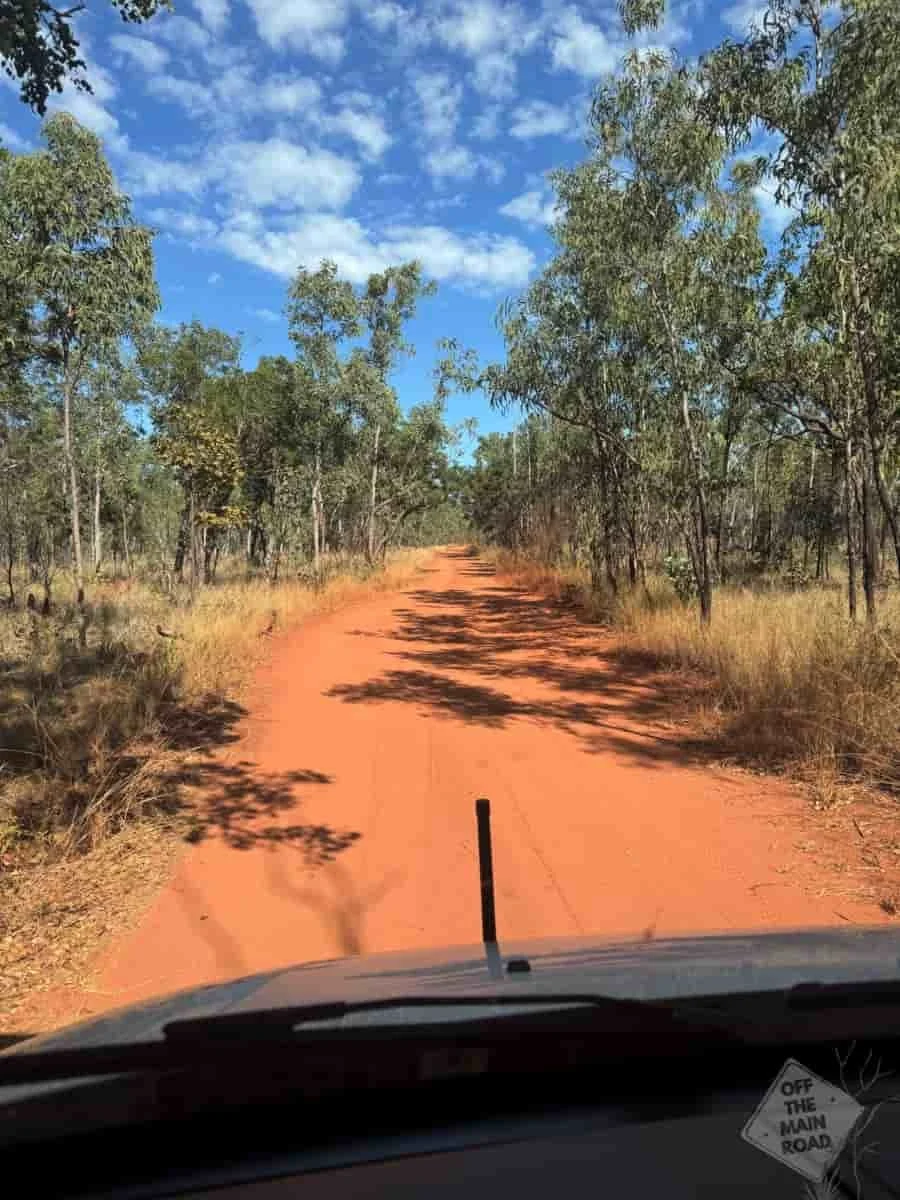
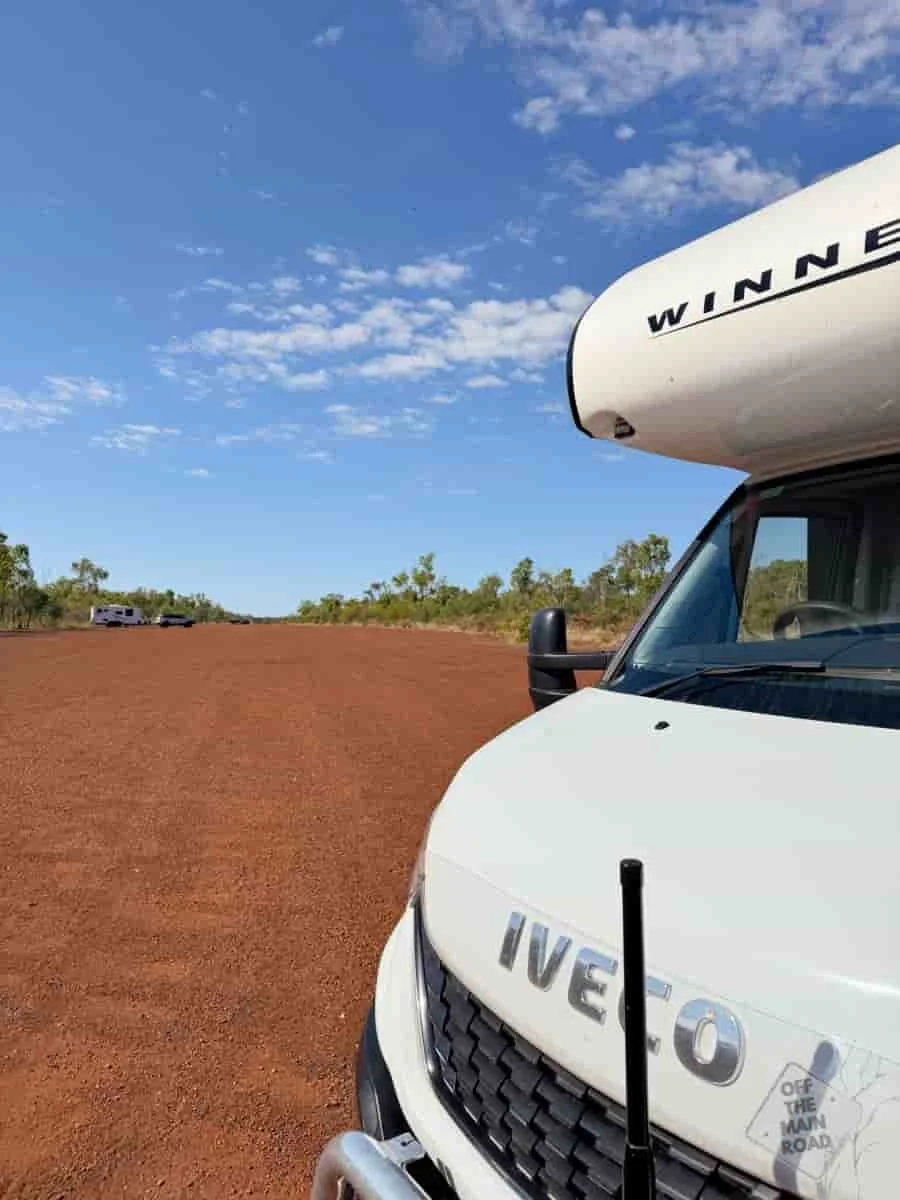
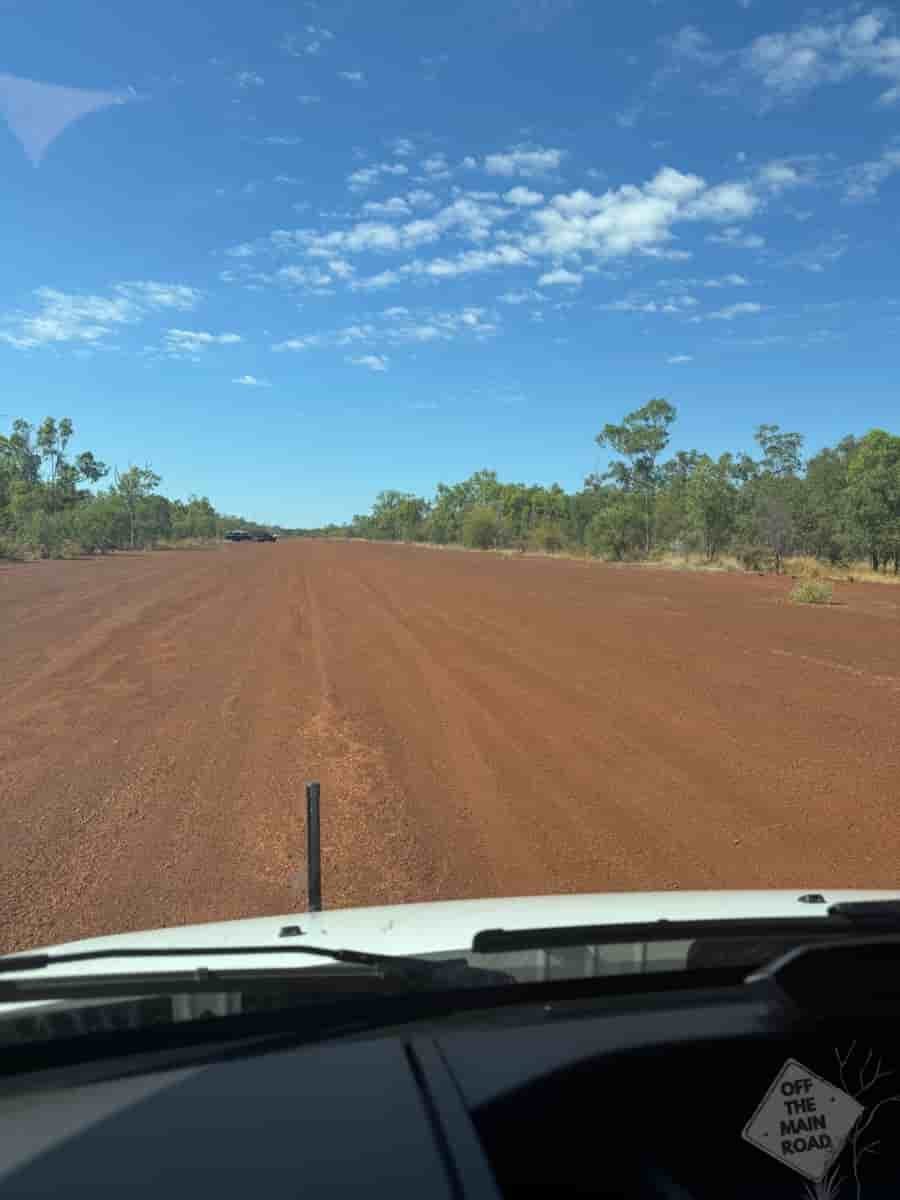
Gorrie is the other one we made the effort for, and it astonishes in a different way. Ten kilometres north of Larrimah, a dirt track runs west off the highway for about a kilometre and then opens out, without much warning, onto a runway. You are suddenly standing on the largest aircraft repair base the Territory had in the war, and by some accounts, the biggest air force base in the country.
At its peak in late 1943, Gorrie held more than six thousand people. It was less an airstrip than a town. There was an open-air picture theatre that seated two thousand, a boxing ring, four tennis courts, and grounds for football and cricket. All of it out here, in a country that today has a pub, a few buildings and a famous pink panther at Larrimah, and not much else. It is named for Flying Officer Peter Gorrie of No. 2 Squadron RAAF, from Peterborough in South Australia, whose Hudson bomber was shot down over the Netherlands East Indies in January 1942. None of the crew was found.
Walk the old runway now, and it is just cracked bitumen, parked-up campers, concrete slabs where the great igloo hangars stood, and a lot of sky. But stand still for a minute and try to picture six thousand people, a picture theatre and a boxing ring.
The ones we haven’t visited yet
Between Gorrie in the south and Strauss in the north, the highway passes a string of others we have driven by but not yet visited. We will get to them.
Hughes was a Hudson bomber base established in May 1942 that survived three air raids without losing a single life. Livingstone, the old 34-Mile, was the first strip finished in early 1942 and took its name from an American pilot, Lieutenant John Livingstone, who crash-landed after a fight over Darwin. Further south, McDonald was built by American engineers who first called it Burkholder, before it was renamed for a Wing Commander killed in 1941. And Fenton, out to the west, was the big offensive base, a piece of America dropped into the outback, launching long-range bombers against Japanese targets through 1943 and 1944.
Each one is a slightly different story. Some are little more than a widening in the scrub now. Others, like Strauss and Gorrie, have been looked after. All of them were loud, crowded places once, and all of them are very quiet and peaceful now.
Final thoughts
The thing we carry away is not the runways themselves. It is a reminder about the war cemetery at Adelaide River, up the same highway, where a lot of these names are not on signs but on headstones.
It is easy to treat the roadside strips as a nice leg-stretch, a cut-out plane, a photo, and back in the moho. And they are a good stop, genuinely. But they are also the reason a whole generation of young men, Australian, American, British, came to this hot, remote country, and the reason some of them never left it. The strips are named for the ones who did not make it home. Worth pulling over for. Worth reading the boards. Worth a quiet minute before you get back on the road.
What's nearby
These strips thread through the country we have travelled in for months. To the north, the highway runs down to Darwin and out to the coast at Dundee Beach. To the south, it continues toward Three Ways, then either south to Adelaide or west to Queensland. Adelaide River, with its war cemetery, sits right on the road between the two and is well worth the stop for anyone following this history properly.
We share the road as we find it, the quiet history as much as the big country, through our Travel Dispatch. If that is your pace, you can join usHERE
The Stuart Highway Airstrips
The airstrips run the length of the Stuart Highway through the Top End, with more as you get closer to Darwin. They were the dispersal fields of the air war, built to scatter aircraft away from Darwin after the 1942 bombing. Some are now heritage-listed and interpreted with boards and model planes. Others are little more than a widening in the scrub, slowly going back to bush. The two best to visit are Strauss, the most intact of the roadside fighter strips, and Gorrie, once the largest airbase in the country.
How to Get There
The strips sit along the Stuart Highway between Three Ways, at the Barkly junction, and Darwin. You do not need to plan a special trip. If you are driving north to Darwin, you are already passing them. Strauss is the easiest to visit. It sits right beside the highway, a short run south of Noonamah, roughly 45 kilometres south of Darwin, with a car park, interpretive boards, and cut-out planes visible from the road. You cannot really miss it once you are looking. Gorrie takes a little more effort, which is part of its appeal. It is about 10 kilometres north of Larrimah. A signed dirt track runs west off the highway for around a kilometre before opening out onto the runway. The track is fine in the dry but should be left alone after rain, and it is worth checking conditions before you take anything large down it.
What to See and Do
What we did:
Stopped at Strauss to walk the old runway and read the interpretive boards.
Drove the dirt track into Gorrie and stood on the airstrip of what was once the biggest airbase in the country.
Other highlights nearby:
Hughes Airfield, a Hudson bomber base that came through three air raids without losing a life.
Livingstone, the old 34-Mile, the first strip completed and named for an American pilot lost over Darwin.
McDonald and Fenton, further south and west, the latter a major long-range bomber base.
The Adelaide River War Cemetery, on the highway between the strips, where many of these names appear on headstones.
When to Visit
The dry season, roughly May to October, is the time to visit. The weather is stable, the strips are easy to walk on, and the Gorrie track is firm. The wet season brings heat, storms and the risk of a boggy track, and the dirt run into Gorrie in particular is best avoided after rain. Early morning or late afternoon is best for walking the open runways, as they retain heat.
Final Thoughts
The thing we carry away is not the runways themselves. It is the cemetery at Adelaide River, up the same highway, where a lot of these names are not on signs but on headstones. The strips are named after those who did not make it home. Worth pulling over for. Worth reading the boards. Worth a quiet minute before you get back on the road.
What's Nearby
To the north, the highway runs down to Darwin and out to the coast at Dundee Beach. To the south, it continues toward Three Ways, then either south to Adelaide or west to Queensland. Adelaide River, with its war cemetery, sits right on the road between the two and is well worth the stop for anyone following this history properly.
We share the road as we find it, the quiet history as much as the big country, through our Travel Dispatch. If that is your pace, you can join us HERE

Dundee Beach, NT
📍 Approx 100km West from Strauss AirstripDundee Beach is beautiful — and absolutely not for swimming. Timor Sea sunsets, the tavern, fishing, and what to know before the 120 km drive from Darwin.
Fast Facts
Location: Stuart Highway, between Three Ways and Darwin, Northern Territory
Key stops: Strauss Airfield (south of Noonamah); Gorrie Airfield (10km north of Larrimah)
Strauss: Built Mar–Apr 1942; most intact roadside fighter strip; interpretive boards and model aircraft roadside
Gorrie: Territory’s largest wartime repair base; held 6,000+ personnel at its 1943 peak; runway accessible via 1km dirt track (dry season).
Informal, unofficial camping on the old airfield. No facilities, leave no trace.
Access: Strauss is roadside and sealed; Gorrie is a short dirt track, dry weather only.
Best Time to Visit: Dry season, May to October
Dog Friendly: Yes, outdoor sites (on lead)1080 baiting in the area near Gorrie Airstrip, dogs must be kept on lead
Things That Could Kill You (Probably Won’t)
A semi-serious guide to surviving Australia. Mostly common sense, occasionally luck.
The highway itself: Road trains, long distances, wandering stock. The strips are right beside a fast road, so pull off properly and watch the kids and the dog near the bitumen.
The Gorrie track: Fine in the dry, boggy and best avoided after rain. Don’t take the moho down it without checking conditions.
The heat: Open runways, no shade. Hat, water, sunscreen.
Snakes: Old overgrown strips are good snake country. Watch where you step in the long grass.
If this post helped, you can support our work here.

Other updates you may like…











Most people drive through Batchelor on the way to Litchfield. Stop, and you find a miniature Czech castle built by a homesick miner, a Cold War uranium mine, and a wartime airfield with a famous visitor.