
Childers: Heritage, Sugar and a Solemn Memorial
We came into Childers after a quiet night up the road at Miriam Vale, a quaint little town, where the main attractions, if we are honest, were the Big Rock Wallaby and a giant doughnut. We had spent a little time relaxing out of town before heading in, and we were not quite prepared for how busy Childers would be. For a small country town, the place hums, largely because the Bruce Highway runs straight through the middle of it, funnelling a steady stream of travellers down a main street lined with grand old buildings and shady trees.
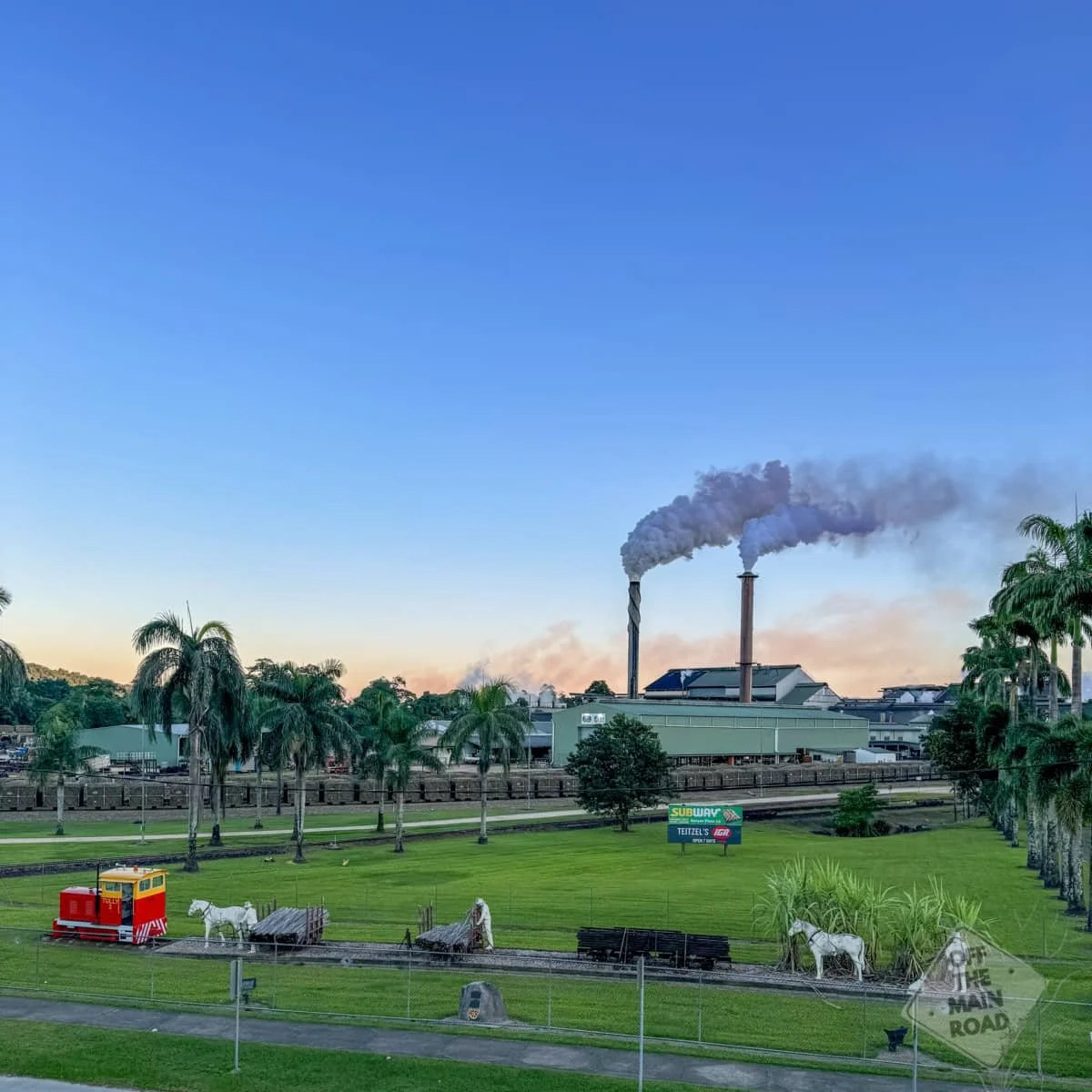
Childers sits on a low rise of rich red soil in the Bundaberg region, surrounded by cane fields, avocado orchards and macadamias. It was built in the 1880s to service the sugar industry, and sugar still shapes it, but somewhere along the way Childers became something more. A genuine heritage town, its main street a near-intact streetscape of early 1900s architecture. Much of Churchill Street is heritage-listed, and it is a lovely place to walk, with iron lacework, parapets and wide, shady awnings. We spent a good while just wandering up and down, taking it in. A fair few places were closed the day we visited, which is the risk with a small town, but the buildings themselves are the attraction as much as anything inside them.
There is a reason the street looks the way it does. In 1902, a fire tore through Childers, destroying most of the south side of the main street. The town rebuilt grandly and quickly, in the styles you see today. That would not be the last time fire marked this town.
The Palace Backpackers Memorial
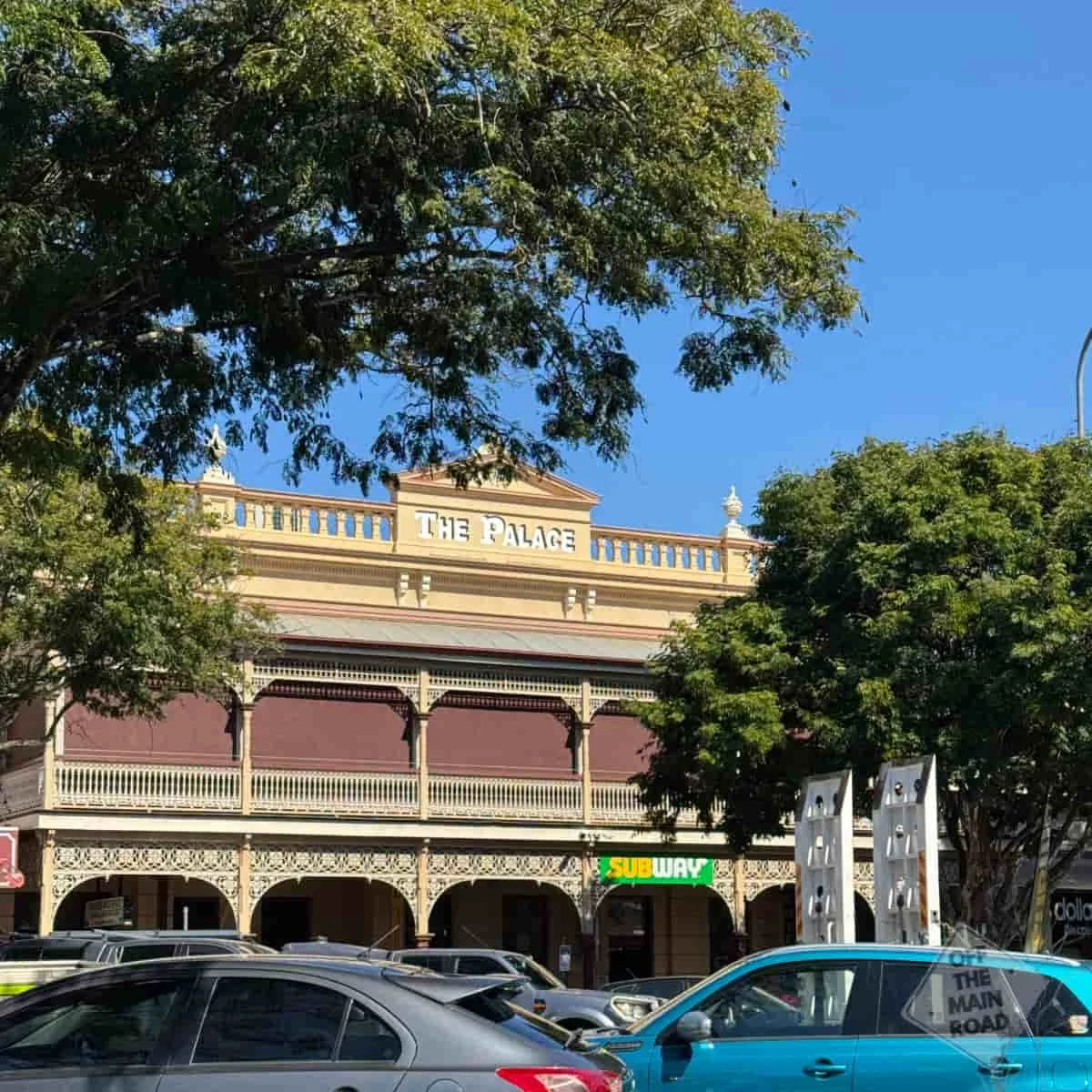
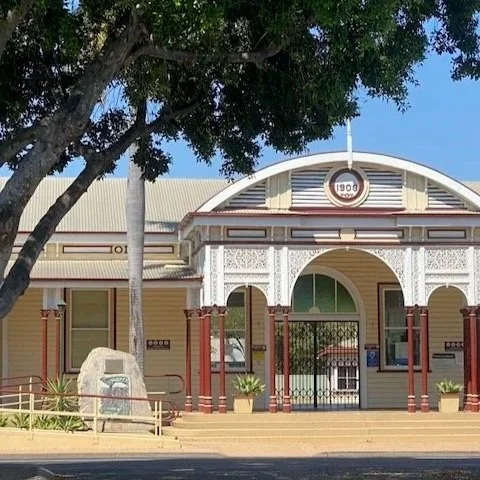
The building that stops you is the old Palace Hotel, and the reason it stops you is not its architecture, though it is a fine two-storey timber and masonry building from around 1902. It is what happened here on the night of the 23rd of June, 2000.
The Palace had been converted into a backpackers' hostel and was full. Most of the young people staying there were seasonal farm workers, harvesting local crops to earn the regional work required by a second-year working holiday visa. Eighty-five backpackers were asleep inside when, shortly after midnight, a fire was deliberately set in the downstairs recreation room. The century-old timber building had no smoke detectors or fire alarms. The fire spread quickly up the walls and into the stairwell, and the power failed, leaving people to find their way out in darkness and smoke.
What happened next is the part worth holding onto. In the chaos, some of the backpackers went back into the smoke, banging on doors and waking as many others as they could before escaping onto the balcony. Because of them, and because of the fire crews and locals who reached the scene within minutes, most of the eighty-five got out. But fifteen did not. Nine women and six men, most of them travellers from overseas, a long way from home, lost their lives that night. It remains one of the worst tragedies of its kind in Australia.
The man responsible, a former resident who had been evicted from the hostel, was later found guilty of arson and two counts of murder and sentenced to life in prison. We will leave him there, because this is not his story. It belongs to the fifteen.
After the fire, the Isis Shire Council took over the gutted building and, working closely with the victims’ families, restored it. It reopened in 2002, rebuilt in its original early-1900s style, as an art gallery and a memorial. Inside, a long glass memorial wall by artist Sam Di Mauro holds family photographs and mementoes, and a large group portrait by Sydney artist Josonia Palaitis, titled Taking a Break in the Field, shows all fifteen young people at rest together in a field, as farm workers on a break. It is a quiet, dignified, deeply moving place, and standing in front of that painting, with the fifteen faces looking back at you, is not something you forget. If you stop in Childers, stop here and give them a few minutes of your time.
What else is in town
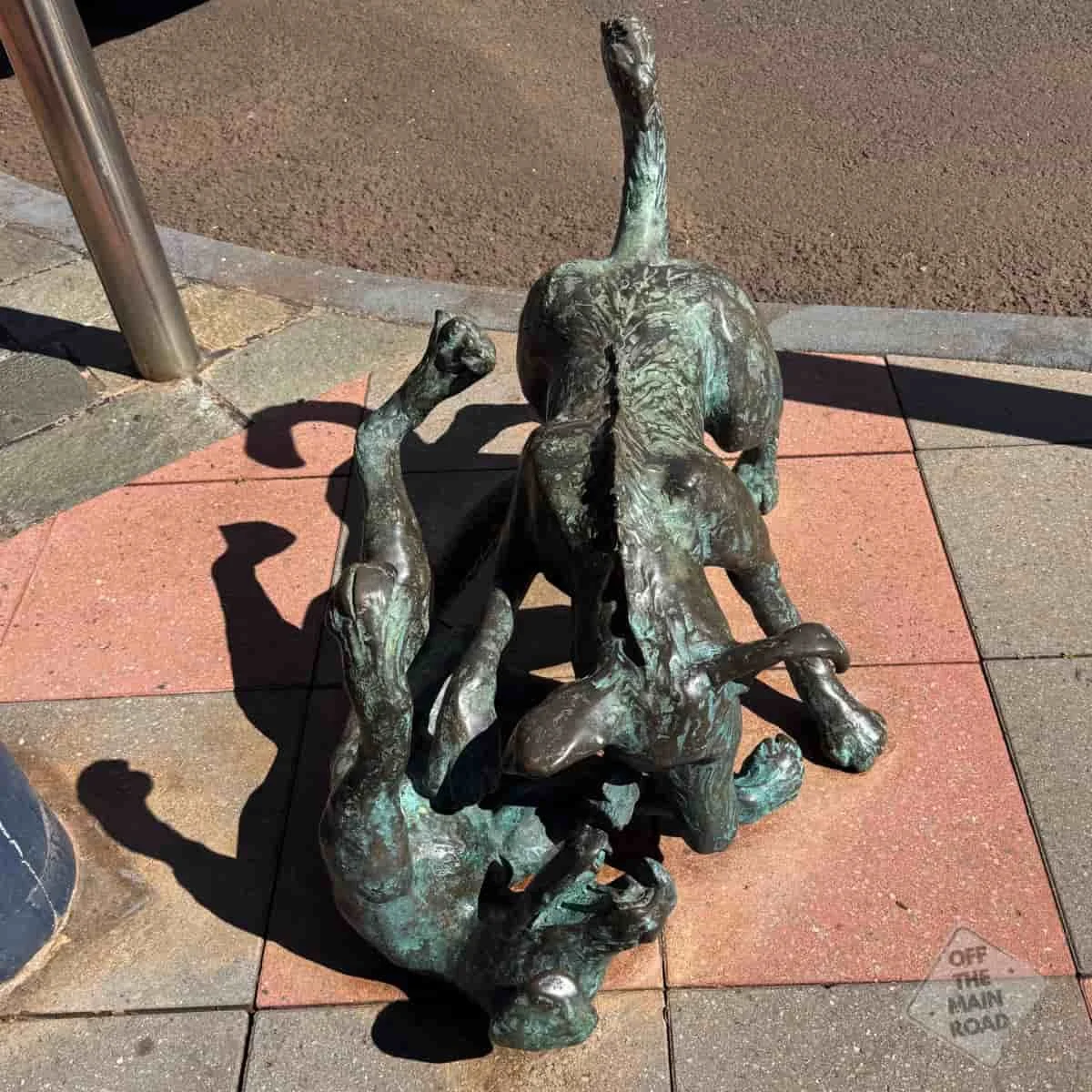
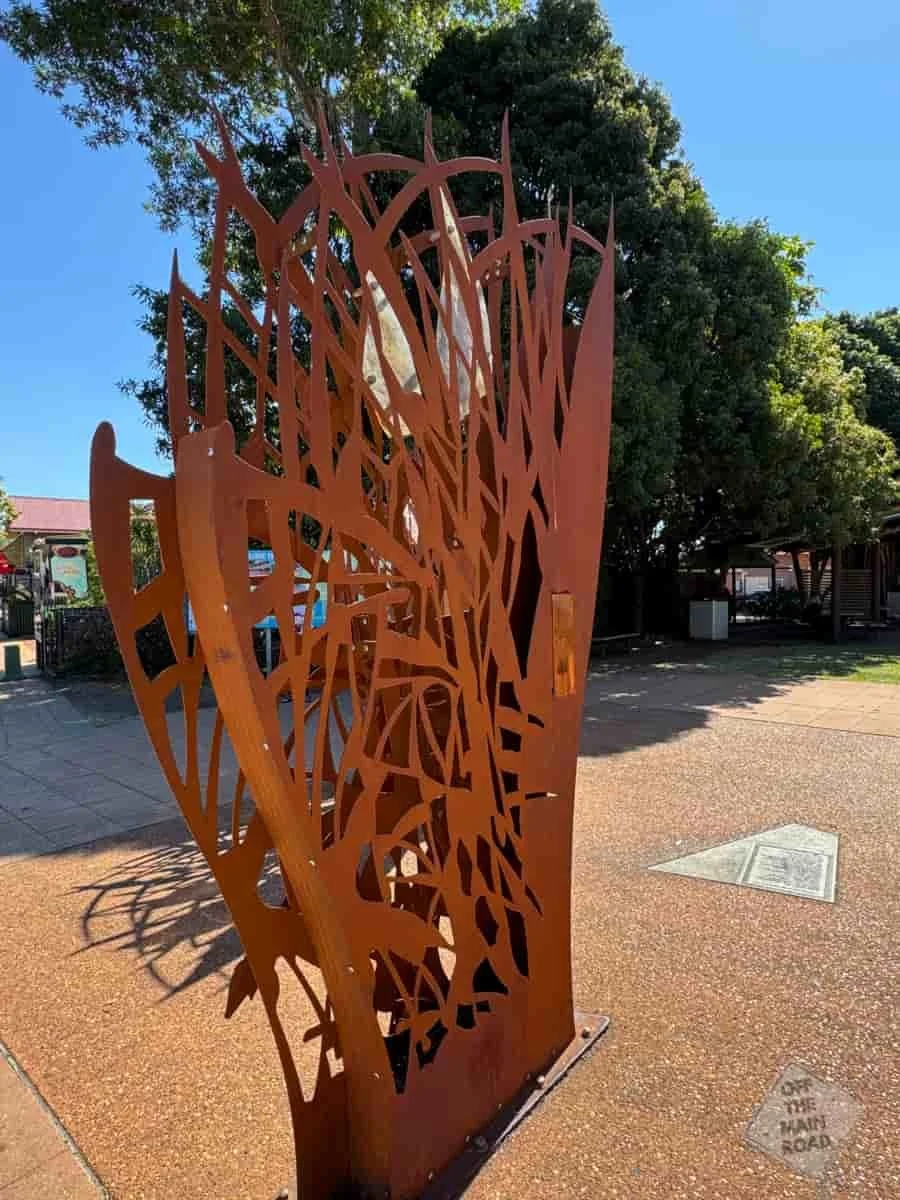
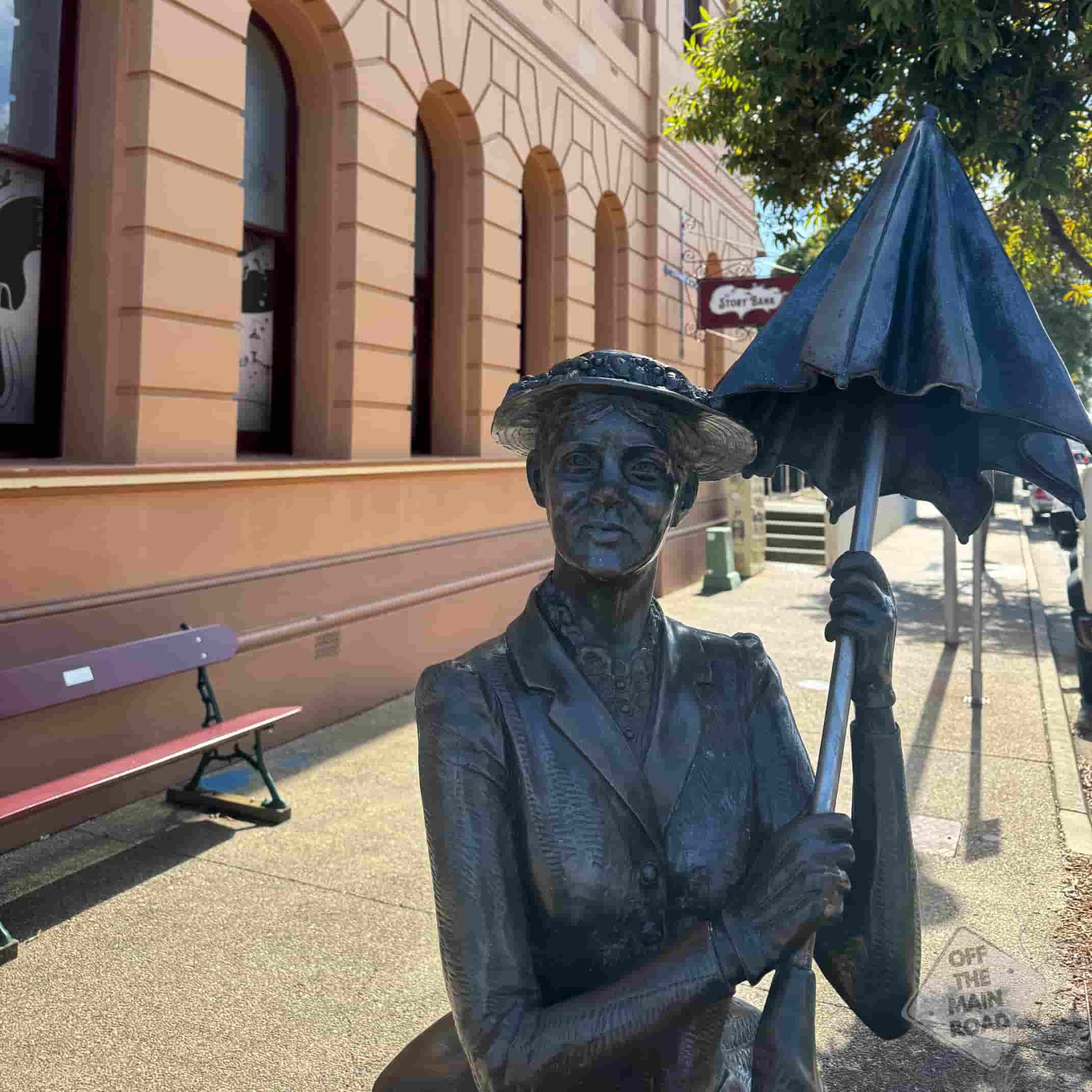
Childers carries its history in more than one place, and some of it is confronting in its own right. Along the main street is a memorial that honours the more than fifty thousand Pacific Islander people who were "blackbirded", coerced or outright kidnapped, to labour in the cane fields in the early years of the sugar industry, often in appalling conditions. They built the wealth of this region, and the memorial is a long-overdue acknowledgement of that. It is worth reading properly.
For a lighter history, the Old Pharmacy, formerly the Childers Pharmaceutical Museum, is a beauty. It is a heritage-listed 1902 shopfront that operated as a pharmacy until the 1980s and now houses one of Australia's largest collections of early pharmaceutical history, with mysterious potions, old timber drawers, and things you would not want to swallow. There is also the Isis District Historical Complex, an outdoor museum of recreated pioneer buildings, and a handful of galleries and cafes along the street.
Out of town, the country is worth a look too. This is rich food-growing land, and there are wineries and produce stops around the district, along with the wide green cane country that gives Childers its setting. And if you are timing a visit, the Childers Festival in late July fills the whole main street.
We came to Childers expecting a quick highway stop and found a town with far more beneath the surface than its size suggests. The heritage street is genuinely lovely, and the sugar history runs deep, in places dark. But it is the memorial we think about most. There is something about standing in a beautifully restored building in a busy little town full of passing travellers, remembering fifteen young people who were exactly that, passing travellers, working the fields, seeing the country, before a single terrible night. Childers honours them with real grace. Stop, walk the street, and go and see them. It is the least and the best thing you can do here.
If you like the towns that are worth a proper look, our Travel Dispatch is full of them. You can sign up HERE
A quick note on the photographs. You will not find many images of the memorial itself in this post, and that is deliberate. Photography is not permitted inside the Palace Backpackers Memorial, and rightly so. It is a place of remembrance, not a photo opportunity, and the families of the fifteen deserve that quiet. So we have kept our camera in its bag for that part. Some things are better simply seen, and felt, in person.

Childers
Childers is a heritage-listed country town in the Bundaberg region of the Wide Bay, Queensland, on the Bruce Highway about 50 kilometres south-west of Bundaberg. Established in the 1880s to service the surrounding sugar industry, it is set on red volcanic soil among cane, avocado and macadamia country. Today it is known as a National Trust heritage town, its main street a near-intact streetscape of early 1900s buildings, and as the site of the Palace Backpackers Memorial. It is a popular and busy stop on the highway run between Brisbane and Bundaberg. This is Kabi Kabi (Gubbi Gubbi) country.
How to Get There
Childers sits right on the Bruce Highway, about 50 kilometres south-west of Bundaberg and roughly a 4-hour drive north of Brisbane. The highway runs straight through the main street, so it is impossible to miss, though that also makes the town centre busy, so take care with parking and pedestrians. The roads are fully sealed and suitable for all vehicles and rigs. Miriam Vale, a common stop just to the north, is about an hour up the highway.
What to See and Do
What we did:
Wandered the heritage main street and its early 1900s buildings.
Visited the Palace Backpackers Memorial.
Took in the town's busy, tree-lined main street.
Visited the Memorial on the main street, remembering the Pacific Islander labourers of the sugar era.
Other highlights nearby:
The Old Pharmacy (Childers Pharmaceutical Museum), a heritage shopfront. (closed when we visited)
The Isis District Historical Complex, an outdoor pioneer museum. (also closed when we visited)
Wineries and produce stops around the district, and the cane country itself.
The Childers Festival, held on the main street in late July.
When to Visit
The cooler, drier months from about April to September are the most comfortable for wandering the main street and exploring the district. Childers is busy year-round thanks to the highway, and especially so during the Childers Festival in late July, which is worth timing for if you enjoy a proper country event, though the town fills up. Many of the smaller museums and shops keep country hours and may be closed on quieter days or early in the week, so check ahead if there is something specific you want to see.
What's Nearby
Childers sits on the Bruce Highway between Bundaberg to the north-east and the long run south toward Gympie and Brisbane. Just up the highway is Miriam Vale, an easy overnight stop, and beyond it the Gladstone and Central Queensland coast. Bundaberg, with its rum, its turtles at Mon Repos and its reef access, is a short drive away and makes a natural pairing with a Childers stop.
We share the country towns and their quieter stories through our Travel Dispatch. If that is your pace, you can join us HERE

Fast Facts
Location: Childers, Bundaberg Region, Wide Bay, Queensland, on the Bruce Highway
Distance: About 50km south-west of Bundaberg; roughly 4 hours north of Brisbane
Traditional Owners: Kabi Kabi (Gubbi Gubbi) people
Access: Fully sealed highway through town, all vehicles and rigs. Busy main street, mind parking and pedestrians
Facilities: Fuel, food, cafes, supermarkets, accommodation, museums. Full services in town
Don’t Miss: The Palace Backpackers Memorial; the heritage main street; the Old Pharmacy; the Kanaka Memorial
Best Time to Visit: April to September; the Childers Festival is in late July
Dog Friendly: Main street and outdoor areas yes (on lead); check individual museums
If this post helped, you can support our work here.

Other updates you may like…






A solo flight to Lady Elliot Island brought a famously short grass runway, an hour in the lagoon, guano mining history, a 150-year-old lighthouse, a communal buffet, and an afternoon among turtles, manta rays and coral gardens.