
The Rough Road to Emerald
Driving from Charters Towers to Emerald: what to expect
The quick numbers
Charters Towers to Emerald is around 480 km via the Gregory Highway (A7), taking five to six hours of actual driving depending on road conditions and how often you need to stop. Allow more for a motorhome. The highway south from Charters Towers is technically sealed the whole way, but "sealed" is doing a lot of heavy lifting, expect broken edges, corrugation, and sections that feel like someone patched potholes with more potholes.
The route breaks into two distinct legs with Clermont as the natural halfway point: roughly 375 km from Charters Towers down to Clermont, then a much more manageable 106 km from Clermont into Emerald.
Fuel: plan before you leave
The Gregory Highway between Charters Towers and Clermont is one of the more desolate fuel gaps in Queensland. The only fuel stop on the 375 km stretch between Charters Towers and Clermont is Belyando Crossing Roadhouse, roughly 192 km south of Charters Towers and 172 km north of Clermont.
Belyando offers fuel, takeaway meals, a basic bar, and a caravan park. Worth a stop regardless of how full your tank is, it’s the only shade and cold drink for a very long way. Fuel prices are remote-premium, so factor that in.
Where to stop
Clermont. The midpoint worth knowing about
Clermont sits 106 km north of Emerald on the Gregory Developmental Road, a small town well set up for travellers, with multiple fuel stations, a caravan park, cafes and a hospital. Most people drive through without stopping, which is understandable after a few hundred kilometres of grazing country, but it’s worth knowing it’s there.
The most interesting stop in town is the flood history. The 1916 flood killed 65 residents, and the Clermont Cemetery on the banks of Sandy Creek holds their graves alongside headstones dating back to the 1860s. There's also a quirky marker on Capricorn Street: the Piano in the Tree, a relic that marks the height floodwaters reached during that disaster.
If you have an hour, the Clermont Historical Centre, a couple of kilometres out of town along the Peak Downs Highway, is worth a look, especially if you have any interest in the gold fossicking history of the region.
Capella. 50 km north of Emerald
Capella sits about 50 km north of Emerald, and its main street is literally the Gregory Highway — you're passing through it whether you mean to or not. It's a small mining and agricultural town with a couple of things worth a short stop.
The Capella Pioneer Village holds more than 5,000 items covering the region’s pastoral and agricultural history, including Australia's largest restored drop-plank homestead, the 1869 Peak Downs Homestead. And if you pull over near the bridge on the Gregory Highway, the Capella Creek Nature Walk runs along the creek for about a kilometre and has examples of the area's rocks and a fossilised tree trunk in a small geo-park.
At the northern end of town, the Dragline Bucket is worth a pause, a huge green "Eartheater" bucket from a Marion 8050 dragline excavator that scooped over 83 million tonnes of overburden from the BMA Gregory Open Cut Coal Mine. It's the type of industrial-scale ‘big thing’ that's both absurd and genuinely impressive when you’re standing next to it.
Peak Range — the view that comes to you
You don’t need to detour for this one; it arrives outside your window, south of Clermont. The Peak Range is a series of dramatic volcanic plugs that rise from the plains like sentinels, formed when lava cooled and solidified in volcanic pipes some 29–32 million years ago, while the surrounding land eroded away.
We thought we’d seen bad roads before, but the five-and-a-half-hour drive from Charters Towers to Emerald proved us wrong. The locals had warned us, “you’ll rattle a few fillings loose”, and they weren’t exaggerating.
Charters Towers to Emerald is about 480 kilometres of sealed inland highway, a four to five-hour run depending on how often you pull over for photos or to check the bolts on your motorhome! It’s straightforward driving through grazing country and mining towns, with long quiet stretches between services. Classic central Queensland road.
The bitumen came and went, potholes appeared faster than we could dodge them, and at one point Zoe had to be held down to stop her from bouncing off the seat. Every bump had a sound like a cupboard rattle or the squeak of something that definitely wasn’t squeaking yesterday.
By the time we rolled into Emerald, we felt like we’d crossed a small war zone on wheels. But the sight of that familiar main street, with its palms and patchwork of pubs, felt like landing somewhere safe. We’ve been here plenty of times before, and it’s always a good base. A proper town where you can refill, restock, and remember what smooth ground feels like.
We spent a couple of quiet days catching up on life. Things like laundry, groceries and minor van repairs (All the fun stuff). It’s grounding being in a town that feels both familiar and practical, especially after hours of clattering chaos.
Emerald has always been a bit of a jumping-off point for adventures further inland or north.
This time, it marked the point where we’d start heading south, toward Biloela, with fingers crossed for fewer potholes and more pavement.
If you’ve ever hit a stretch of road that made you question your life choices, sign up for our travel dispatches here. We’ve got plenty more questionable decisions to share.
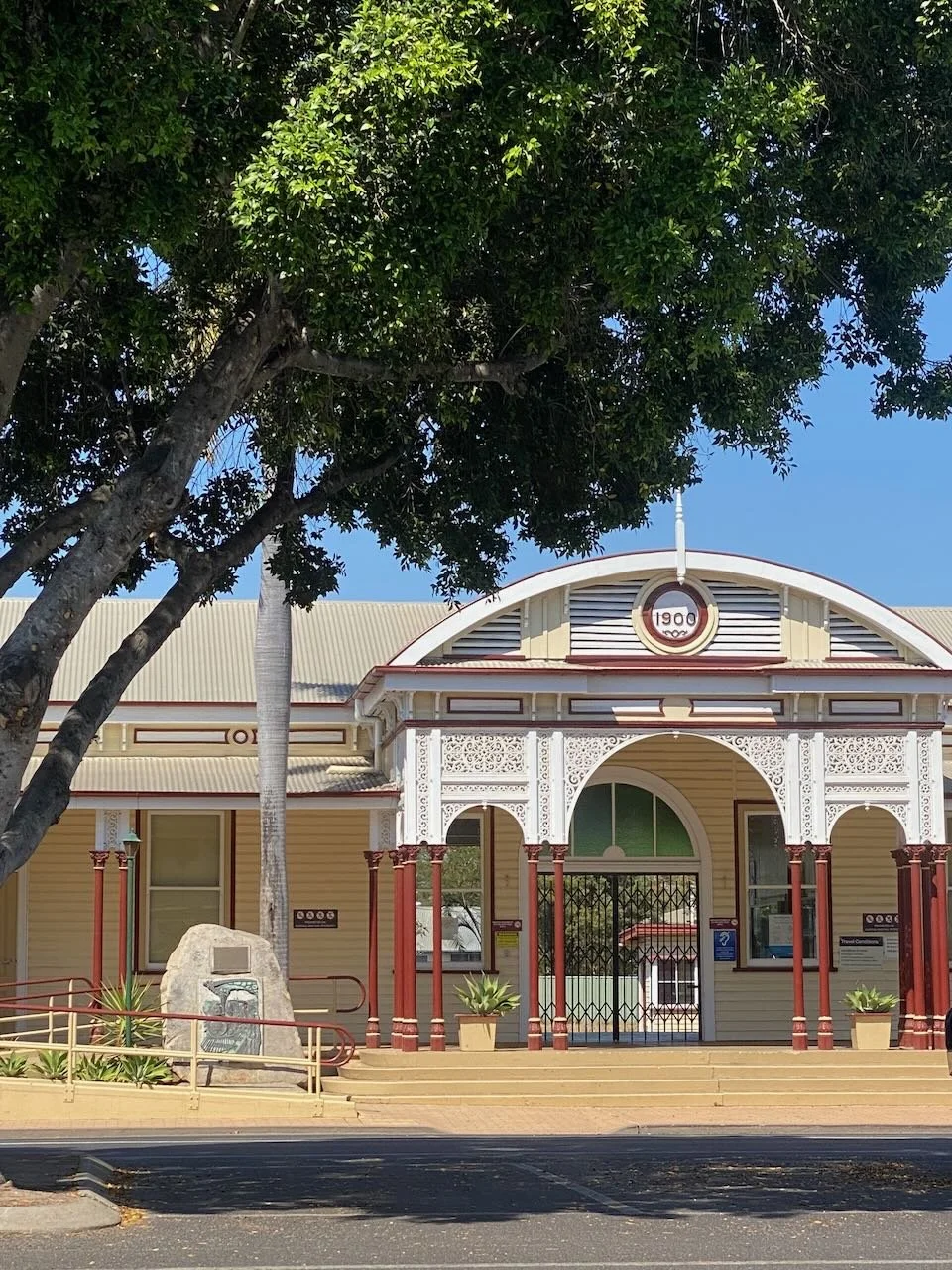
Charters Towers to Emerald
Five and a half hours of grit, laughter, and the occasional airborne dog. Not every stretch of road is pretty — but the stories that come out of them usually are.
How to Get There
Take the Gregory Highway (A7) south from Charters Towers through Belyando Crossing to Emerald. The 400-kilometre trip takes around five to six hours, depending on how kindly the road’s feeling that day. It’s sealed the whole way, but patchy and rough in sections. Fuel stops are limited, so fill up before you leave.
What to See, Tours and Activities
What we did:
Survived the drive (no small achievement).
Spent two days in Emerald regrouping and catching up on chores.
Enjoyed coffee in town and a stroll through the Emerald Botanic Gardens.
Other highlights you might explore:
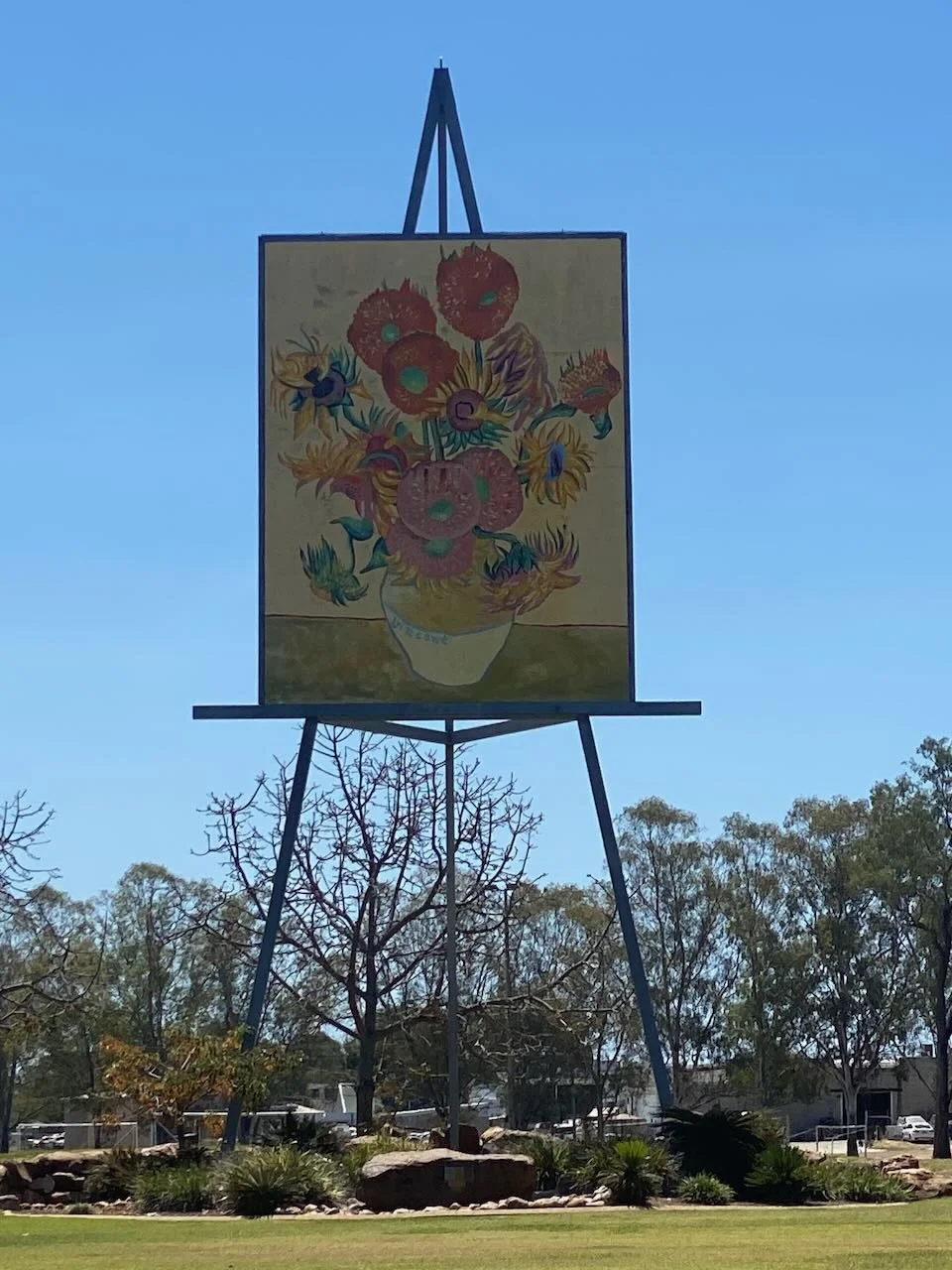
Check out the Van Gogh Sunflower painting and Centenary of Federation Mosaic Pathway in Emerald.
Visit nearby Fairbairn Dam and Lake Maraboon for fishing or kayaking.
Take the scenic drive out to Rubyvale or Sapphire for fossicking.
When to Visit
The dry months from April to October offer the best conditions for travel and camping. Summer heat makes the drive tougher, and heavy rain can turn potholes into small lakes.
Final Thoughts
It wasn’t the smoothest run, but it’s always the roughest roads that make the best stories later on. Emerald was a welcome pause with solid ground, good food, and a chance to stop everything from rattling.
What’s Nearby
If you're heading this stretch of the Gregory Highway, our Four Days in Charters Towers post covers the town well before you hit the road south. From Emerald, we continued on to Biloela, where the red dirt eases off and the pace softens a little.
If you're planning the broader Central Queensland loop, our Heart of Queensland Quick Escape guide covers the region in detail — potholes not guaranteed.
Join our newsletter for stories, secret spots, and off-the-main-road adventures that don’t make the guidebooks — delivered straight to your inbox. Sign up here.
Fast Facts
Location: Charters Towers to Emerald, Queensland
Distance: 400 km via Gregory Highway (A7)
Traditional Owners: Gudjal People (Charters Towers), Gayiri People (Emerald)
Access: Sealed but rough in sections; limited services at Belyando Crossing
Facilities: Fuel, rest areas, campgrounds, caravan parks in Emerald
Walking Track: Emerald Botanic Gardens paths
Dog Friendly: Yes, in most campgrounds
Best Time to Visit: April to October for cooler, drier travel
Things That Could Kill You (Probably Won’t)
A semi-serious guide to surviving Australia. Mostly common sense, occasionally luck.
Potholes: Big enough to have their own postcode. Slow down and keep a spare tyre handy.
Loose Cupboards: Check your latches — nothing says chaos like a mid-corner can avalanche.
Road Fatigue: Even the toughest stretches demand a break. Swap drivers, stretch, and don’t chase the clock.
If you’ve ever questioned your life choices halfway down a corrugated road, you’re in good company. Sign up for our travel dispatches here — we’ll keep the bumps entertaining.

Other updates you may like…




A solo flight to Lady Elliot Island brought a famously short grass runway, an hour in the lagoon, guano mining history, a 150-year-old lighthouse, a communal buffet, and an afternoon among turtles, manta rays and coral gardens.