Babinda: Bananas, Boulders and a Sad Legend
Our first taste of Babinda was, quite literally, a taste. Just outside town, we pulled over at a roadside stall selling bananas, the honesty-box sort you find all through the far north, and bought a bunch for next to nothing. They were the best we had eaten, sweet and soft and still warm from the tropical sun. We stood by the moho eating them one after another, and if that had been all Babinda gave us, it would have been enough. But there was much more.
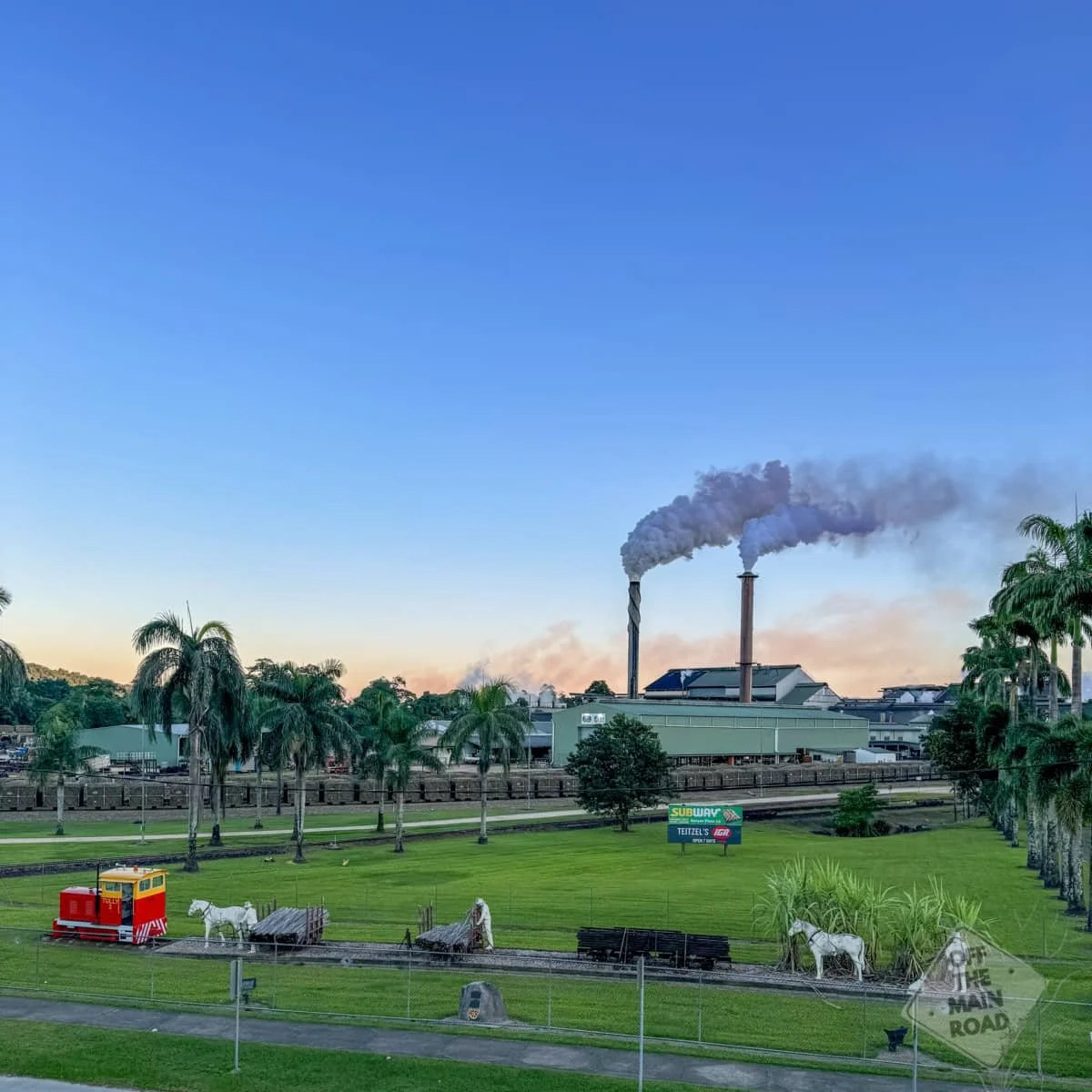
Babinda sits about 60 kilometres south of Cairns, a small sugar and banana town tucked right under Queensland’s two highest mountains, Bartle Frere and Bellenden Ker. It is one of the wettest places in the country, forever trading the title of Australia's wettest town with nearby Tully and Innisfail, and all that rain makes for a lush, dripping, impossibly green corner of the tropics. The town itself is small and quiet, with a wide main street, a few shops, some closed the day we came through, and the unmistakable feel of a place the highway hurries past. But people do not really come to Babinda for the town. They come for the Boulders.
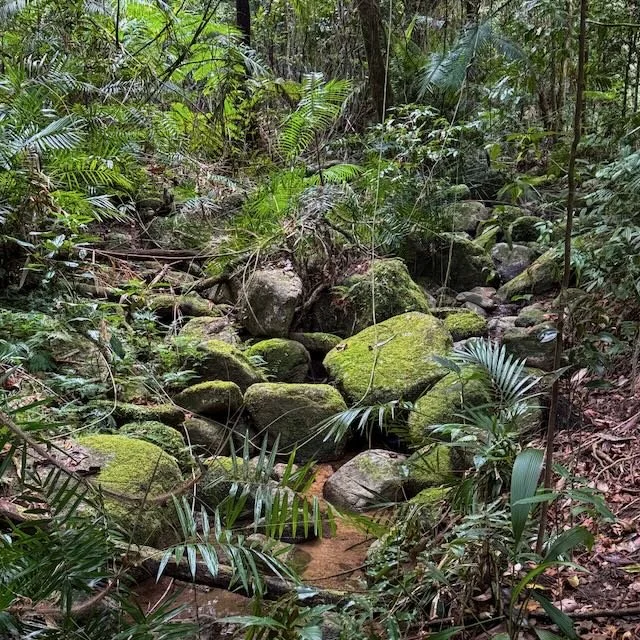
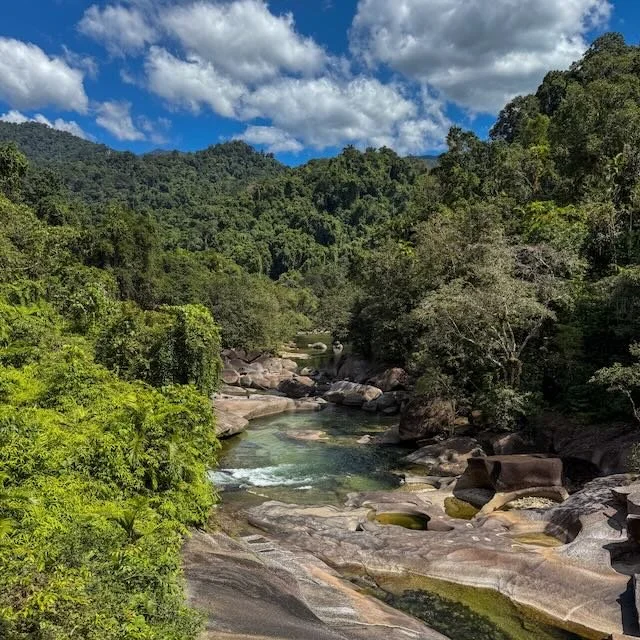
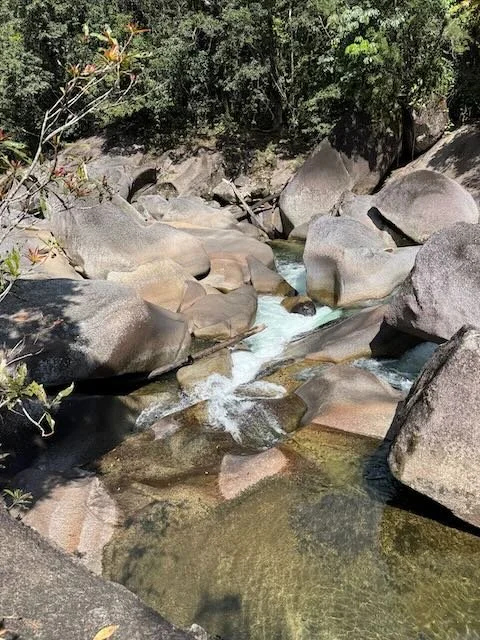
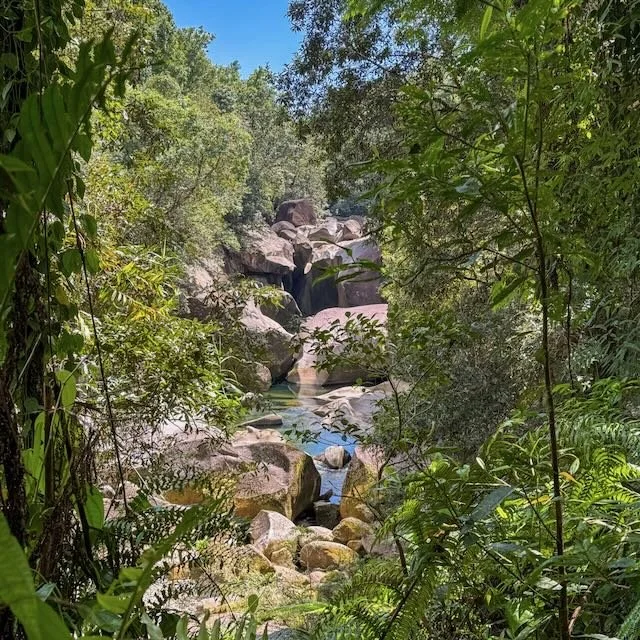
Seven kilometres up a sealed road behind town, Babinda Creek tumbles down out of the mountains through a jumble of huge granite boulders, smoothed round and pale by the water over unimaginable time. It is a genuinely beautiful place, rainforest crowding down to the water, the creek running clear and cool over the rocks, with a picnic area, lawns, toilets and changing rooms, and a designated swimming hole that is safe, popular and lovely on a hot day. We spent a good while here, walking the short tracks through the forest to the viewing platforms, watching the water pour through the rocks below.
And it is here that Babinda's beauty turns to something more sombre, because a little downstream lies Devil's Pool, one of the most dangerous stretches of water in Australia.
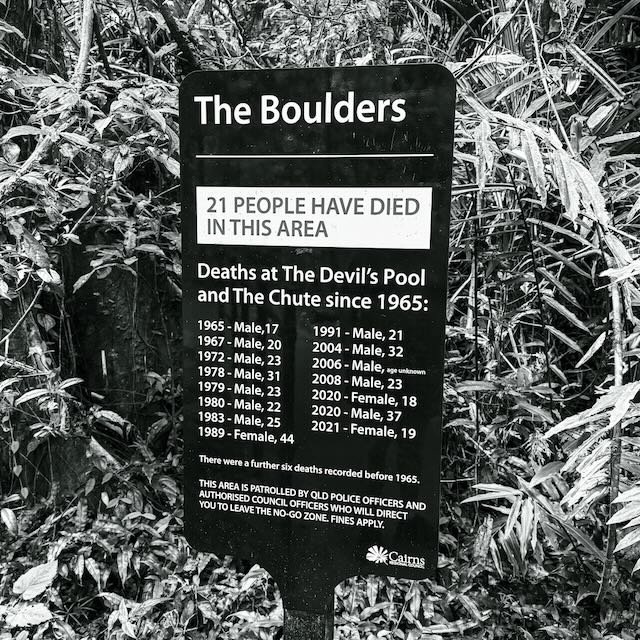
There is no gentle way to say this, so we will say it plainly. Since 1959, more than twenty people have drowned at Devil's Pool, the vast majority of them young men. It looks calm. It looks inviting. That is exactly what makes it so deadly. Beneath the surface, the water funnels through narrow channels and under the granite in fierce, hidden currents, siphons and chutes that can pull even a strong swimmer down and pin them under the rock with a force no person can fight. People have died there who were barely in the water, who slipped from a rock, who ventured a few metres past the safe zone.
The swimming area at the Boulders is safe, and it is signed, fenced and clear. Devil’s Pool and the stretch below it are a designated No Go Zone, and the signs are not being cautious for the sake of it. Stay in the marked swimming area. Do not climb over the barriers, do not walk out onto the downstream rocks, and do not let anyone in your group treat the warnings as a challenge. This is the single most important thing to know before you visit, and it is worth saying to your kids, your mates, and anyone travelling with you.
An older story is woven into this place too, and it deserves to be told with respect. To the Yidinji people, this is the story of Oolana, a young woman promised to a tribal elder who fell in love with a young man from another mob. When they were caught and separated, Oolana threw herself into the waters of the creek in her grief, and it is said her cries brought the boulders tumbling down and turned the calm creek into the churning pool it is today. Her spirit is believed to remain in the water, still calling for her lost love and drawing wandering young men down to her. Whatever you make of the legend, the truth beneath it is plain enough. This place has taken many lives, and the old story and the modern warning signs say exactly the same thing. Treat it with respect, and keep your distance.
A little south of Babinda, at the foot of Bartle Frere, is Josephine Falls, and it makes a natural pairing with the Boulders. It is one of the prettiest waterfalls in the far north, a series of cascades and pools spilling over smooth granite through the rainforest, with a natural rock slide that has thrilled generations of visitors. It is beautiful, and it too demands care; flash flooding after rain has claimed lives here, and the rocks are slippery. Check conditions, obey the signs, and enjoy it for the genuinely lovely place it is. The walk in is short and easy, through classic wet-tropics rainforest, and well worth doing.
Babinda surprised us. We came for a cheap bunch of roadside bananas and found one of the most beautiful, and most sobering, stops on the whole run north. The Boulders are genuinely special, green and cool and ancient, and the safe swimming hole is a delight. But the place carries a weight too, a long, sad history and a legend that both say the same thing: this beautiful water is not to be trifled with. Go, swim in the safe zone, walk the rainforest, eat the bananas, and take the warnings to heart. Babinda gives a lot to those who treat it with respect.
If you like the stops that most people rush past, our Travel Dispatch is full of them. You can sign up HERE
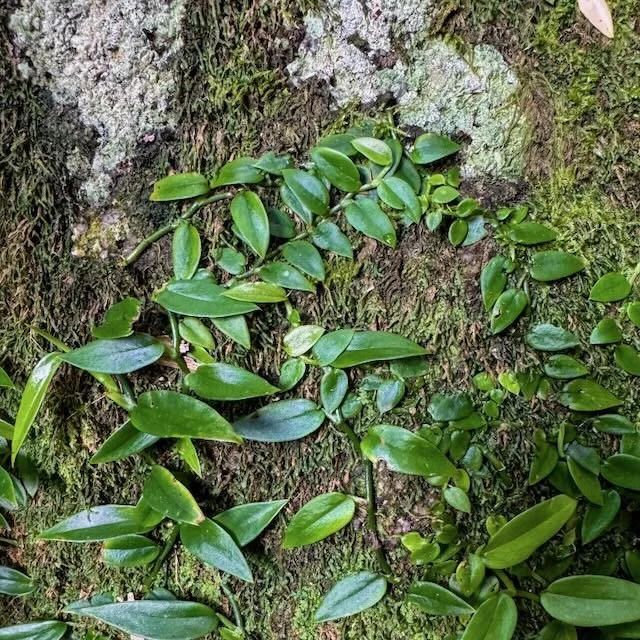
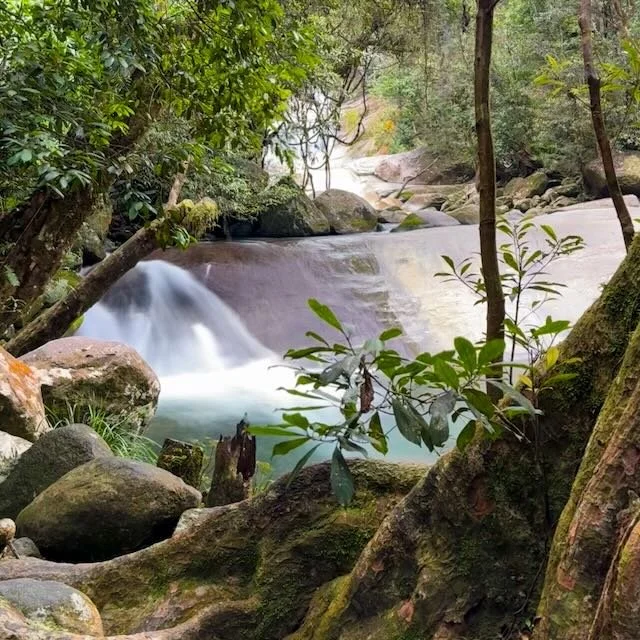
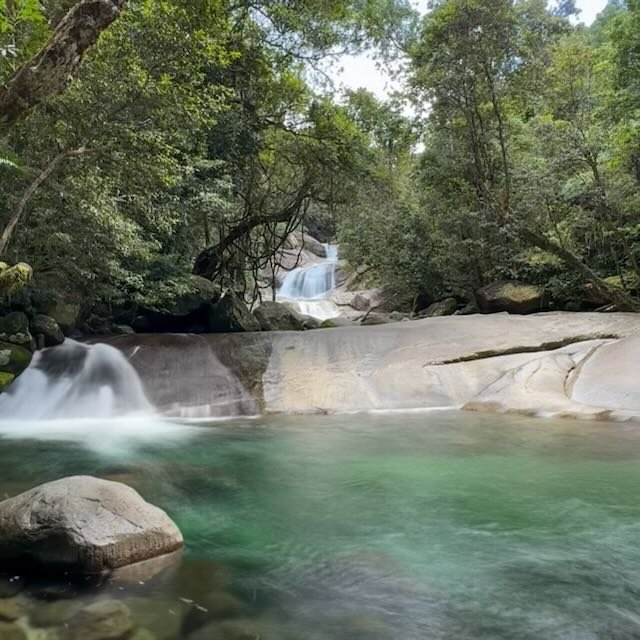
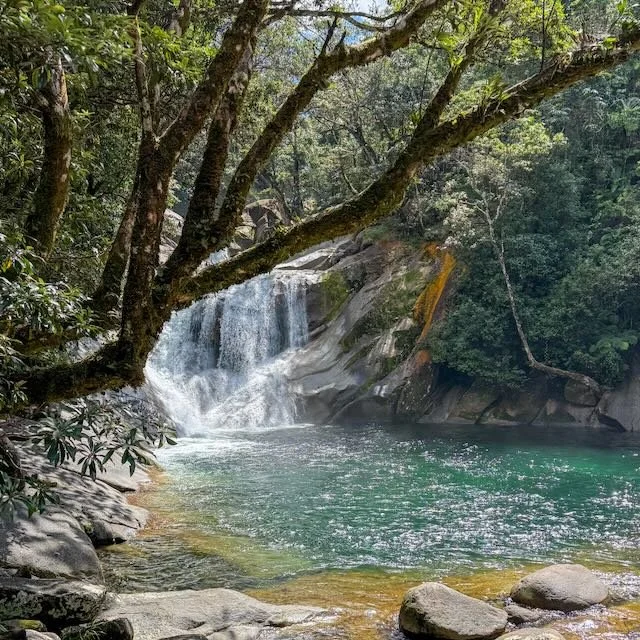
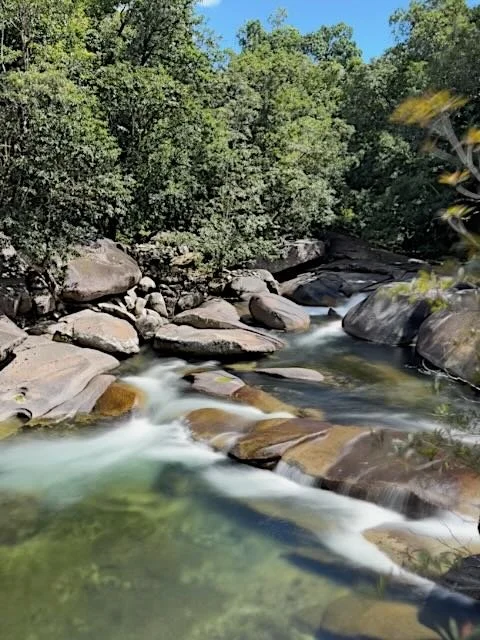
Babinda
Babinda is a small sugar and banana town in the Cairns Region of Tropical North Queensland. Sitting beneath Queensland’s two highest peaks, Bartle Frere and Bellenden Ker, it is arguably one of the wettest towns in Australia, competing each year with Tully and Innisfail for the title. It is best known for the Babinda Boulders, a scenic reserve where Babinda Creek runs through spectacular granite boulders, with a safe swimming hole and the notoriously dangerous Devil’s Pool downstream. This is Yidinji and Madjandji country.
How to Get There
Babinda sits right on the Bruce Highway, about 60 kilometres south of Cairns and a similar distance north of Innisfail, so it is an easy stop on the coastal run. Turn off the highway into town, follow Munro Street through the middle, and the Boulders are about 7 kilometres up a sealed road behind town. The road is suitable for all vehicles. Josephine Falls is signed off the highway a little to the south. Everything is close and well marked.
What to See and Do
What we did:
Bought a bunch of sweet bananas from a roadside stall outside town.
Swam and walked at the Babinda Boulders, in the safe designated area.
Walked the rainforest tracks to the viewing platforms over the creek.
Visited Josephine Falls, a beautiful rainforest waterfall with a natural rock slide, a short drive south (obey all safety signage).
Other highlights nearby:
The Goldsborough Valley, for camping, swimming and rainforest walks.
Mount Bartle Frere, Queensland's highest mountain, for serious hikers.
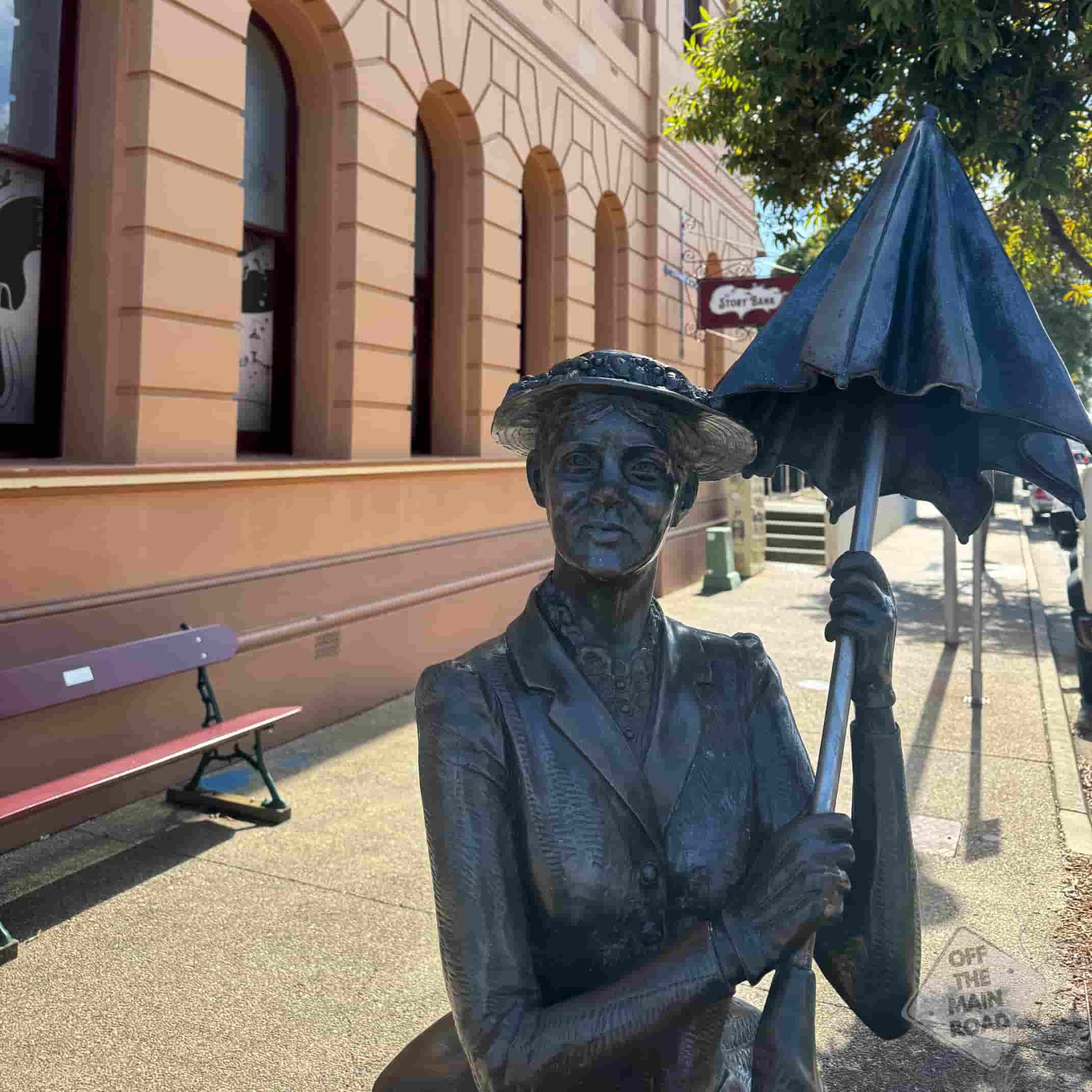
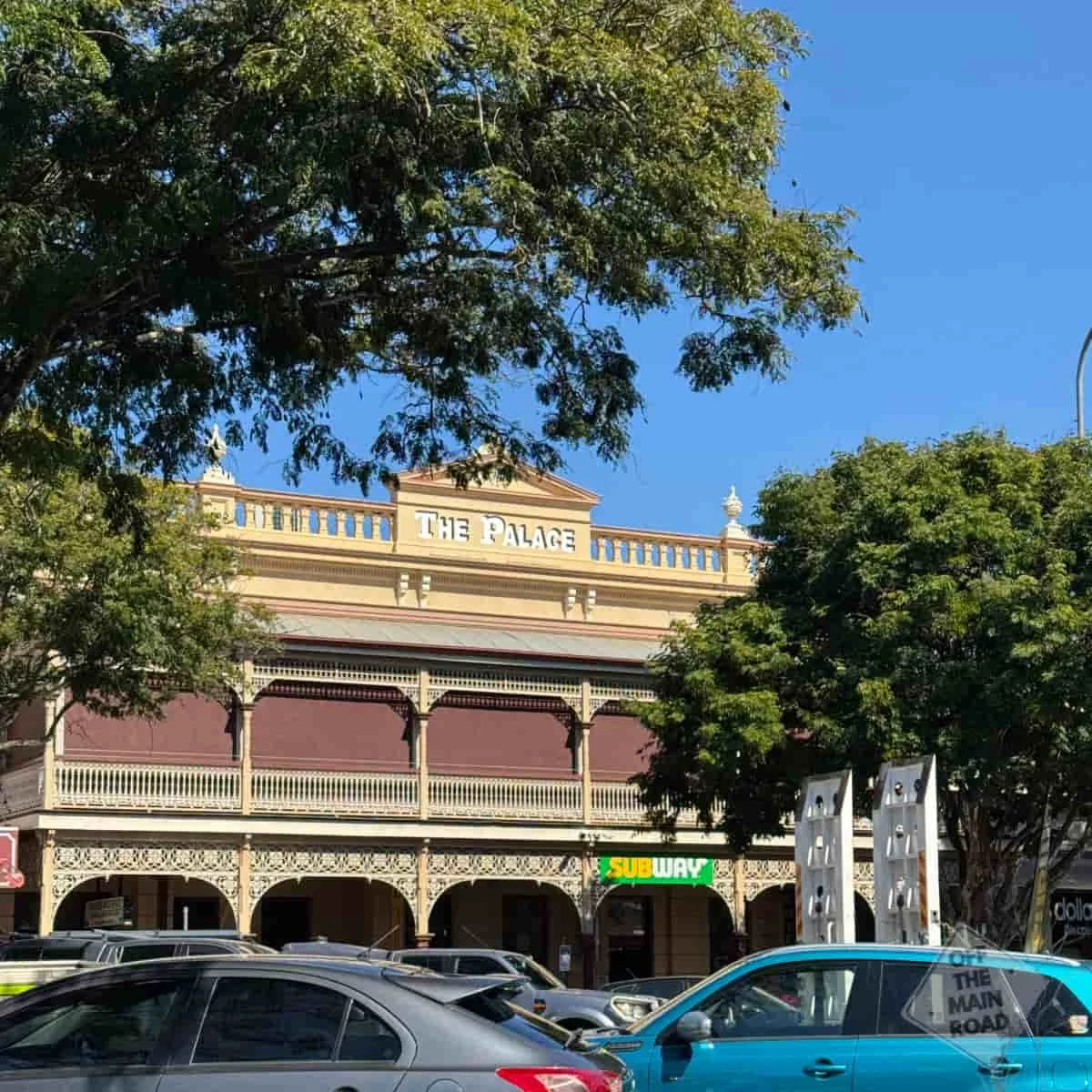
The town of Babinda itself, with its heritage buildings.
When to Visit
The dry season, from about May to October, is the most comfortable and safest time for the water, with lower rainfall and gentler creek flows. The wet season, from November to April, brings enormous rain (this is one of the wettest places in the country) and with it flash flooding, which makes the creeks and falls far more dangerous. The Boulders and Josephine Falls are at their most powerful after rain, but that is also when they are most lethal, so the dry season is both the easier and the wiser time to come. Whenever you visit, check current conditions and never enter the water after heavy rain.
What's Nearby
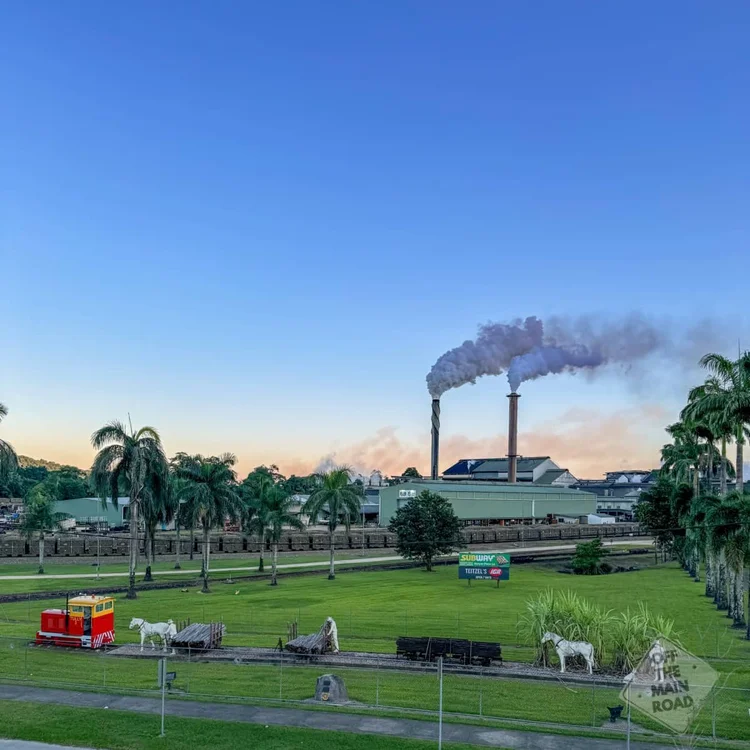
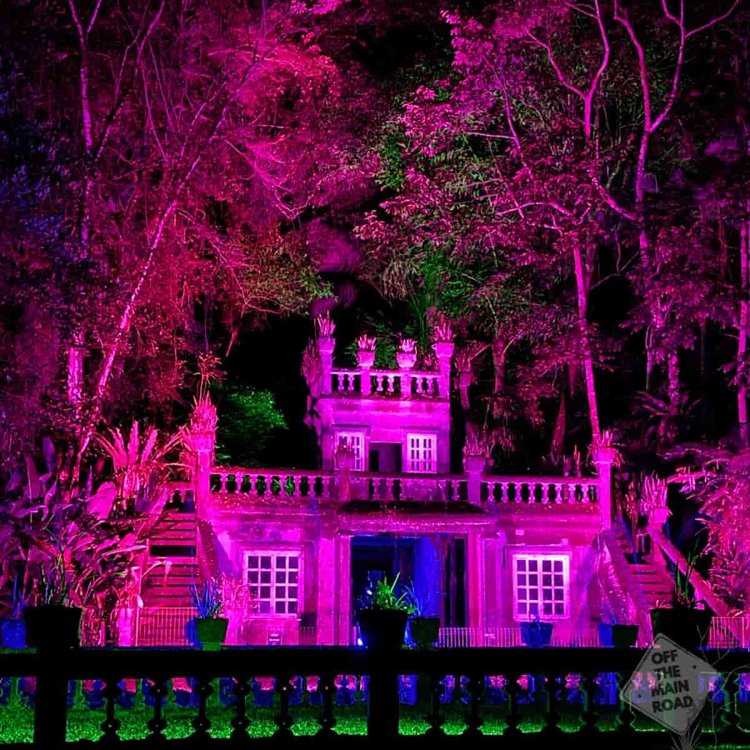
Babinda sits on the coastal run between Innisfail and the rainforest castle of Paronella Park or Tully to the south, and Cairns and the Kuranda ranges to the north. The whole Cassowary Coast is thick with waterfalls, rainforest and cane country. Whether you are heading up to Cairns and the reef or south toward Townsville, Babinda and its Boulders are well worth pulling off the highway for.
We share the beautiful stops and the honest warnings alike through our Travel Dispatch. If that is your pace, you can join us HERE
Fast Facts
Location: Babinda, Cairns Region, Tropical North Queensland, on the Bruce Highway
Distance: About 60km south of Cairns
Traditional Owners: Yidinji and Madjandji peoples
Access: Sealed roads, all vehicles. The Boulders are 7km up a sealed road behind town
Facilities: Picnic area, lawns, toilets, changing rooms and safe swimming at the Boulders. Fuel and food in town
Swimming: Yes, in the designated safe area at the Boulders only. Devil’s Pool is a No Go Zone
Best Time to Visit: Dry season, May to October (safer water, less rain)
Dog Friendly: Check current signage; not permitted in some reserve areas
A Serious Safety Note
Some stops need a straight warning rather than our usual light-hearted one.
Devil’s Pool is genuinely deadly. More than twenty people have drowned in this stretch of Babinda Creek since 1959, most of them young men, many who only slipped or ventured slightly past the safe zone. The water funnels under the boulders through hidden chutes with a force no swimmer can escape.
Swim only in the designated safe area at the Boulders. It is clearly marked, and it is genuinely lovely. Do not cross the barriers into the No Go Zone, no matter how calm the water looks.
Never enter the water after rain. Flash flooding is sudden and has killed people at both the Boulders and Josephine Falls. Check conditions and heed every sign.
Respect the cultural warnings. The Traditional Owners have asked people to stay out of Devil’s Pool, both for safety and out of respect for a place of deep significance.
Other updates you may like…




A solo flight to Lady Elliot Island brought a famously short grass runway, an hour in the lagoon, guano mining history, a 150-year-old lighthouse, a communal buffet, and an afternoon among turtles, manta rays and coral gardens.