Moonta: Little Cornwall's Copper Story
We rolled into the donation camp right in the middle of Moonta to find some good mates already set up under the gums, and that’s really where this stop started, before we’d even looked at a single old mine building. A few cold drinks, a shared dinner, and easy conversation that only happens with people you’ve crossed paths with more than once on the road. Moonta got largely remembered for the mates we caught up with, though as it turned out, the town had plenty going for it too.
Moonta calls itself Little Cornwall, and once you’ve walked the main street you understand why. The sandstone buildings, the tight rows of miners’ cottages, the church spires, all of it was built by Cornish hands and Cornish money in the 1860s and 70s, when this patch of the Yorke Peninsula was, for a while, the biggest copper story in the country. A shepherd named Paddy Ryan found the first traces of ore in a wombat hole in 1861, and within a decade Moonta had grown into the second largest town in South Australia, behind only Adelaide. Cornish miners and their families poured in by the thousand, brought their chapels, their pasties and their mining know-how with them, and built a town that still looks and feels like nowhere else in the country.
We spent an afternoon out at the Moonta Mines Heritage Area, starting with a ride on the old tourist train that loops through the site and gives you the potted history of the mining era and what life was like for the families who worked it. From there we jumped on the motorbikes and did the self-drive mining trail, out past the Hughes Enginehouse and its old pump house, and on to Ryan’s Tailing Heap, named for the same Paddy Ryan whose wombat hole find started the whole rush in 1861. There’s something mildly ironic about that fact: the shepherd who found the copper getting the leftover waste rock named after him.
Engine houses still stand over old shafts, cobbled ore floors stretch across the ground, and the scale of the place, even in ruin, gives you a real sense of what a working nineteenth-century mine actually looked like. The part that stuck with us most was the old slime dumps, flat expanses of leftover processing sludge from the ore works. The signage on site told us they’re still inhospitable to plant life more than a century on, which says something about what this industry left behind, even as it built a town.
It’s sobering in parts and genuinely fascinating in others, and the museum and interpretive displays do a good job of putting names and faces to the miners and families who lived here. Moonta deserves a proper look, not just a drive-through.
If you want more stories like this one, plus a few more nights around the campfire with mates old and new, our Dispatches newsletter is where we tell them. Sign up here.


Moonta
Moonta sits on the Yorke Peninsula in South Australia, about 165 kilometres north-west of Adelaide, on Narungga country. Copper was discovered here in 1861, and the Moonta Mining Company went on to run one of the richest copper mines in the British Empire, home to the largest Cornish mining community outside Cornwall itself. Alongside Kadina and Wallaroo, Moonta forms the Copper Triangle, still known locally as Little Cornwall. The mine closed in 1923, but the heritage area, the old miners’ cottages and the town’s Cornish festivals keep that history very much alive. Moonta Mines is also part of Australia’s Cornish Mining Sites, listed nationally and on the UNESCO World Heritage Tentative List.
How to Get There
Moonta is on the Yorke Peninsula, about 165 kilometres (roughly two hours) north-west of Adelaide via the Copper Coast Highway. The town sits close to Moonta Bay on the Spencer Gulf, with Kadina and Wallaroo both a short drive away if you want to see the rest of the Copper Triangle in one run.
What to See / Tours / Activities
What we did:
Camped at the donation camp in town and caught up with mates
Rode the Moonta Mines Tourist Railway through the heritage area
Rode the self-drive mining trail out to the Hughes Enginehouse and Ryan's Tailing Heap
Walked through the old engine houses and ore floors, and saw the old slime dumps
Took in the museum and interpretive displays on mining life
Walked past the old miners' cottages and the 1878 Model School
Other highlights nearby:
Moonta Bay and Port Hughes for the coastal side of a visit
Kernewek Lowender, the Cornish festival held across Moonta, Kadina and Wallaroo every second year in May, billed as the largest Cornish festival outside Cornwall itself
When to Visit
The cooler months from April to October are the most comfortable for walking the heritage area, with the Yorke Peninsula summer sun making the mostly shadeless mine site hard going in the middle of the day in Summer. If your timing lines up with an odd-numbered year, mid-May brings Kernewek Lowender to the Copper Triangle, worth checking the exact dates closer to travel since it shifts slightly year to year.
Final Thoughts
Moonta gave us two things we didn’t expect in the same afternoon: a proper reckoning with how brutal and brief a mining boom can be, and a really good night with mates around a fire. The town wears its Cornish heritage without cynicism, pasties and all, and the mine site is honest about what it cost the land and the people who worked it. We left thinking about Paddy Ryan, a shepherd who stumbled on a fortune in a wombat hole and ended up with a heap of tailings named after him for his trouble. Some places give you a photo. Moonta gave us a proper story.
What's Nearby
We visited Moonta from our exploration of the Dhilba Guuranda-Innes National Park at the bottom of the Yorke Peninsula, with cliffs, coast and a different pace altogether before all that copper and sandstone. If you’re doing the peninsula loop, Moonta sits neatly at the top of the peninsula and is a good stop before heading back to Adelaide or up to Port Augusta and down onto the Eyre Peninsula.
If you like the towns that hide a bigger story than their size suggests, our Dispatches newsletter is full of them. Sign up here.


Fast Facts
Location: Moonta, Yorke Peninsula, South Australia
Distance: About 165km (2 hours) north-west of Adelaide via the Copper Coast Highway
Traditional Owners: Narungga people
Access: Sealed roads, all vehicles
Facilities: Full town services in Moonta, including supermarkets, fuel, accommodation and caravan parks; more caravan parks and cafes at nearby Moonta Bay
Don’t Miss: Moonta Mines Heritage Area; the tourist train; the self-drive mining trail to the Hughes Enginehouse and Ryan’s Tailing Heap; the museum; Kernewek Lowender if timing allows
Cost: Museum and tourist train have modest entry fees; the heritage area and self-drive trail are free to walk or drive
Best Time to Visit: April to October; mid-May in odd years for the festival
Dog Friendly: Yes on the heritage area walking trails and self-drive route (on lead); not permitted inside the museum or on the tourist train
Things That Could Kill You (Probably Won’t)
A semi-serious guide to surviving Australia. Mostly common sense, occasionally luck.
The heat: Yorke Peninsula summers are hot, and the mine site has little shade. Water, a hat, and go early if you can.
Old mine workings: Shafts, ruins and uneven ground everywhere. Stick to marked paths and keep an eye on kids and dogs.
The slime dumps: More than a century old and still not growing anything. Look, don’t touch; don’t let the dog wander through them either.
Cornish pasty overload: A very real risk in Little Cornwall. Pace yourself.
Other updates you may like…
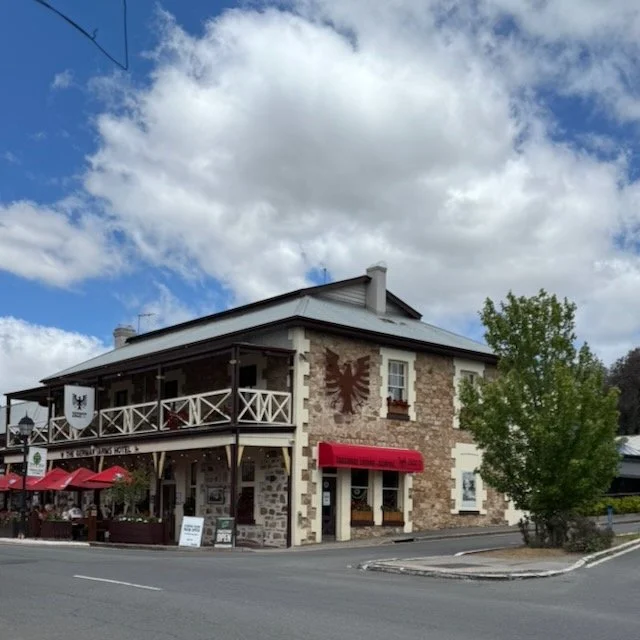











With just one day in Adelaide, we crammed in all our favourites! Art, museums, botanic gardens and a market dash. North Terrace delivered its usual magic, reminding us why this city always feels good to return to.