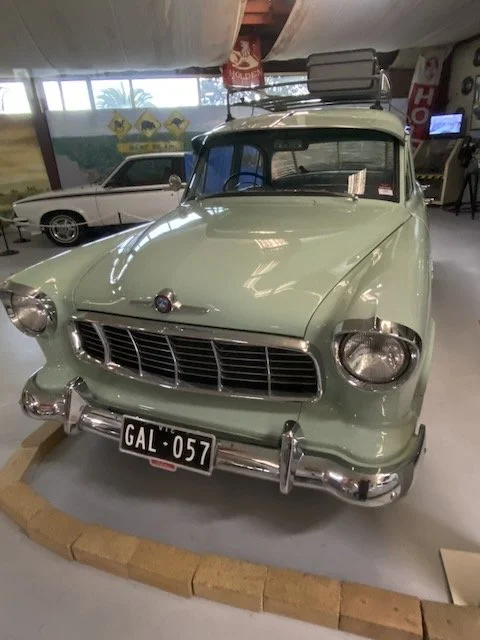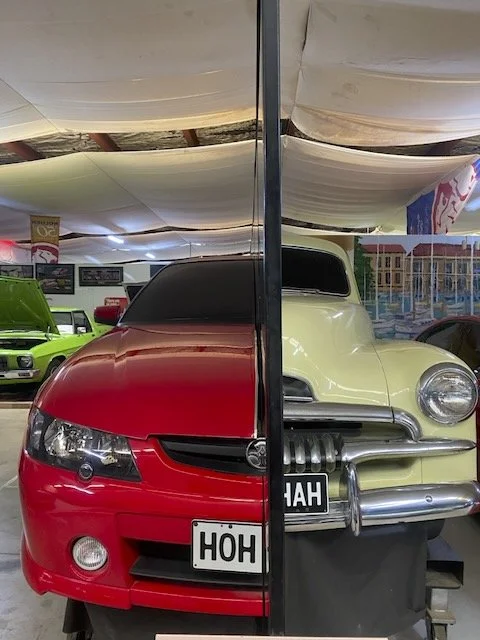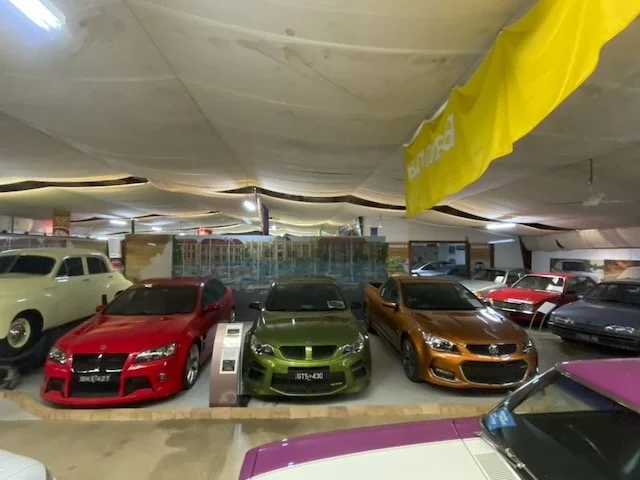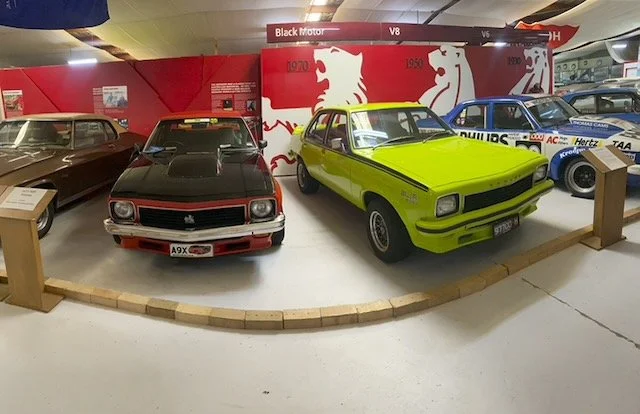
We didn’t come to Echuca for a museum. But once Neil realised the Holden Museum was there, plans shifted quickly. A very specific kind of excitement kicked in. Not loud. Not dramatic, well maybe a little dramatic! Just that quiet pull of something familiar, built into muscle memory rather than nostalgia.
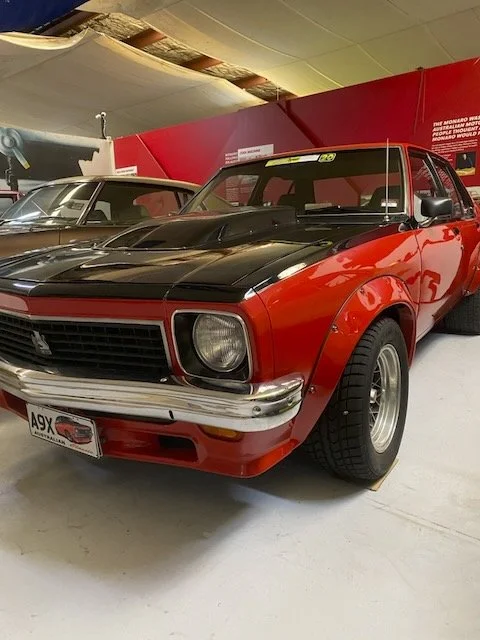
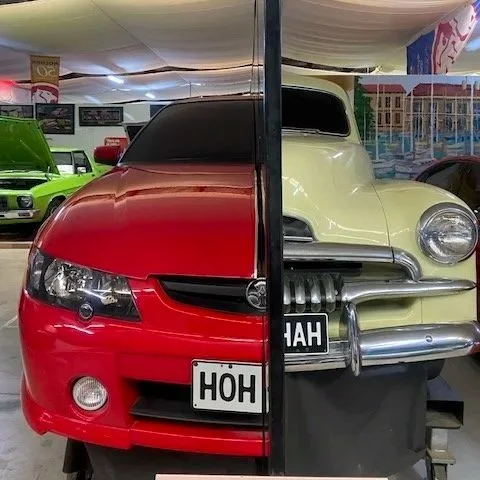
The Holden Museum in Echuca has since closed, but when we visited, it was still very much alive. Rows of cars that once filled suburban driveways, country roads, and work car parks. Nothing precious. Nothing was roped off emotionally. These were cars people owned, drove, dented, fixed, and drove again.
That’s the thing about Holden. It doesn’t sit comfortably as mythology. It belongs to the everyday. To long trips with the windows down. To farm utes, family sedans, and panel vans with a job to do. Walking through the museum felt less like learning history and more like recognising it.
Neil moved slowly from car to car, pointing out details, remembering shapes, colours, and stories attached to them. I watched him light up in a way that only happens when something hits the right nerve. Not because it was rare or valuable, but because it mattered.
For those unfamiliar with the Holden legacy in Australia, it’s hard to overstate how embedded the brand once was in everyday life. Holden wasn’t just a car manufacturer. It was part of the national furniture. Built locally, sold locally, and driven everywhere from city streets to red dirt roads, Holden cars became shorthand for reliability, affordability, and Australian-made pride.
That legacy also fed into one of the country’s longest-running rivalries: Holden versus Ford. It played out at racetracks, in workplaces, and around backyard barbeques. You were usually one or the other, often by inheritance rather than choice. The rivalry was rarely hostile. It was tribal in a familiar, almost affectionate way. Walking through the museum, that history sat quietly beneath the surface. Not shouted. Just understood.
Holden’s closure in 2020 marked the end of local car manufacturing in Australia, but it didn’t erase what came before it. Factories shut, badges disappeared, and showrooms emptied, yet the cars themselves didn’t vanish. They stayed on the road, in sheds, in memories. Places like the Echuca Holden Museum existed because of that gap between an industry's end and its everyday presence lingering. The museum wasn’t about mourning the loss. It was about recognising how deeply woven Holden had been into ordinary Australian life.
Regional car museums exist for this exact reason. They’re often built and maintained by people who don’t want these stories to disappear quietly. Not collectors chasing perfection, but locals preserving the ordinary. The Holden Museum felt like that. A passion project rooted in pride rather than profit.
We’re glad we saw it when we did. Since its closure, that chapter has folded back into Echuca’s broader story. Other regional Holden collections still exist, including the Holden Car Museum in Mildura, carrying on that work elsewhere. But this one belongs to memory now, and that feels fitting somehow.
If stories like this matter to you, our Travel Dispatches often share the moments that don’t make it into guidebooks.
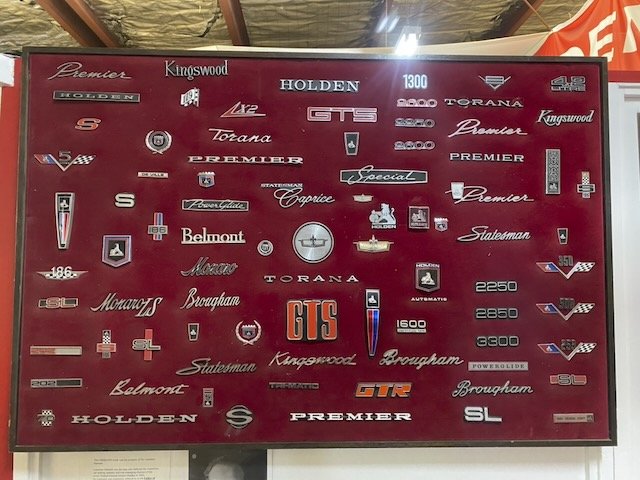
Holden Museum, Echuca (Closed)
The Holden Museum in Echuca was a privately run collection showcasing a wide range of Holden vehicles, from early models to later everyday classics. It focused on accessibility and familiarity rather than rarity, reflecting Holden’s place in Australian daily life.
How to Get There
The museum was located within Echuca, an easy walk or short drive from the town centre. While the museum itself is now closed, Echuca remains a popular stop along the Murray River.
What to See / Tours / Activities
What we did:
Walked through the Holden collection at an unhurried pace.
Took far too many photos of familiar shapes and details.
Let Neil lead the way, story by story.
Other highlights nearby:
The Murray River foreshore.
Echuca Port Precinct and paddle steamers.
Riverside walks and town streets worth wandering slowly.
When to Visit
While the Holden Museum is no longer open, Echuca is an easy year-round destination. Spring and autumn offer the best balance of mild weather and quiet river walks.
Final Thoughts
We didn’t leave thinking about what was lost. We left glad we’d paid attention when it was still there. Some things don’t need to last forever to matter.
What’s Nearby
Echuca sits comfortably on the Murray, with river life, historic buildings, and slow wandering all close at hand. We’ll share more of the town itself separately.
Other updates you may like…
Exploring the mouth of the Hopkins River near Warrnambool, from calm water and dog beaches to coastal walks, fishing spots, historic graves, and wide ocean views. A lived-in stretch of coast best discovered slowly.
Just offshore from Warrnambool, guardian dogs quietly protect a colony of little penguins. The Middle Island Maremma Project is a thoughtful conservation success, best understood from the mainland, where learning matters more than access.
Those concrete domes near Warrnambool’s breakwater aren’t public art. They’re the remains of an underground aquarium built in 1971 and closed in 1997, a small coastal curiosity with an unexpected past.
From buffalo chicken pizza to desert sculptures and Silverton’s donkeys, Broken Hill gave us art, weather, and classic outback humour in equal measure. It’s a place that surprises every time — dust storms included.
From Nyngan’s riverside calm to Cobar’s quiet bush camp and the long road to Broken Hill, this stretch of outback NSW is a reminder that sometimes, the in-between days are the best ones.
Armidale gave us cool mornings, friendly markets, and the joy of finding real bookshops again. With gardens, heritage, and country calm, it’s the kind of inland town that makes you want to stay a little longer.
The NSW coast is busy, but not everywhere. From laid-back Woolgoolga to Bellingen’s Butter Factory and the mountain roads to Dorrigo, we found the quiet corners still holding their charm.
After braving Brisbane and the Gold Coast, Mullumbimby was an exhale. A leafy hinterland town of markets, vintage shops, and slow mornings at the showgrounds. Proof that the best stops aren’t always planned.
Every now and then, you meet people on the road who feel like old friends. Mel and Susie’s bush poetry, humour, and warm-heartedness made us instant fans — and lifelong mates.
We rolled into Lightning Ridge for the third time — this visit a little muddier than usual. After dodging puddles and slick backroads, both the moho and Jimny looked rally-ready and well-travelled.
From Burren Junction’s steaming thermal pool to Rowena’s country pub, this stretch of Northern NSW delivered good food, warm water, and muddy roads—proof that slow travel still brings the best surprises.
Narrabri surprised us with its blend of geology, science and relaxed country charm — from Sawn Rocks to market scones and a slightly embarrassing moment at the Telescope Array. A simple, easy stop on the Newell Highway.
We rolled into Baradine with no big expectations and left a few days later completely charmed.
While in town, we couldn’t skip a quick visit to the Big Bogan — cheeky as ever and just as good for a second round of photos.
A couple of days in Cobar gave us history, quiet station camping and a steady outback pace. From the museum to Glenhope’s big skies, it’s a relaxed stop between the central west and the far west.
Our journey from Warrnambool to Cobar marked the beginning of a new chapter, chasing the sun and warmer days.
Selling our house in Melbourne was one of the biggest decisions we’ve ever made — and one of the best. Letting go of bricks and mortar gave us the freedom to live life on the road full-time.
Wannon Falls gave us a quiet pause west of Hamilton. Basalt cliffs, a deep gorge and short walks that fit neatly into a day on the road. A simple detour, but well worth the stop.
As huge fans of space and science, this iconic landmark was a definite must-see, and it did not disappoint.
This incredible railway depot is one of the few remaining roundhouses in Australia, and stepping inside felt like stepping back in time.
The Murtoa Stick Shed is definitely worth a visit. It’s not just a piece of agricultural history, but a hidden gem for architecture and history lovers alike. We were so glad we made the detour to check it out!
If you’re ever passing through, be sure to stop by the Woomelang Shearing Shed and check out the silo art trail. It’s a rare chance to connect with Australia’s rural past and witness the community’s dedication to preserving its story.
We pulled into Lake Lascelles in Hopetoun, Victoria, planning for a quick stop. Instead, we found ourselves lingering, drawn in by the peaceful atmosphere and the stunning lakeside setting.
A quiet camp near the Grampians with wide skies and easy access to Great Western’s historic wineries. Lake Lonsdale offers a relaxed stop between open water, local history, and good wine.
Pies, saddles, and cool mountain air. Tenterfield surprised us in all the right ways. A heritage town with a big heart and small-town charm, perfect for slowing down and soaking it all in.
Sea breezes, dolphin sightings, and a pub by the bay. Ballina gave us exactly the kind of coastal calm we needed. A giant prawn, a quiet walk, and zero influencer chaos.
We spent a slow morning at the Great Stupa near Bendigo, wandering reflective gardens, exploring inside the stupa, and enjoying lunch at the café. A calm, thoughtful stop that left us feeling lighter and at ease.
We spent a few days in Bendigo visiting family and exploring its gold rush past. Going underground at Central Deborah Gold Mine revealed a larger, more industrial story than nearby gold towns, echoed above ground in Bendigo’s grand architecture.
Castlemaine sits at the centre of Victoria’s quieter goldfields. We explored Maldon, Chewton and Malmsbury, wandered historic diggings, found forgotten machinery and spent time under the Malmsbury Viaduct. A grounded, slow-travel look at the region’s gold rush past.
Cameron is a travel writer, photographer, and freelance copywriter with more than fourteen years of experience crafting stories that connect people and place. Based on the road in a motorhome with his partner, he documents Australia’s quieter corners through Off the Main Road, a travel journal devoted to the towns, landscapes, and characters often overlooked by the tourist trail.
His writing blends observation with lived experience, drawing on a professional background in brand storytelling. Blending visual storytelling with a writer’s eye for detail, Cameron captures moments that reveal the character of regional Australia—from weathered towns and open landscapes to the honest rhythm of life across Australia.
The Holden Museum in Echuca has since closed, but we’re glad we visited when it was still open. A quiet retrospective on everyday Australian cars, regional passion projects, and noticing things before they disappear.