Traveller’s Notes: What are the domes at the Breakwater in Warrnambool?

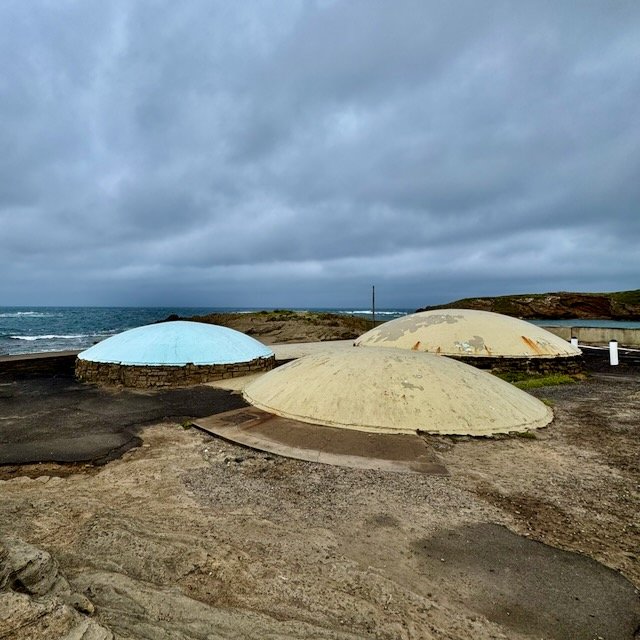
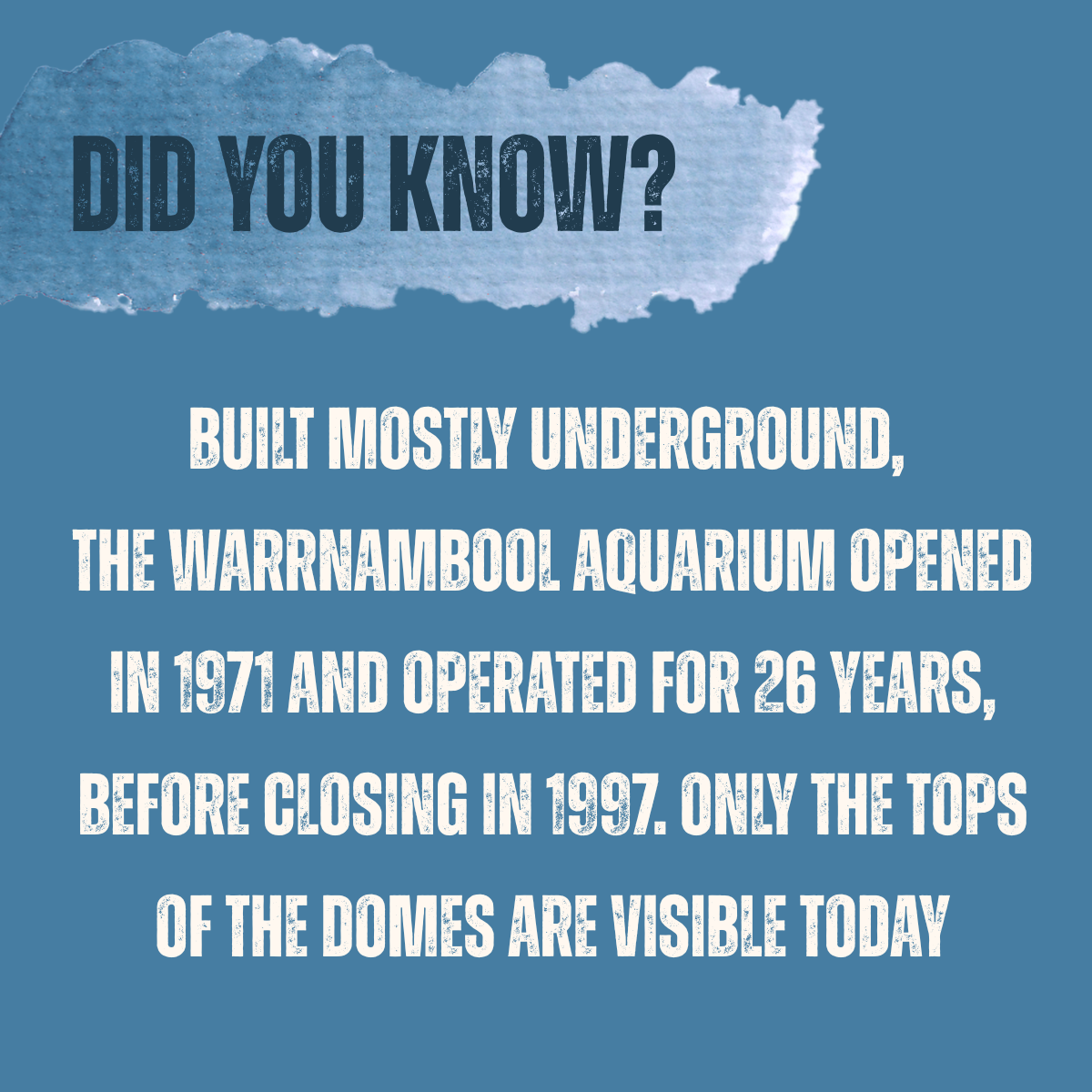
The Warrnambool Aquarium opened in 1971 as a purpose-built, mostly underground marine attraction near the breakwater. Its design was unusual for the time, with concrete domes forming the roof above ground while the main exhibition spaces sat below, allowing visitors to view local marine life in a controlled environment close to the ocean.
The aquarium focused on regional marine species, aiming to educate visitors about the Southern Ocean and coastal ecosystems rather than operate as a large commercial attraction. Despite its innovation, visitor numbers declined over time, and the facility closed in 1997.
After closure, the structure was not demolished. The underground sections were sealed, leaving the domes visible as the most obvious remnant. Over time, they’ve become an informal landmark, often mistaken for bunkers, storm shelters, or public art installations.
Today, the domes remain in place largely because removal would be complex and costly, and because they pose no risk. They’ve quietly transitioned from functional infrastructure to accidental curiosity, part of the layered history of Warrnambool’s waterfront.
If you’d like the whole story, you can read our main post on Warrnambool for more photos and tips.


Other updates you may like…





A slow morning in the mist at Warrnambool's historic Botanic Gardens, a drive out to Hopkins Falls running at full strength, and an afternoon browsing Fletcher Jones Market.