

Pilliga NP: The Sandstone Caves
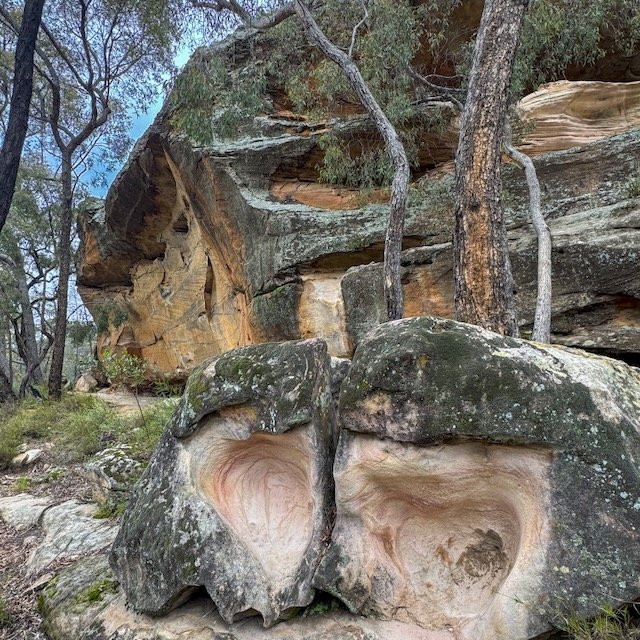
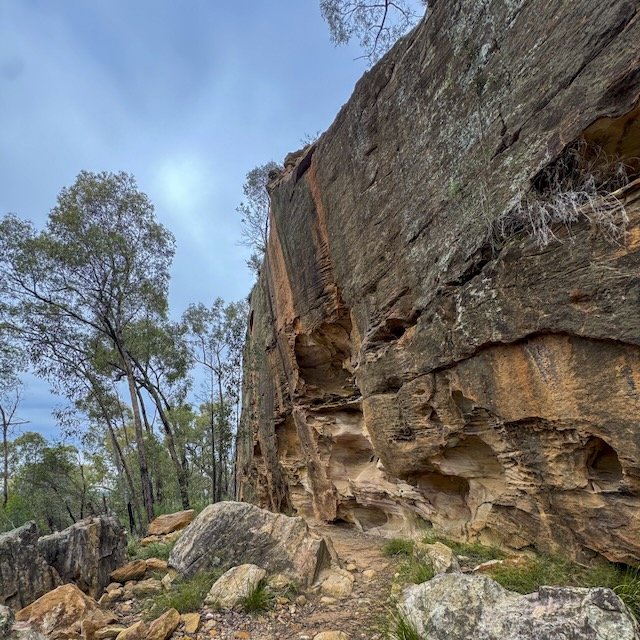
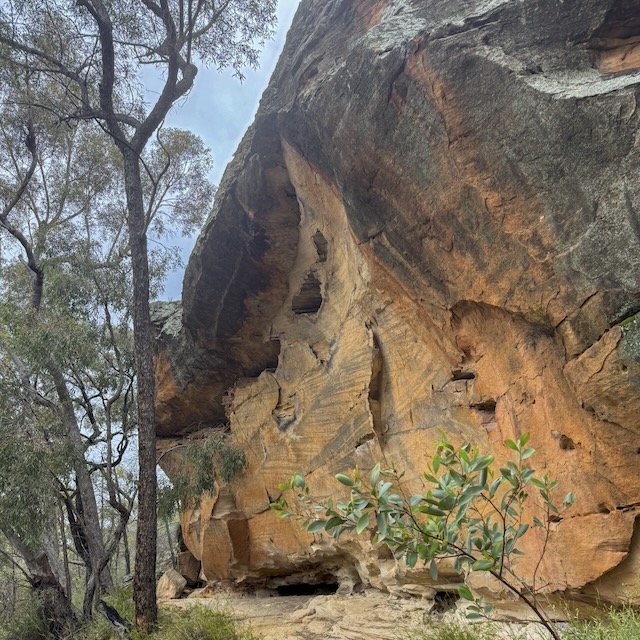
We set out on the Sandstone Caves walking track without much fanfare. It’s a short walk, easy underfoot, and quiet in a way that feels deliberate rather than empty. The forest closes in gently, the path winding between sandstone outcrops that hint at what’s ahead without giving much away.
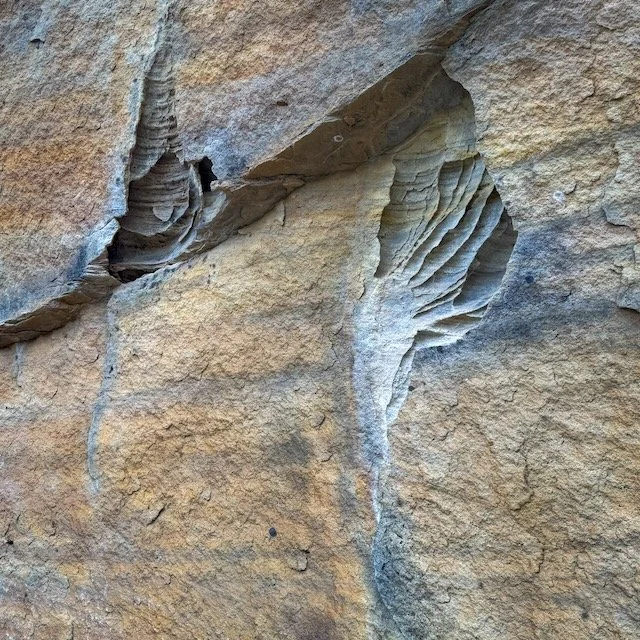
The caves themselves aren’t dramatic in scale. There’s no big reveal, no lookout moment. Instead, they ask you to slow right down. To look closely. To notice where you’re standing.
These sandstone shelters sit on Gamilaraay Country, and the markings within them are Aboriginal artworks that have endured here for generations. They’re not labelled as attractions, and they don’t come with explanations carved into signs. That absence feels intentional. You’re trusted to understand that this isn’t something to consume.
Standing there, it felt helpful to think about these places in familiar terms. Not as relics or curiosities, but as shared cultural spaces. The equivalent of churches, museums, and classrooms. Places where knowledge, story, and connection were held and passed on. We wouldn’t scrawl on a gallery wall or treat a place of worship casually. The same quiet respect applies here.
The walk itself gives you time to settle into that mindset. There’s no rush. The caves appear gradually, and the forest absorbs sound, encouraging stillness. It’s not about how long you spend there, but how present you are while you’re there.
We left feeling grateful rather than impressed. Grateful that these places are still shared at all. Grateful that access comes with trust rather than fences. And aware that visiting comes with a responsibility to tread lightly, even when nothing explicitly tells you to.
Stories like this don’t always travel fast, but they matter. Our Travel Dispatches often share moments that ask for a little more care and attention. You can join us here
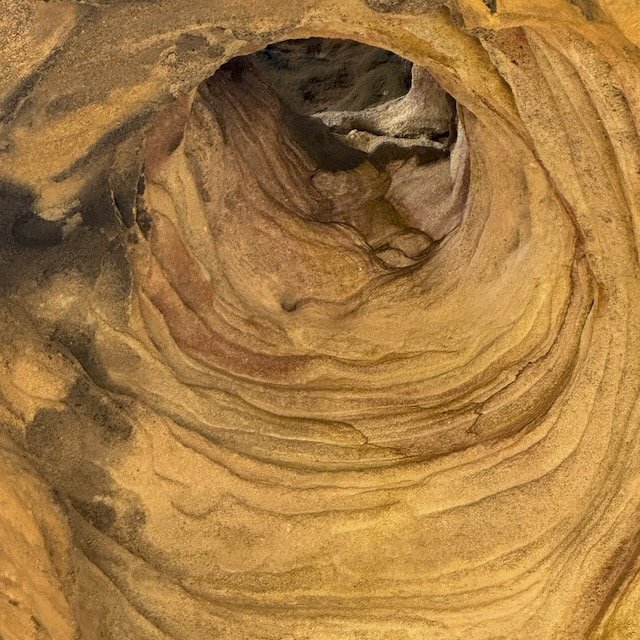
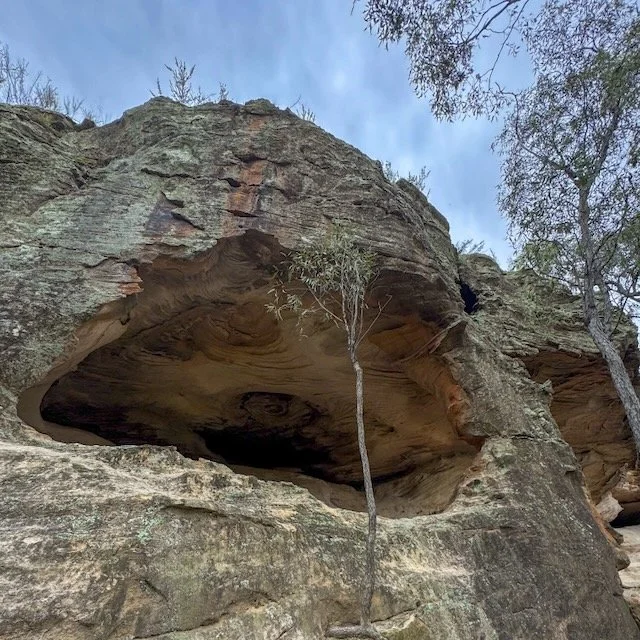
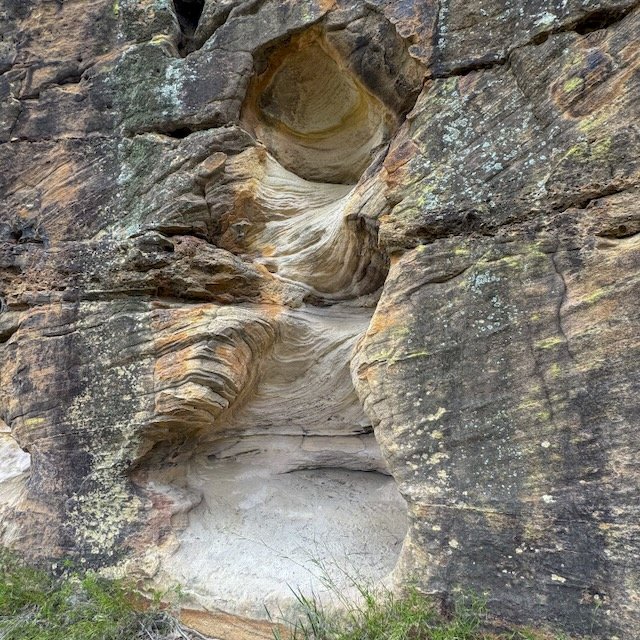
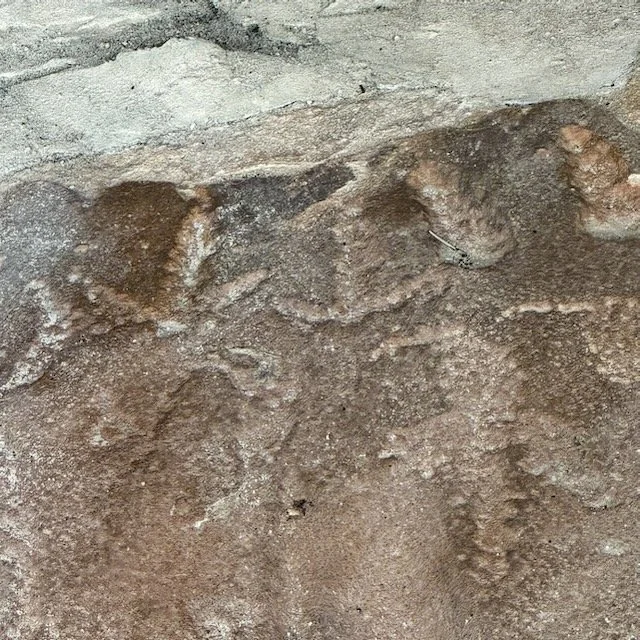
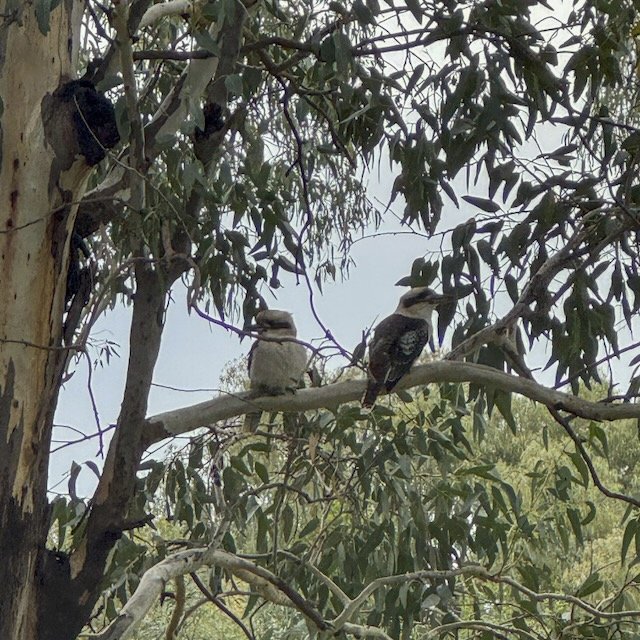
Sandstone Caves, Pilliga National Park
The Sandstone Caves are a short walking track within the Pilliga Forest, leading to a series of sandstone rock shelters that contain Aboriginal artworks. The site is accessible to visitors but deliberately understated, with minimal infrastructure and interpretation.
How to Get There
The Sandstone Caves walking track is accessed via forest roads from Baradine. Roads are generally unsealed within the Pilliga, and conditions can change after rain. Signage leads to a small parking area near the start of the walk.
What to See / Tours / Activities
What we did:
Walked the Sandstone Caves track at an unhurried pace.
Spent quiet time at the rock shelters without lingering unnecessarily.
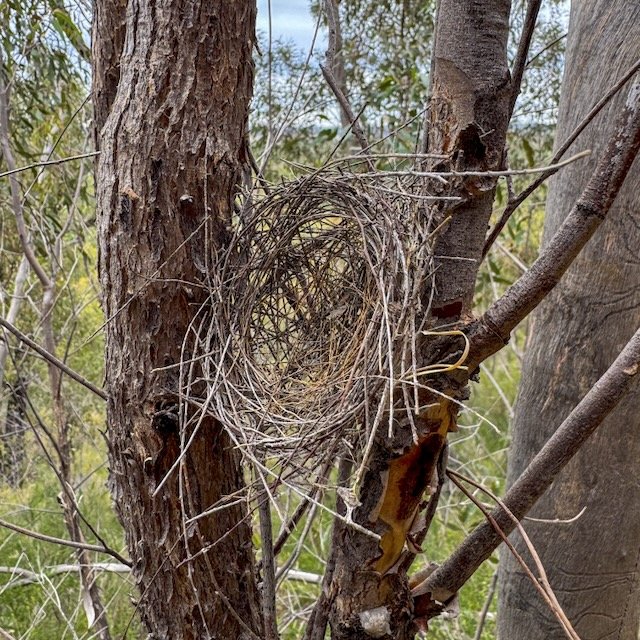
Took photographs of the surrounding landscape, not the artworks themselves.
Other highlights nearby:
Pilliga Fire Tower.
Sculpture Walk.
Salt Caves picnic area.
Long forest drives through the Pilliga.
When to Visit
Spring and autumn offer the most comfortable walking conditions. Summer heat can be intense, and winter mornings are often crisp but quiet. Avoid visiting after heavy rain due to sandy and unsealed roads.
Final Thoughts
Some places don’t ask for admiration. They ask for restraint. The Sandstone Caves felt like that. A reminder that being allowed to visit isn’t the same as being invited to take.
What’s Nearby
The Sandstone Caves sit within the wider Pilliga Forest, with Baradine providing the closest base for supplies and accommodation. The region lends itself to slow exploration rather than ticking off individual stops.
✨ Join our newsletter for stories, secret spots, and off-the-main-road adventures that don’t make the guidebooks — delivered straight to your inbox. Sign up here.
Fast Facts
Location: Pilliga Forest, New South Wales
Distance: Approx. 25 km from Baradine
Traditional Owners: Gamilaraay people
Access: Unsealed forest roads; short walking track
Facilities: Small car park; no amenities
Walking Track: Short, flat loop
Best Time to Visit: Spring and autumn
Dog Friendly: No
Visiting With Respect
The Sandstone Caves are a shared cultural site. Aboriginal artworks are fragile and irreplaceable.
Touching, marking, or tracing artworks causes damage.
Photography of artworks should be minimal and considered.
Stay on tracks and follow signage.
These places remain accessible because visitors treat them with care.
If this post helped, you can support our work here.
Other updates you may like…
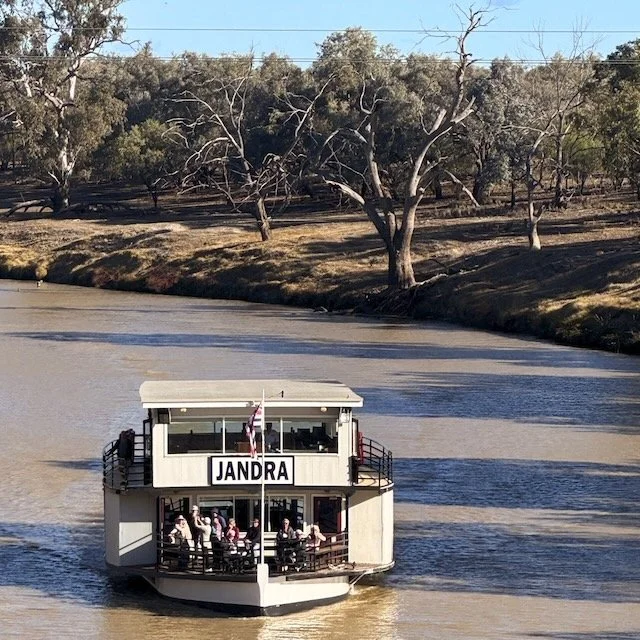
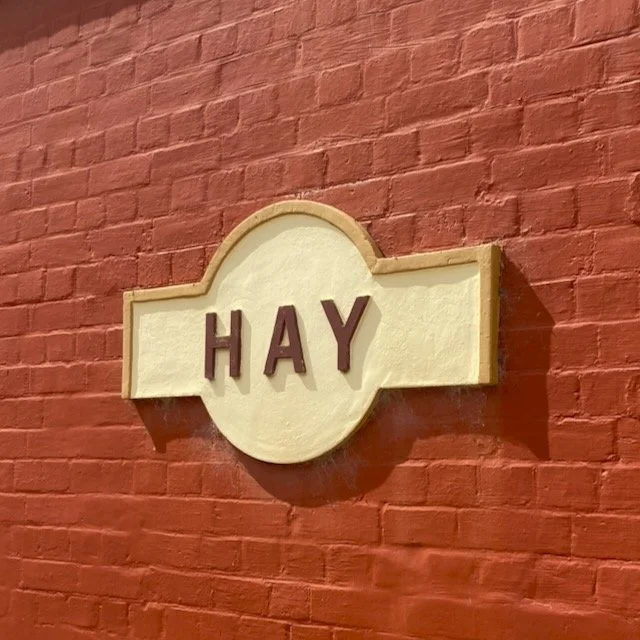












The Kidman Way is a 644-kilometre sealed touring route through inland NSW, from Jerilderie in the south to Barringun on the Queensland border. Named after the 'Cattle King', it passes through Griffith, Cobar and Bourke.