Pine Creek is a small town on the Stuart Highway, but it has a knack for surprising you if you give it a minute. For us, the Lazy Lizard Tavern was the standout, part pub, part roadside refuge, part accidental museum.
We pulled in for a couple of nights and grabbed a meal at the tavern. It’s a relaxed, open-air place, built from local stone and timber, with the warm, slightly oddball charm that the Top End does so well. Dinner hit the spot, the drinks were cold, and the whole vibe felt friendly in that easy, come-as-you-are way.
Out the back sits the real treasure: a shed packed with classic motorbikes and old cars. It’s the sort of museum you wander into expecting a few dusty bits and pieces, then suddenly realise beautifully restored machines surround you. Neil was in his element, drifting from car to car and bike to bike, half admiring, half plotting the man cave he’d build if space and budget didn’t exist. Even if you’re not a vehicle person, it’s still a fun place to poke around. It’s a little time capsule tucked behind a pub.
Pine Creek itself carries a lot of railway and gold-mining history, and you can feel it in the buildings and old rail remnants around town. We didn’t dive into everything this visit, but even a quick walk shows how much story sits behind the calm facade.
Just outside town sits the old Enterprise Pit, a former open-cut gold mine that’s now completely filled with water. The lookout above it is worth the short drive. The road up is steep but sealed, and the view gives you a real sense of Pine Creek’s mining past. A huge, deep pool framed by red earth and scrubby bush. It’s the kind of place you linger for a minute, taking in how quickly the landscape can reclaim what was once all machinery and noise.
It’s a small stop, but one with plenty of character. Worth pulling over for if you’re heading north or south in the Top End and feel like stretching your legs, grabbing a feed, or admiring a few classics that have been given a second life.
Want more Outback oddities and the stories that don’t always make the blog? Join our newsletter for the next stretch of the NT road.
Pine Creek
A small Top End town with railway roots, gold history, and a pub that hides one of the most unexpected sheds in the NT. It’s easy to overlook Pine Creek if you’re pushing through, but stopping in gives you a glimpse of what makes the Territory tick…character, history, and a good dose of quirk.
How to Get There
Pine Creek sits on the Stuart Highway, about 200 km south of Darwin or 90 km north of Katherine. Access is fully sealed and suitable for all vehicles, from caravans to big rigs.
What to See, Tours and Activities
What we did:
Stayed overnight at the Lazy Lizard Tavern.
Had dinner and cold drinks at the pub.
Explored the classic car and motorbike shed out the back.
Miners Park
Other highlights nearby:
Pine Creek Railway Station Museum
Gungurul Lookout (in nearby Nitmiluk NP)
Umbrawarra Gorge Nature Park (4WD access)
Old gold mining relics around town
When to Visit
Dry season (May to September) offers cooler days and easier travel. The wet season brings storms, heavy humidity, and occasional access issues on side tracks, but the tavern and town stay open year-round.
Final Thoughts
Pine Creek might not be a full-day destination, but it’s one of those small towns that's definitely worth a stop. A laid-back pub, a shed full of surprises, and a town stitched together with history…all on a road most people speed through.
What’s Nearby
Heading north takes you toward Adelaide River, Litchfield, and eventually Darwin. South leads into Katherine and Nitmiluk Country — plenty of camps, walks, and river adventures waiting down the track.
If you’d like the behind-the-scenes stories, outtakes, and the moments we don’t always publish, join our Top Secret Travel Dispatches. You’ll fit right in.
Fast Facts
Location: Pine Creek, NT
Distance: 200 km south of Darwin
Traditional Owners: Jawoyn and Wagiman Peoples
Access: Fully sealed on the Stuart Highway
Facilities: Tavern, fuel, small shops, caravan park, basic services
Walking Track: Short heritage walks around the old railway precinct
Dog Friendly: Yes, in town areas and at the Lazy Lizard (on lead)
Best Time to Visit: Dry season for cooler weather
Things That Could Kill You (Probably Won’t)
A semi-serious guide to surviving Australia. Mostly common sense, occasionally luck.
Crocodiles: Not in town, but always assume any water in the NT has teeth.
Heat: Pine Creek turns the temperature dial up fast — hydrate or regret it.
Husbands in a Shed of Classics: You may lose him for hours. Be prepared.
Other updates you may like…
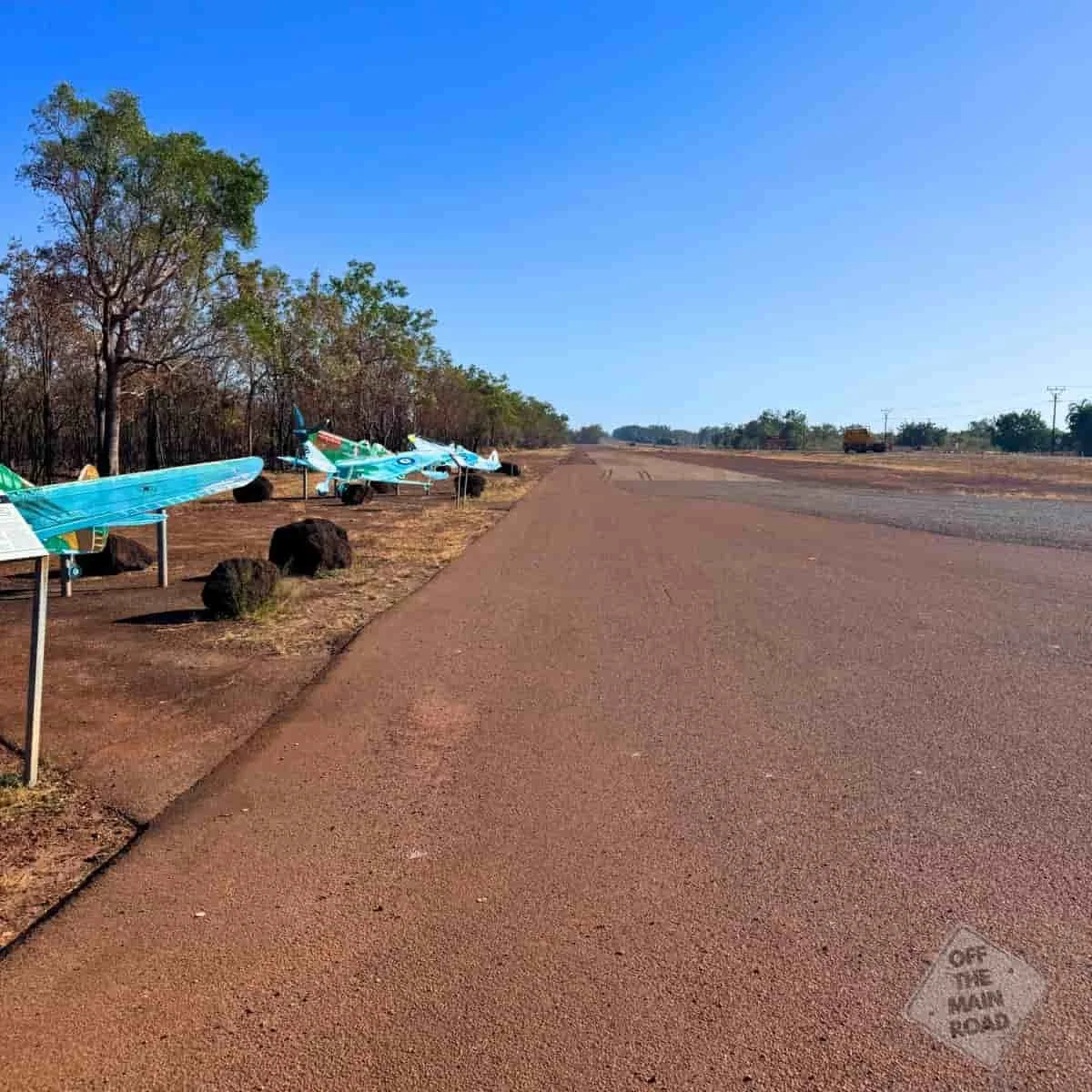
A chain of World War Two airstrips lines the Stuart Highway on the run to Darwin. We stopped at Strauss and Gorrie, once the country's biggest airbase, and drove past the rest, each named for a lost pilot.
Our airboat trip with Northern Territory Airboats gave us a fast look at the Bynoe wetlands. Crocodiles on the banks, birdlife across the floodplains and a guide who knew the country well. A relaxed Top End wildlife experience.
We drove to Fogg Dam near Darwin expecting a few ducks and found hundreds of birds, three crocodiles, and two tourists we probably saved from becoming breakfast on the closed, croc-lined dam wall.
We broke the curse the only way we could, by cheating and flying. A doorless chopper, sandstone towers older than almost anything on earth, and a walk through a Lost City with no one else in sight.
Every expedition needs a curse, and ours began the moment we left Mount Isa chasing the Lost Cities. Plagues of bugs, biblical rain, a brutal road, and a mysterious rash.
We arrived dusty and travel-worn, but Alice Springs greeted us with warmth, colour and comfort. From quirky cafes to red desert sunsets — don’t believe everything you read about Alice.
We returned to Uluru with fresh eyes, riding out for sunrise, circling the base, and watching rain turn the rock to copper. Quiet, powerful, and unforgettable—the red heart of Australia.
Massive, mysterious and far less crowded than Uluru, Kata Tjuṯa blew us away. We wandered among towering domes, soaked in the silence, and left feeling tiny, dusty, and full of quiet awe.
We hiked the Rim Walk at sunrise, cooled off in the Garden of Eden, and took to the skies for a birthday flight. Kings Canyon is vast, ancient, and one of the Territory’s true wonders.
Often, when travelling together, it’s great to visit places individually so we can each have a different point of view. Neil’s quieter view of Ormiston Gorge. Red walls, soft light, and the sound of wind through the ranges.
Cameron’s take on Ormiston Gorge. A cool desert waterhole framed by red cliffs and silence. A refreshing swim, a perfect view, and a reminder of how still the Outback can be.
Hidden in the West MacDonnell Ranges, the Ochre Pits reveal layers of colour and culture. Once used by the Arrernte people for ceremony and trade, they remain a sacred reminder of Australia’s enduring connection to land.
A short, bright walk through one of the Red Centre’s most dramatic natural landmarks. Standley Chasm glows with midday light and cultural depth, cared for by the Western Arrernte people of Central Australia.
Standley Chasm changes completely depending on the light. Here’s a quick guide covering the best time to see the glow, how long the walk takes, and what to expect when you arrive.
This stunning natural landmark feels like a hidden sanctuary, where the arid landscape meets the cool refuge of a dry creek bed nestled between towering cliffs.
Karlu Karlu (Devil’s Marbles) rises from the desert floor in enormous rounded granite boulders, glowing red at sunset and pink at dawn. We stayed overnight and caught both. One of the Northern Territory's most striking stops.
Crocodylus Park in Darwin brought us face to face with the Territory’s wildest locals. From croc feedings to holding a baby reptile, this visit was thrilling, educational, and a little bit terrifying.
Territory Wildlife Park at Berry Springs offers a relaxed way to explore Top End wildlife. We wandered open trails, watched birds in free flight, and learned how wetlands, forests, and savannahs shape life in the Northern Territory.
The Darwin Botanic Gardens gave us a quiet break from the city. Rainforest paths, tropical plants, a shady waterfall area and easy walking. A simple, relaxing morning in one of the NT’s best green spaces.
The Darwin Aviation Museum gave us a steady half-day indoors. A B-52 bomber, military aircraft, WWII history and curious stories from NT aviation. A cool, informative break just minutes from the city.
Darwin’s build-up delivered heat, humidity and some of the best skies we’ve seen. Slow days, big clouds and long sunsets showed us a different side of the Top End. Intense, colourful and uniquely tropical.
Mindil Beach Markets gave us a classic Darwin evening. Warm air, good food and a sunset crowd drifting to the sand. A relaxed mix of colour, flavour and that dry-season atmosphere the Top End does so well.
The Darwin Oil Storage Tunnels offered a calm step into the city’s wartime past. Cool underground chambers, simple displays and a quiet look at how Darwin prepared for air raids during WWII.
The NT Legislative Assembly gave us a calm, informative look at Territory politics: modern architecture, guided tours and stories like the 1996 Remonstrance. A thoughtful Darwin stop for anyone interested in how the Top End governs itself.
Dundee Beach gave us a quiet NT coastal break. With long sand, wide horizons, fishing boats heading out and a sunset worth sitting still for. No swimming here, just the sea breeze and the feel of the Top End coast.
Litchfield’s waterfalls and swimming holes gave us three days of cool, easy walking and clear water. From Florence Falls to Buley and Wangi, this Top End park delivers exactly what hot travellers need.
Adelaide River blends wartime history, weekly markets, and Top End quiet. We wandered the War Cemetery, chatted with locals at the dry-season market, and found a town that carries both stillness and life with ease.
Tucked away in the bush near Adelaide River, this vast complex was once one of the largest fixed installations in the Northern Territory during the war.
Robin Falls, tucked away near Adelaide River, is one of those places that feels like a secret waiting to be shared.


Most people drive through Batchelor on the way to Litchfield. Stop, and you find a miniature Czech castle built by a homesick miner, a Cold War uranium mine, and a wartime airfield with a famous visitor.