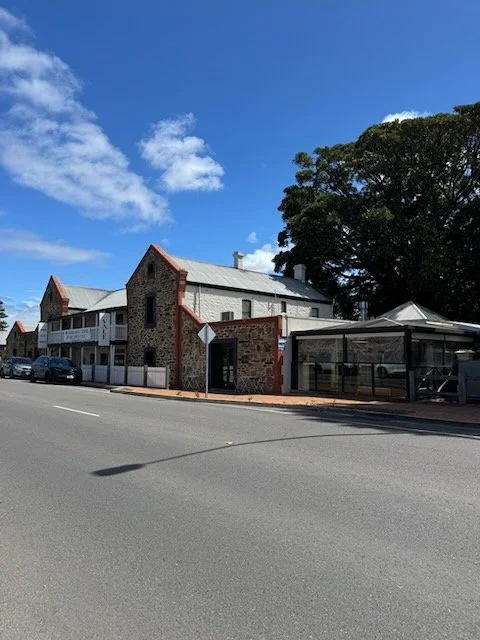
Staying at Port Willunga meant McLaren Vale quickly became part of our regular loop. It’s one of those regions where everything sits close together from cellar doors and food to coast and town, and it didn’t take long for us to find a chilled rhythm there.
We started at the McLaren Vale Visitor Centre, which is hands-down one of the best we’ve come across. Maps, local tips, winery lists, places to eat, all laid out clearly and without fuss. It’s a stop that makes the rest of the day feel easier, especially when you’re choosing between dozens of cellar doors.
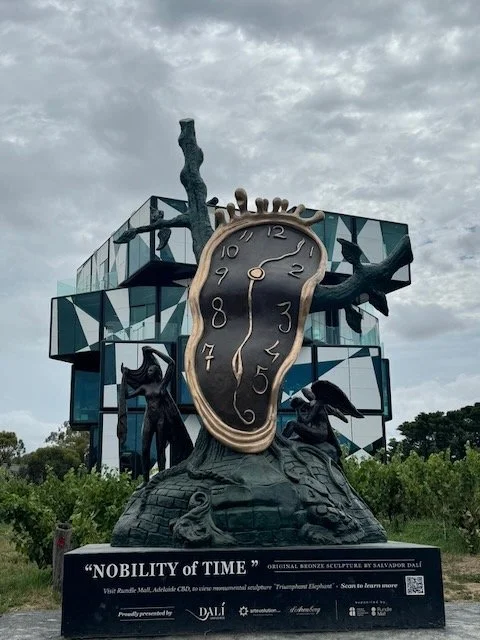
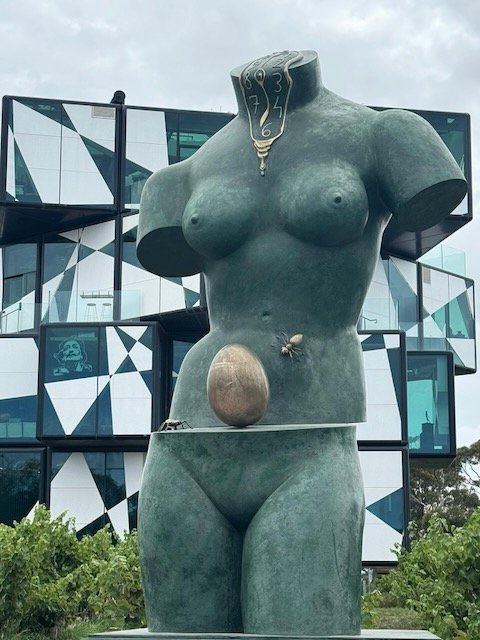
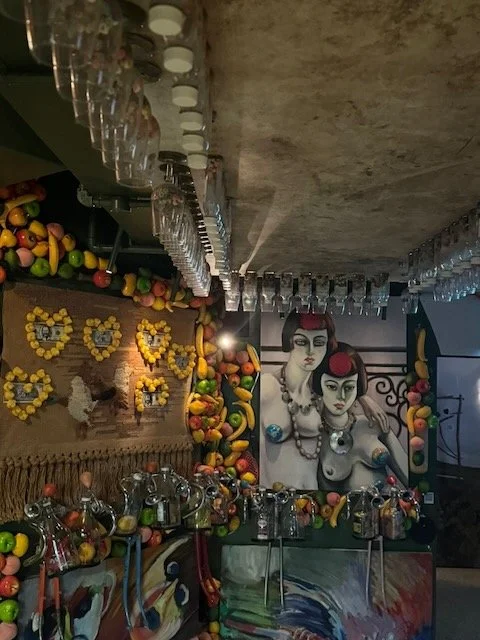
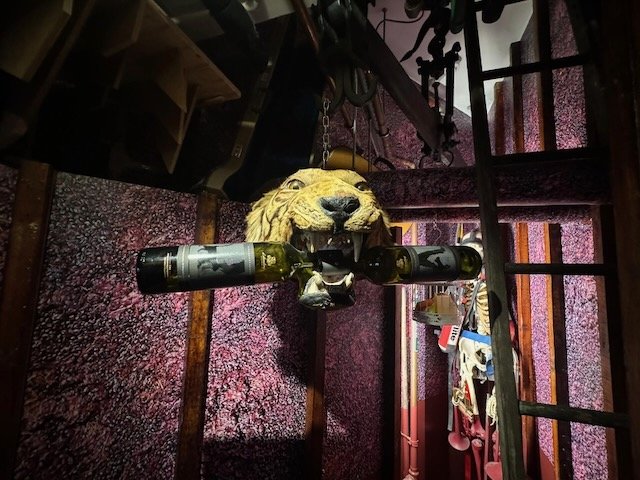
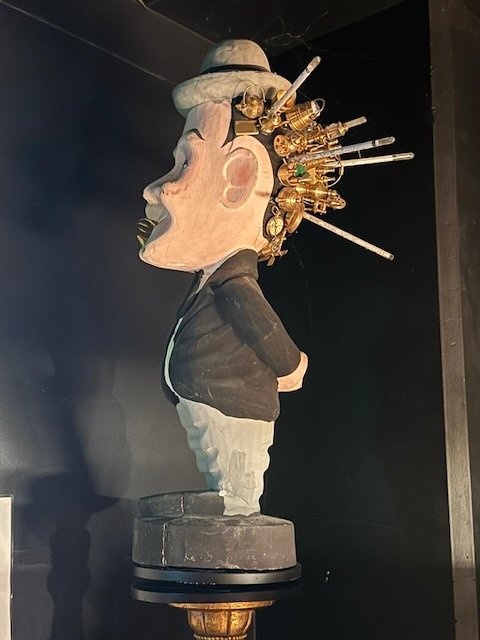
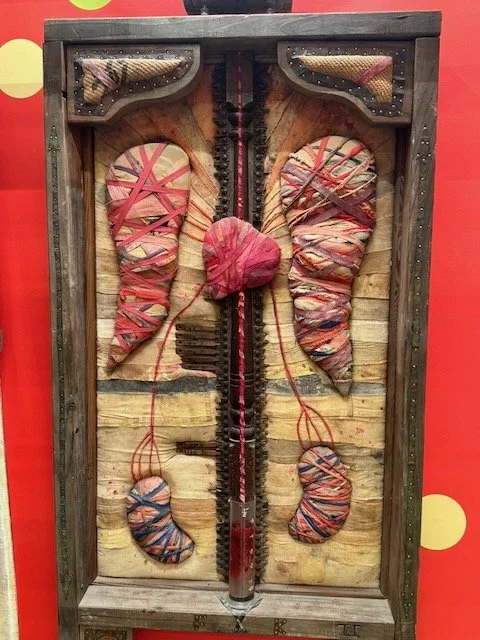
The big drawcard for us was the d’Arenberg Cube. You can’t really explain it to someone who hasn’t seen it. It’s part art installation, part museum, part winery, all wrapped inside a five-storey glass puzzle. We spent most of the morning wandering through the quirky exhibits, losing track of time while Neil eyed off the tasting room. The wine became secondary to the experience, but somehow he still managed to leave with a sneaky Pinot tucked under his arm.
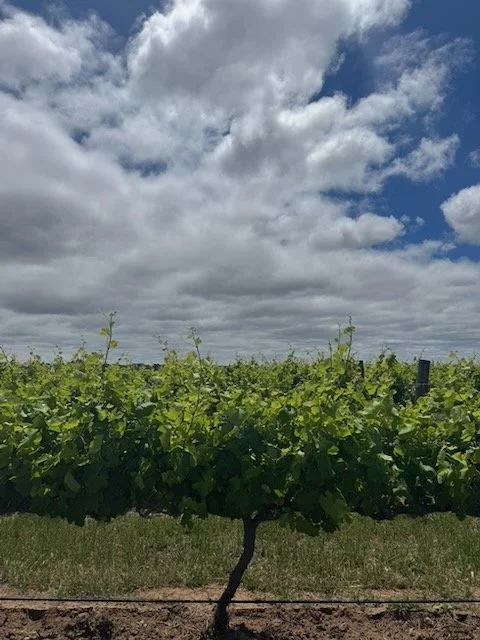
Lunch took us up to Chalk Hill. The view across the vineyards is one of the best in the region, and the pizza is reason enough to stay longer than planned. We ate outside in the sunshine, watching the breeze ripple across the vines.
Before heading back toward Port Willunga, we made a mandatory stop at the Fruchocs shop in town. A few bags “for the road”… which lasted about ten minutes. There’s something about being in South Australia that makes stocking up feel like a duty.
McLaren Vale has plenty more waiting…walking trails, hidden cellar doors, backroads through the vineyards. But even with a handful of visits, it still feels like a region we’ve only just started to get to know.
Sign up for our Travel Dispatch for more coastal detours and wine-country days.
McLaren Vale
A well-known wine region south of Adelaide, home to cellar doors, local produce, rolling vineyards and one very unusual cube-shaped art-meets-wine experience.
How to Get There
McLaren Vale is about 45 minutes south of Adelaide via the Southern Expressway. All roads are sealed, with easy access to cellar doors and the coast.
What to See, Tours and Activities
What we did:
Visited the McLaren Vale Visitor Centre.
Explored the d’Arenberg Cube and its museum.
Picked up a Pinot from the tasting room.
Enjoyed pizza and views at Chalk Hill.
Stopped at the Fruchocs shop for supplies.
Other highlights nearby:
Beaches at Port Willunga and Maslin Beach.
Shiraz Trail walking and cycling path.
Willunga Farmers Market (Saturdays).
Boutique cellar doors along McMurtrie Road and Olivers Road.
When to Visit
Autumn and spring offer mild weather and bright vineyard colour. Summer brings long evenings and busy cellar doors, while winter is quieter and great for indoor tastings.
Final Thoughts
McLaren Vale blends wine, art, food and coastal breezes in an easy, approachable way. A few visits were enough to make it a favourite, but not nearly enough to feel finished — which suits us fine.
What’s Nearby
To the west sits the coastline from Port Willunga down to Moana. Inland, the region links to Willunga, Aldinga and the backroads toward the Adelaide Hills.
Don’t miss our Top Secret Travel Dispatches — the stories and sillier moments we only share off the main road. Join here.
Fast Facts
Location: McLaren Vale, Fleurieu Peninsula SA
Distance: 45 minutes south of Adelaide
Traditional Owners: Kaurna People
Access: Fully sealed roads
Facilities: Visitor centre, cellar doors, cafes, shops, food outlets
Walking Track: Shiraz Trail (easy, well-marked)
Dog Friendly: Many cellar doors offer outdoor dog-friendly spaces
Best Time to Visit: Spring and autumn
Things That Could Kill You (Probably Won’t)
A semi-serious guide to surviving Australia. Mostly common sense, occasionally luck.
Cellar Door Temptations: Your budget may experience sudden distress.
The Cube’s Staircases: Easy to lose yourself in more ways than one.
Fruchocs: Highly addictive — proceed with restraint (or don’t).
Seriously though…Don’t Drink and Drive!
Other updates you may like…
Slow travel isn’t about distance or aesthetics. It’s about rhythm, familiarity, and staying long enough for places to reveal themselves. A reflective look at what slowing down actually feels like, from life on the road.
The Holden Museum in Echuca has since closed, but we’re glad we visited when it was still open. A quiet retrospective on everyday Australian cars, regional passion projects, and noticing things before they disappear.
Exploring the mouth of the Hopkins River near Warrnambool, from calm water and dog beaches to coastal walks, fishing spots, historic graves, and wide ocean views. A lived-in stretch of coast best discovered slowly.
Just offshore from Warrnambool, guardian dogs quietly protect a colony of little penguins. The Middle Island Maremma Project is a thoughtful conservation success, best understood from the mainland, where learning matters more than access.
Those concrete domes near Warrnambool’s breakwater aren’t public art. They’re the remains of an underground aquarium built in 1971 and closed in 1997, a small coastal curiosity with an unexpected past.
2025 wasn’t about ticking boxes. It was about slowing down, paying attention, and letting the road lead. A reflective look back at the places and moments that shaped our year, in the order they unfolded.
With just one day in Adelaide, we crammed in all our favourites! Art, museums, botanic gardens and a market dash. North Terrace delivered its usual magic, reminding us why this city always feels good to return to.
Hahndorf gave us a relaxed day of wandering, snacks and a few too many condiments from Beerenberg. Between gin tastings, strudel and leafy streets, this Adelaide Hills favourite is an easy, enjoyable stop with plenty to explore.
McLaren Vale became a favourite during our Port Willunga stay. Art at the Cube, pizza at Chalk Hill and a few essential Fruchocs for the road. A relaxed mix of wineries, food and rolling vineyard views.
The Barossa Sculpture Park and Whispering Wall made for a simple, memorable stop between the valley and Adelaide — big views, strange acoustics and a few fun moments we’ll save for our next Top Secret Dispatch.
A relaxed Barossa morning at Maggie Beer’s Farm Shop gave us scones, lake views and a visit to the kitchen from The Cook and the Chef. Peaceful, friendly and a must-stop for Maggie fans.
Waikerie gave us ferry rides, silo art, bakery stops and an easy riverfront stay. A bright Riverland town with good food, calm paths and a few rituals we return to every time we pass through.
A relaxed day trip to Renmark gave us river cliffs, quiet tracks, a friendly pet café and a stop for chocolate almonds. A simple wander along the Murray with plenty to pause for.
From buffalo chicken pizza to desert sculptures and Silverton’s donkeys, Broken Hill gave us art, weather, and classic outback humour in equal measure. It’s a place that surprises every time — dust storms included.
From Nyngan’s riverside calm to Cobar’s quiet bush camp and the long road to Broken Hill, this stretch of outback NSW is a reminder that sometimes, the in-between days are the best ones.
Armidale gave us cool mornings, friendly markets, and the joy of finding real bookshops again. With gardens, heritage, and country calm, it’s the kind of inland town that makes you want to stay a little longer.
The NSW coast is busy, but not everywhere. From laid-back Woolgoolga to Bellingen’s Butter Factory and the mountain roads to Dorrigo, we found the quiet corners still holding their charm.
After braving Brisbane and the Gold Coast, Mullumbimby was an exhale. A leafy hinterland town of markets, vintage shops, and slow mornings at the showgrounds. Proof that the best stops aren’t always planned.
We came to Toowoomba for two nights and stayed four. Drawn in by gardens, markets, thunderstorms, and easy charm. A big city with a small-town heart, full of stories and surprises on the range.
From the old Rex Cinema in Monto to a four-kilo peanut haul in Kingaroy, this stretch of Queensland had everything—local tips, bush learning, and the stories you only find on the road.
Living full-time on the road means finding balance between connection and quiet. From calls home to campfire uploads, we’re learning that staying grounded matters just as much as staying online.
A weekend stop in Biloela for new windscreens turned into a laid-back escape. Between Heritage Park, Callide Dam, and country charm, this Central Queensland town proved that even repair days can feel like holidays.
Five hours of potholes, rattles, and questionable suspension from Charters Towers to Emerald reminded us that not every road is smooth.
Charters Towers caught us off guard — a planned two-night stop turned into four days of gold-rush history, quirky landmarks, tyre trouble and small surprises!
Blistering heat, long roads, and a sense of humour carried us from Julia Creek to Hughenden. Between dusty stops, cool lakes, and cranky tyre alarms, we found that real travel isn’t always picture perfect.
We spent three days in Cloncurry, exploring its history, murals, aviation heritage, and dam. From the first Qantas hangar to the birthplace of the RFDS, this outback town surprised us with stories and charm.
Croydon, Normanton, and Karumba gave us history, character, and Gulf Coast charm. From welcoming the Gulflander to cold drinks at the Purple Pub and sunsets in Karumba, this stretch of the Savannah Way was unforgettable.
We explored Cobbold Gorge after a rugged drive from Forsayth. Floating along the calm waters and hiking to the glass bridge, we were captivated by the towering cliffs, wildlife, and serene beauty of this Queensland outback gem.
Exploring the Undara Lava Tubes was like stepping into another world…towering underground tunnels carved by ancient lava flows, part history, part geology, and all awe. A side quest well worth the detour.
Cameron is a travel writer, photographer, and freelance copywriter with more than fourteen years of experience crafting stories that connect people and place. Based on the road in a motorhome with his partner, he documents Australia’s quieter corners through Off the Main Road, a travel journal devoted to the towns, landscapes, and characters often overlooked by the tourist trail.
His writing blends observation with lived experience, drawing on a professional background in brand storytelling. Blending visual storytelling with a writer’s eye for detail, Cameron captures moments that reveal the character of regional Australia—from weathered towns and open landscapes to the honest rhythm of life across Australia.
Photography slowed our travel down. By staying longer, noticing light, and relying on simple techniques, we learnt to photograph with more intention. Sometimes the best images arrive quietly, once a place feels familiar.