Chinchilla: Quiet Camps & Big Fruit
We’d been drifting across southern Queensland for a while when we swung toward Chinchilla. The country opens up around there. Long stretches of grain fields, low scrub, and those wide skies that seem to flatten everything out. We’d stayed in Chinchilla before, so this run felt familiar. Still, the town has a way of shifting slightly each time you return.
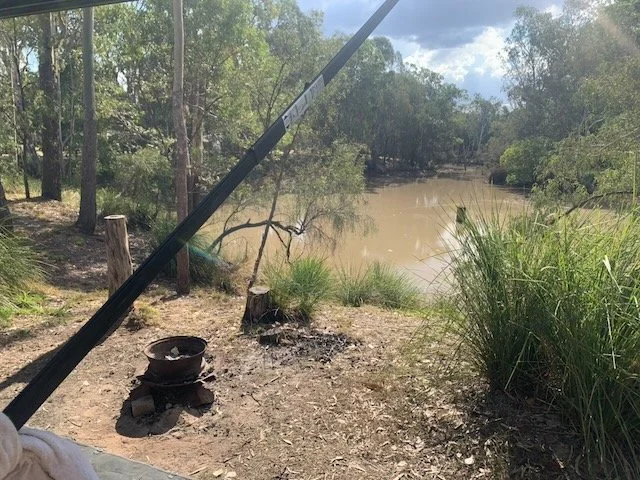
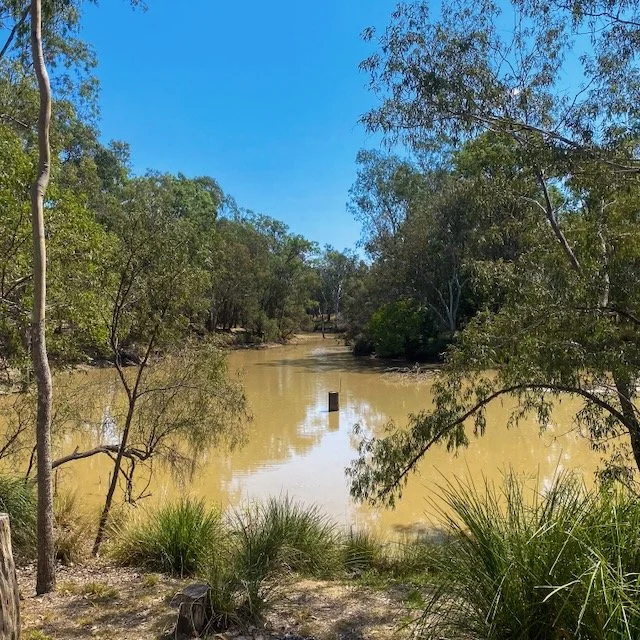
We set up first at Chinchilla Weir. The campground sits out of town and the pace changes the moment you pull in. The water spreads out behind the trees and the sites are lined up neatly with plenty of room to move. It’s donation based, which always feels fair, and the facilities are clean and simple. There aren’t many powered spots, so we settled into our solar setup and took it as an excuse to slow the days right down.
The weir itself gave us enough to do without overthinking it. We wandered along the paths, watched a few people fish, and kept an eye on the wildlife drifting in and out. The evenings were calm, the kind that remind you that travel doesn’t need to be complicated. After a couple of nights out there, we moved into town to stay at Charley’s Creek Campgrounds.
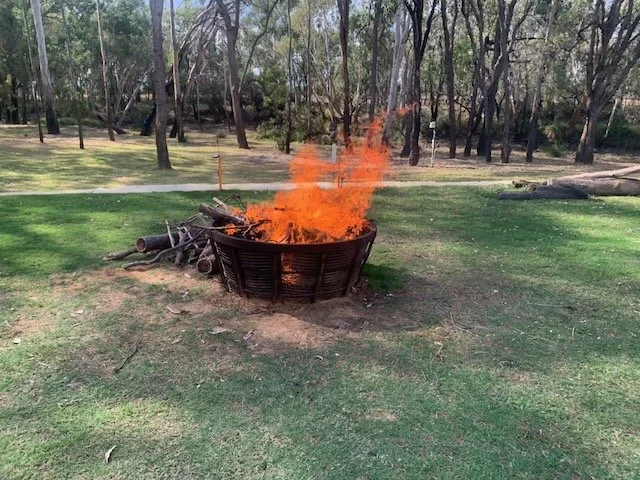
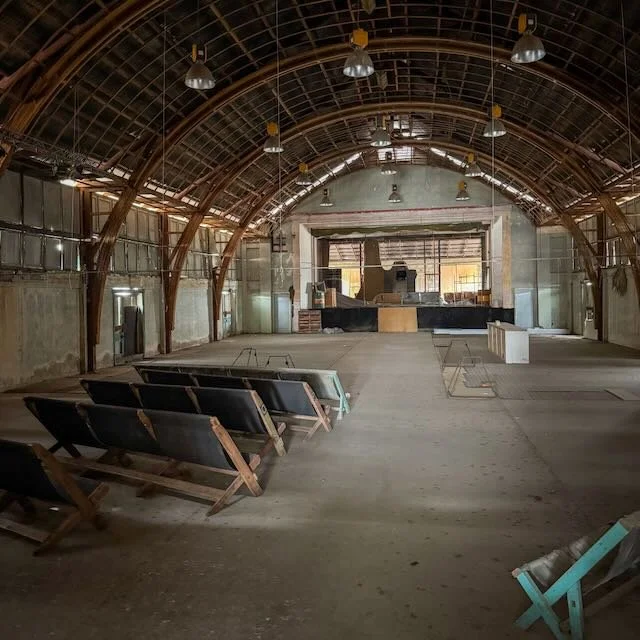
Charley’s Creek was quieter than we expected. Big open lawns, shaded corners, and plenty of space to spread out. The brewery is still under construction. We’d wander past the site every so often, curious to see how it would take shape. The smell of timber and concrete hung around the shed. It already felt like it was going to become a local favourite.
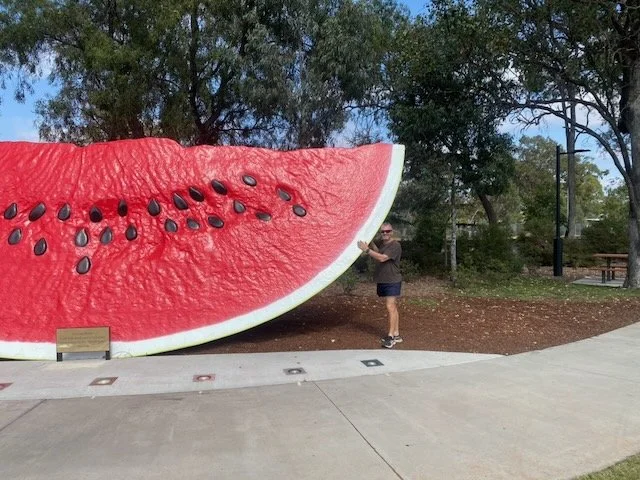
Once we settled in, we spent time wandering through town. Chinchilla has that tidy country-town feel with a bit of energy under the surface. The Big Melon sits proudly at the visitor centre and is exactly what you expect: large, bright, and impossible not to smile at. The main street has all the usual bits, but tucked between the shops are a few local spots worth a look. The museum is interesting if you give it the time. There are parks and footpaths that loop around quieter pockets, and plenty of places to grab supplies before heading back to camp.
There’s something steady about Chinchilla. Maybe it’s the river, or the way the town feels settled into its landscape. Or maybe it’s just the fact that it’s a good base for a few nights while you figure out where the road is taking you next.
If you happen to be in town during Melon Festival year, it’s worth sticking around. Chinchilla goes all in. Streets fill up, the town gets a lift, and you’ll see events you won’t find anywhere else. Even if melons aren’t your thing, the atmosphere alone makes it a good time to visit.
If you enjoy these stories and want more from life off the main road, you can sign up for our travel letters here: https://www.offthemainroad.com.au/signup

Chinchilla
Chinchilla sits on the Warrego Highway between Dalby and Miles. It’s known for melons, friendly locals, and easy access to water thanks to the creek and weir. The town has enough going on to keep you busy for a few days, but it still holds that relaxed country feel. Good food, good camps, and a calm pace make it an easy stop for travellers.
How to Get There
Chinchilla is about three and a half hours west of Brisbane along the Warrego Highway. If you’re coming from the west, it’s roughly an hour from Miles. The roads are sealed and suitable for caravans and motorhomes. Chinchilla Weir is a short drive south of town on a well-maintained sealed road.
What to See / Tours / Activities
What we did:
Camped at Chinchilla Weir and spent time walking along the water’s edge.
Relaxed at Charley’s Creek Campgrounds while the brewery was still under construction. (We’re going back to check it out!)
Explored the main street and picked up supplies in town.
Visited the Big Melon at the visitor centre.
Other highlights nearby:
Chinchilla Museum for local history and heritage machinery.
Fishing spots along the creek and weir.
Charleys Creek Brewery (now open) for easy food and local beer.
Botanic Parklands with walking paths and shaded picnic areas.
Local cafés and bakeries for a steady breakfast or lunch stop.
When to Visit
Most travellers find autumn and winter the easiest time to visit. Days are mild and the nights cool. Summer can be hot and humid, but the creek and shaded camp areas help soften the heat.
Final Thoughts
Chinchilla gave us a mix of quiet camps, slow days by the water, and easy time in town. Nothing complicated. Just a good stretch of country Queensland with enough interest to stay a while and enough calm to make it worthwhile.
What’s Nearby
Miles sits just up the highway with its excellent museum precinct. Dalby sits to the east if you need larger shops or a fuel top-up. And we’ve got another story waiting a little further down the road.
If you want the behind-the-scenes version of our travels, you can sign up for our Travel Dispatches. It’s where the quieter stories live.
Fast Facts
Location: Western Downs, Queensland
Distance: 3.5 hours west of Brisbane
Traditional Owners: Barunggam people
Access: Fully sealed roads to town and the weir
Facilities: Shops, cafés, fuel, caravan parks, donation camp at the weir
Walking Track: Foreshore paths at the weir and town parklands
Best Time to Visit: Autumn and winter
Dog Friendly: Allowed in most town areas and at Chinchilla Weir
Other updates you may like…





A solo flight to Lady Elliot Island brought a famously short grass runway, an hour in the lagoon, guano mining history, a 150-year-old lighthouse, a communal buffet, and an afternoon among turtles, manta rays and coral gardens.