

Winton: Age of Dinosaurs
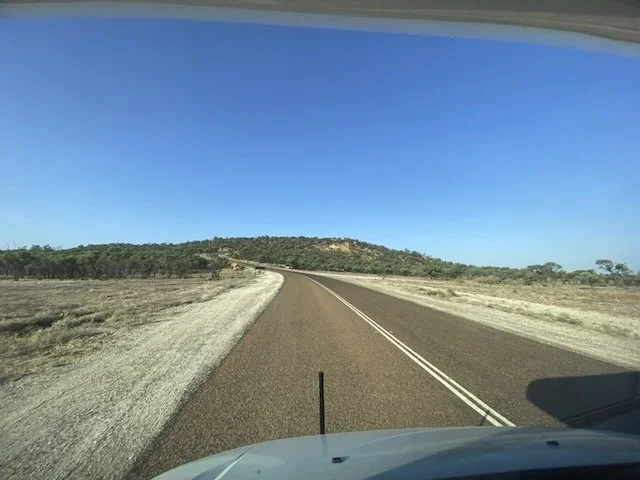
We were up before the heat had a chance to settle in and pulled out of Winton with the sun still low, heading the 24 kilometres south-east toward the Australian Age of Dinosaurs Museum.
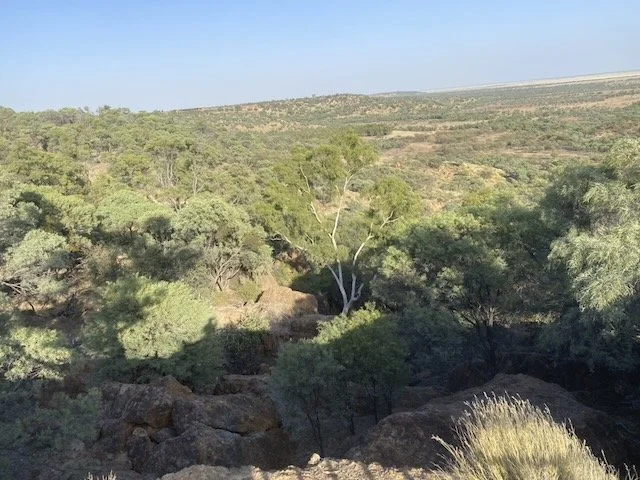
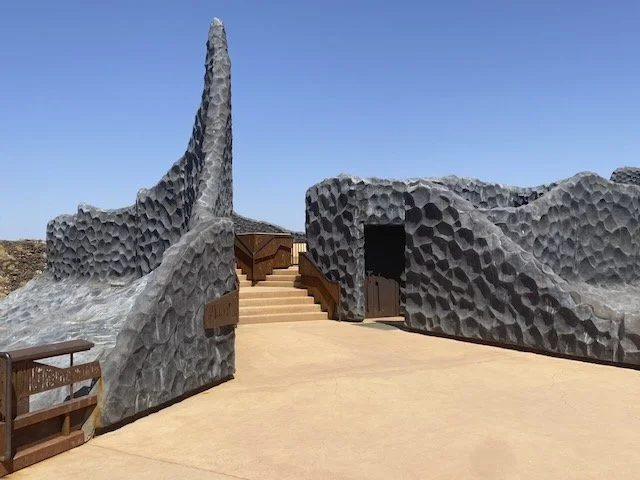
The Jump-Up mesa sets the scene for a step back in time. A wide, flat-topped plateau rising sharply from the flat plains, with the museum buildings sitting up top as they’ve grown out of the red earth. It doesn’t feel like buildings were dropped here. It feels like they belong.
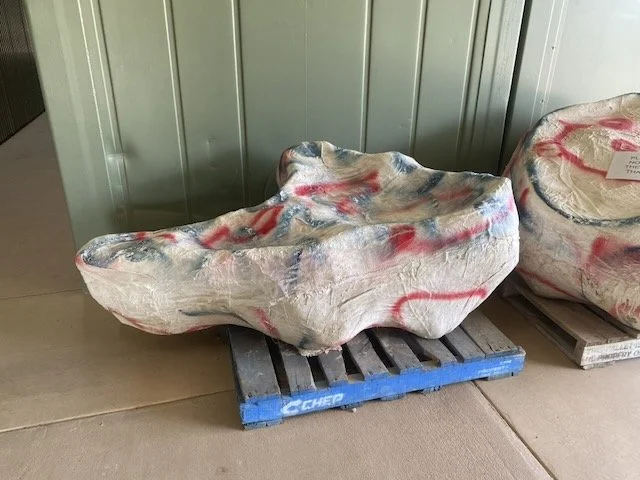
We’d booked the Ultimate Dinosaur Tour, which runs around three to four hours and covers a Fossil Preparation Laboratory, a Collection Room, the March of the Titanosaurs exhibition, and a self-guided walk-through of Dinosaur Canyon.
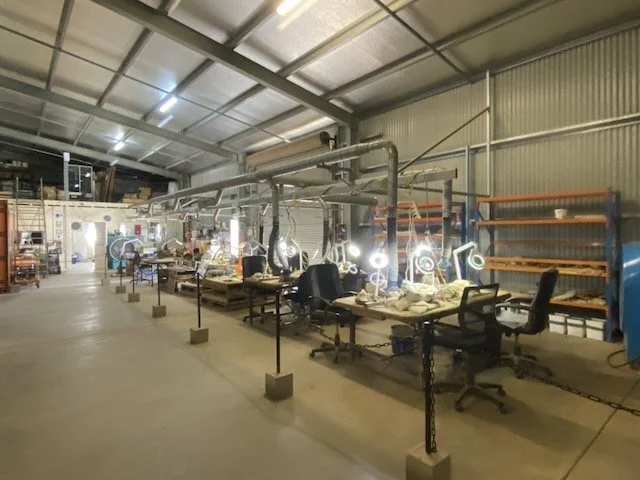
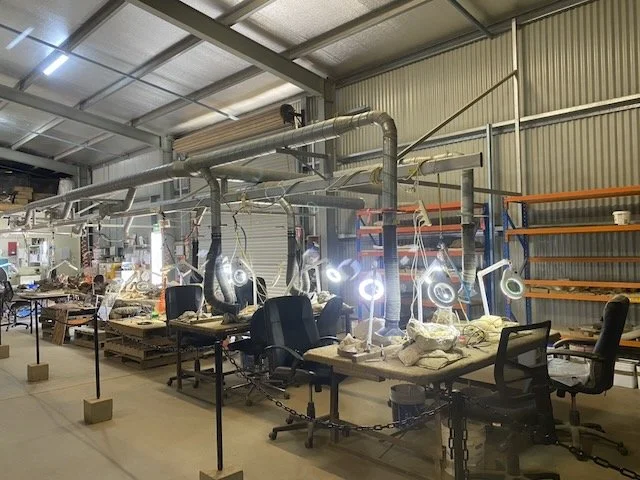
The Laboratory was the first stop, where the story really starts. Scientists and volunteers work on real 95-million-year-old fossils right in front of you. Chiselling away rock with pneumatic scribes to reveal the bones beneath. There’s something genuinely amazing about watching that. These things have been sitting in the ground since before humans existed, and here’s someone patiently freeing them, millimetre by millimetre.
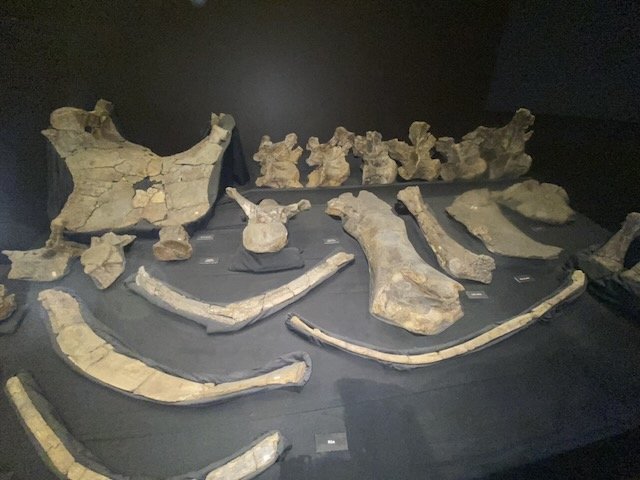
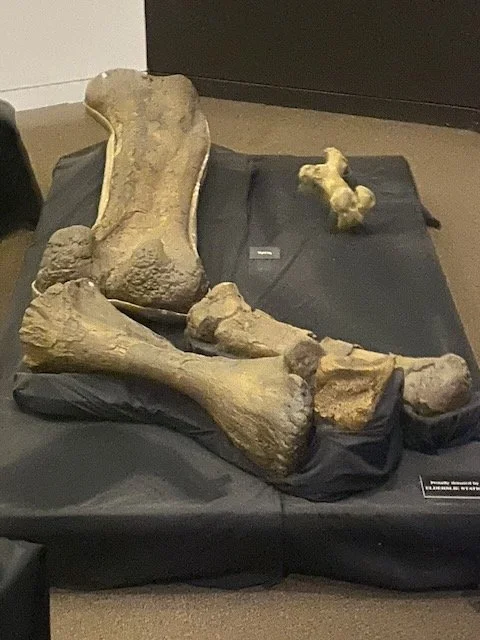
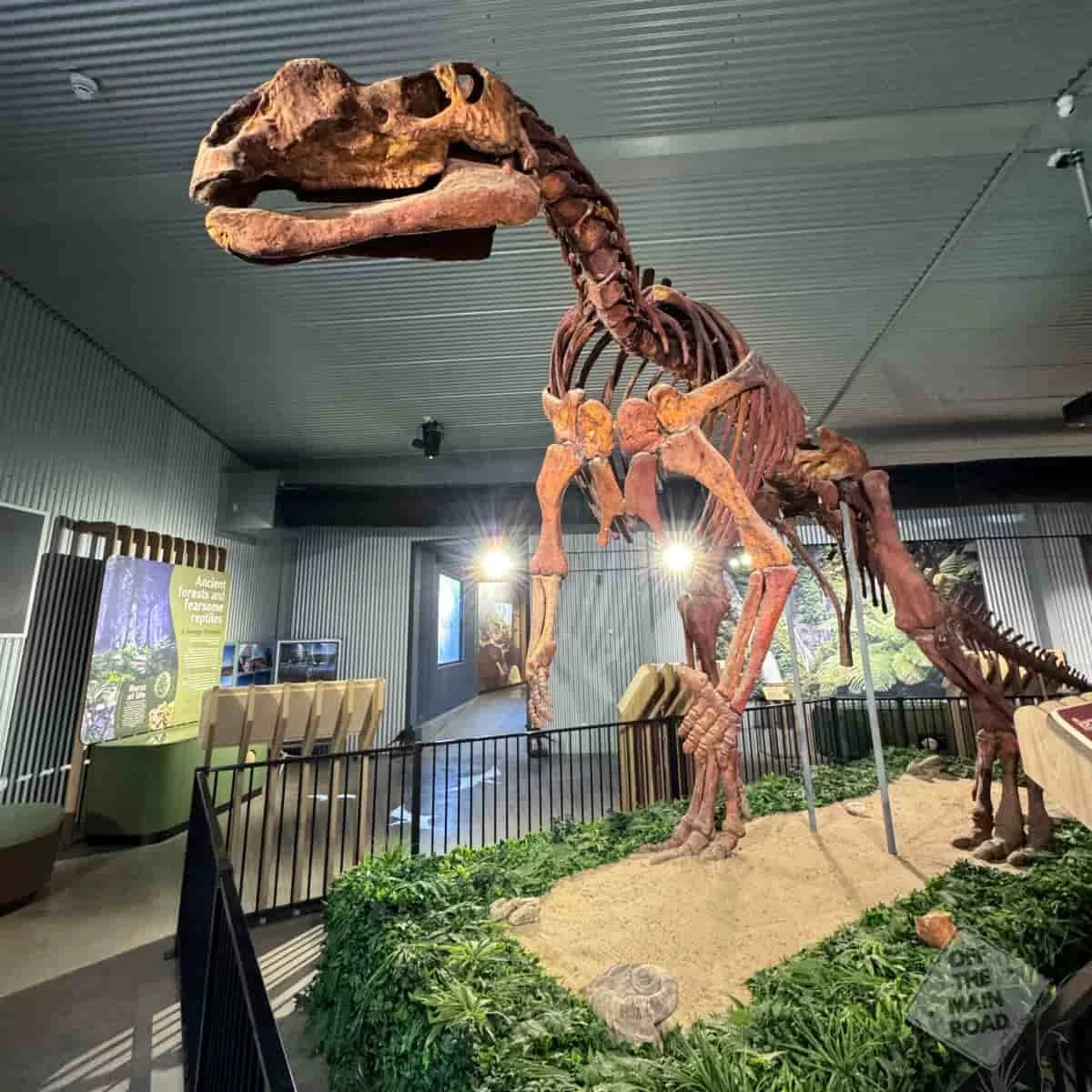
The Collection Room is where the museum’s key specimens live. ‘Banjo’, ‘Matilda’, ‘Wade’, and ‘Butch. The specimens of Australovenator wintonensis, Diamantinasaurus matildae, Savannasaurus elliottorum, and Ferrodraco lentoni. The nicknames make them feel less distant somehow. The documentary footage woven into the tour helped too, showing the fossils animated back into something close to life.
Our guides were excellent throughout. They clearly loved what they were talking about. What stuck with us most, though, was the stampede.
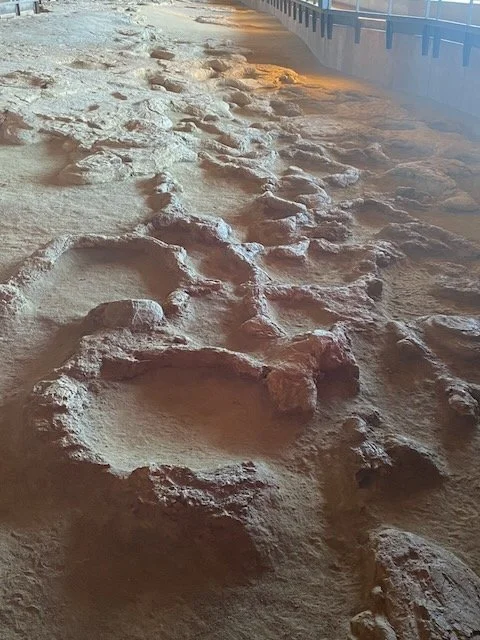
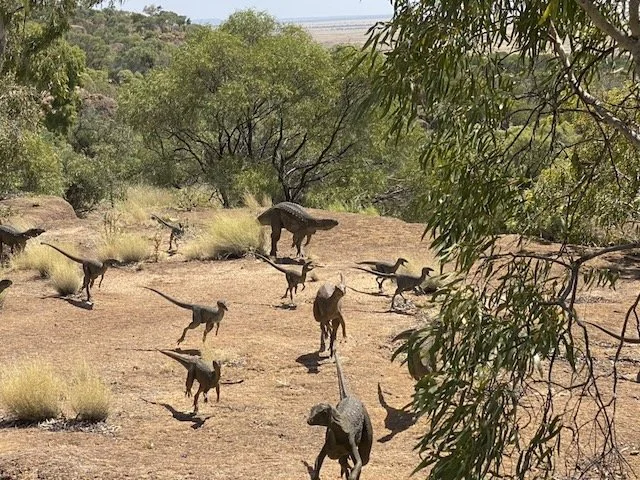
The museum includes a representation of the Lark Quarry stampede with over 3,300 dinosaur footprints preserved in rock about 110 kilometres south-west of Winton, and considered the only known record of a dinosaur stampede on the planet. The traditional account is vivid: roughly 150 small dinosaurs, some no bigger than chickens, scattering in terror as a large predator approached. All of it was frozen in the mud 95 million years ago.
What makes it even more interesting is that recent research has challenged that reading. Some palaeontologists now believe the large tracks were made by a plant-eater, not a predator, and that the smaller footprints may represent a river crossing rather than a panicked flight. Nobody is entirely sure. And somehow that uncertainty makes it more fascinating, not less. A mystery that’s been locked in stone for 95 million years, and we’re still working out what it means.
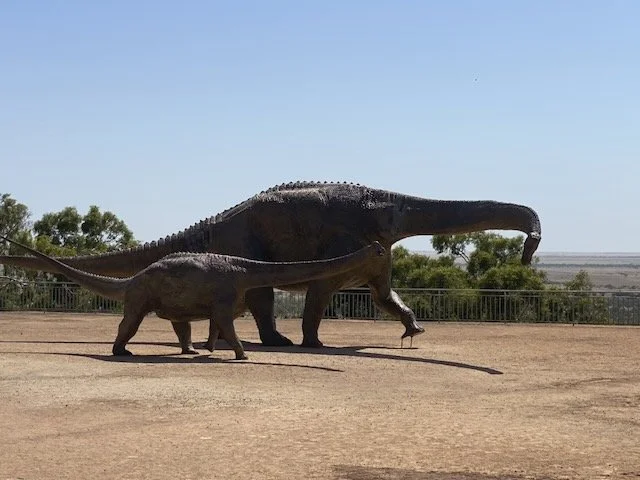
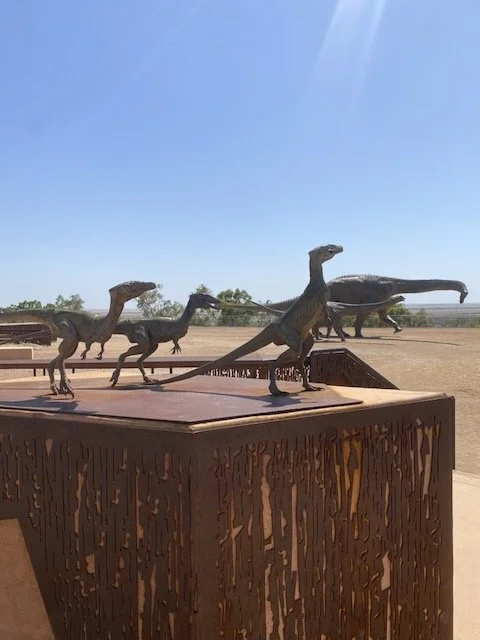
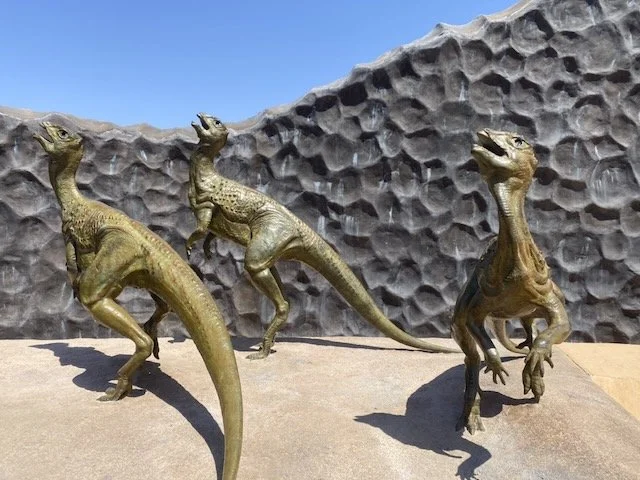
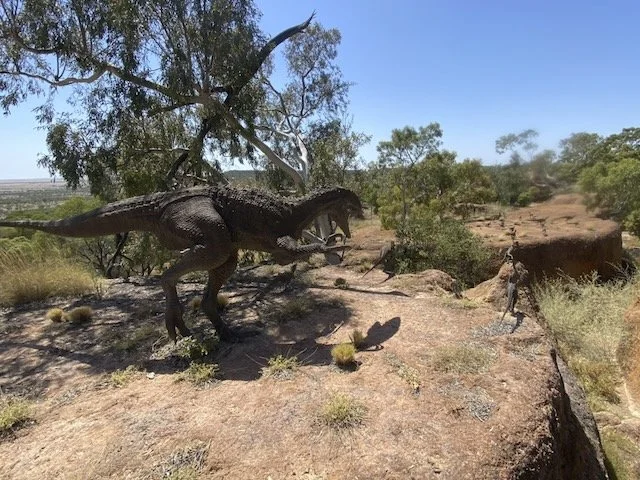
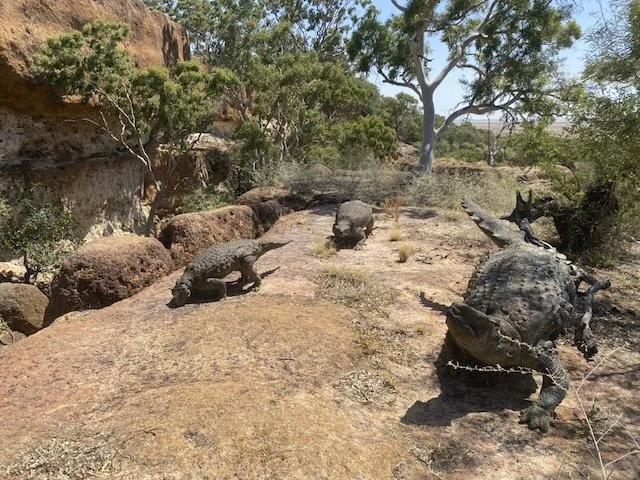
Dinosaur Canyon is a great end to the tour, with life-sized bronze dinosaurs arranged across the mesa among views that stretch out to the flat country below
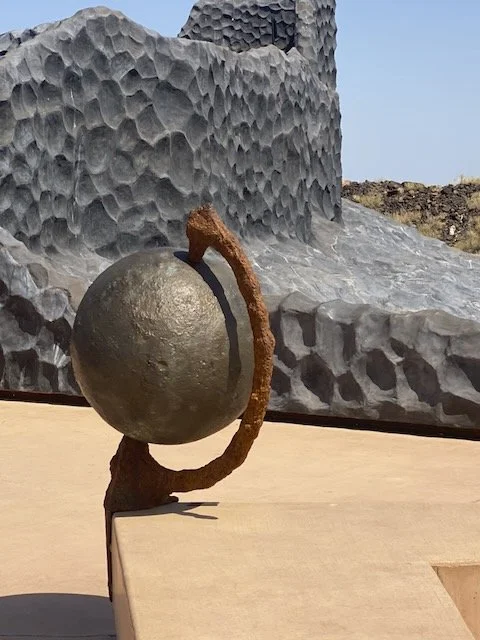
The Jump-Up also has another identity after dark. The Gondwana Stars Observatory sits here, a giant meteorite-shaped open-top structure, and it operates as Australia’s first International Dark-Sky Sanctuary. The mesa is far enough from any town to offer near-pristine night skies, and Winton itself has very recently become Queensland’s first International Dark Sky Community. We didn’t make it back for a night session this time, something to fix on a future trip, but knowing that the same place that holds some of Australia’s oldest fossils also looks out at some of the clearest skies in the country feels like a fitting combination.
Old bones below. Old light above. Winton has layers.
If this kind of travel is your thing, early starts, genuinely surprising places, and outback Queensland doing what it does best, our Travel Dispatch is worth a look. We share more from the road at offthemainroad.com.au/signup.
Australian Age of Dinosaurs Museum
The Australian Age of Dinosaurs Museum of Natural History sits atop the Jump-Up, a mesa about 24 kilometres south-east of Winton in outback Queensland. Founded as a not-for-profit organisation in 2002 by David and Judy Elliott after David discovered a fossilised bone while mustering sheep on their property near Winton in 1999, it has grown into the home of the world’s largest collection of Australian dinosaur fossils.
The museum includes a working Fossil Preparation Laboratory, a Collection Room housing holotype specimens, the March of the Titanosaurs exhibition featuring a 54-metre-long sauropod tracksite, and Dinosaur Canyon with life-sized bronze dinosaur replicas. The Gondwana Stars Observatory, an International Dark-Sky Sanctuary, is also located on the mesa.
How to Get There
The Australian Age of Dinosaurs Museum is located approximately 24 kilometres south-east of Winton via Dinosaur Drive, which is sealed for its full length. Caravans can be towed to the top of The Jump-Up, though an unhitching area is available at the base for those who prefer to leave the van behind.
From Longreach, head north-west along the Landsborough Highway for approximately 164 kilometres before turning onto Dinosaur Drive.
What to See / Tours / Activities
What we did:
Booked the Ultimate Dinosaur Tour (3 to 4 hours), covering the Fossil Preparation Laboratory, Collection Room, March of the Titanosaurs, and Dinosaur Canyon.
Watched scientists and volunteers preparing real fossils in the Laboratory.
Explored the Collection Room and met Banjo, Matilda, Wade, and Butch up close.
Walked Dinosaur Canyon with its life-sized bronze replicas and big outback views.
Other activities and highlights:
Gondwana Stars Observatory night sky sessions, Australia's first International Dark-Sky Sanctuary.
Dinosaur Stampede National Monument at Lark Quarry Conservation Park, about 110 kilometres south-west of Winton (65 kilometres unsealed). Worth a dedicated half-day.
Australia's Dinosaur Trail combo pass, covering Kronosaurus Korner in Richmond and the Flinders Discovery Centre in Hughenden.
Winton town itself, including the Waltzing Matilda Centre and the North Gregory Hotel.
When to Visit
The museum is open year-round. Cooler months from April to October offer the most comfortable conditions and daily access. Summer is hot, and the museum operates on a reduced schedule, closing Sundays.
Book tours in advance, particularly for early-morning starts during the warmer months, when tour times are limited.
Final Thoughts
There is a version of this place that could feel like a theme park, but the Age of Dinosaurs has been done well and feels natural and authentic. The science is front and centre, the guides know their material, and the landscape does most of the heavy lifting. Standing on the mesa with the plains stretching out below, it’s hard not to feel the age of the continent.
We were back in Winton before the heat got serious. But the morning had been a long way from ordinary.
What's Nearby
The museum sits naturally inside a few days spent in Winton. The road east leads to Longreach. Lark Quarry is its own separate trip south-west of Winton, and well worth the detour if conditions allow. Note that the road is only partially sealed.
There’s always more road ahead. Sign up for our Travel Dispatch at offthemainroad.com.au/signup, and we'll keep you posted.
Fast Facts
Location: Australian Age of Dinosaurs Museum, Winton, Queensland
Distance: 24km south-east of Winton via Dinosaur Drive
Traditional Owners: Mutthi Mutthi and Wangkumara Peoples
Access: Sealed road, caravan-friendly to the top of The Jump-Up
Facilities: Guided tours, cafe, gift shop, observatory, toilets
Walking Track: Dinosaur Canyon self-guided walk
Best Time to Visit: April to October
Dog Friendly: No
Things That Could Kill You (Probably Won't)
A semi-serious guide to surviving Australia. Mostly common sense, occasionally luck.
The heat: Get there early. The outback doesn't negotiate.
The drive to Lark Quarry: 65km of unsealed road. Check conditions and take water.
Deep time: 95 million years is a lot to sit with. Allow a moment.
If this post helped, you can support our work here.
Other updates you may like…




A solo flight to Lady Elliot Island brought a famously short grass runway, an hour in the lagoon, guano mining history, a 150-year-old lighthouse, a communal buffet, and an afternoon among turtles, manta rays and coral gardens.