
Kimba: Halfway across Australia
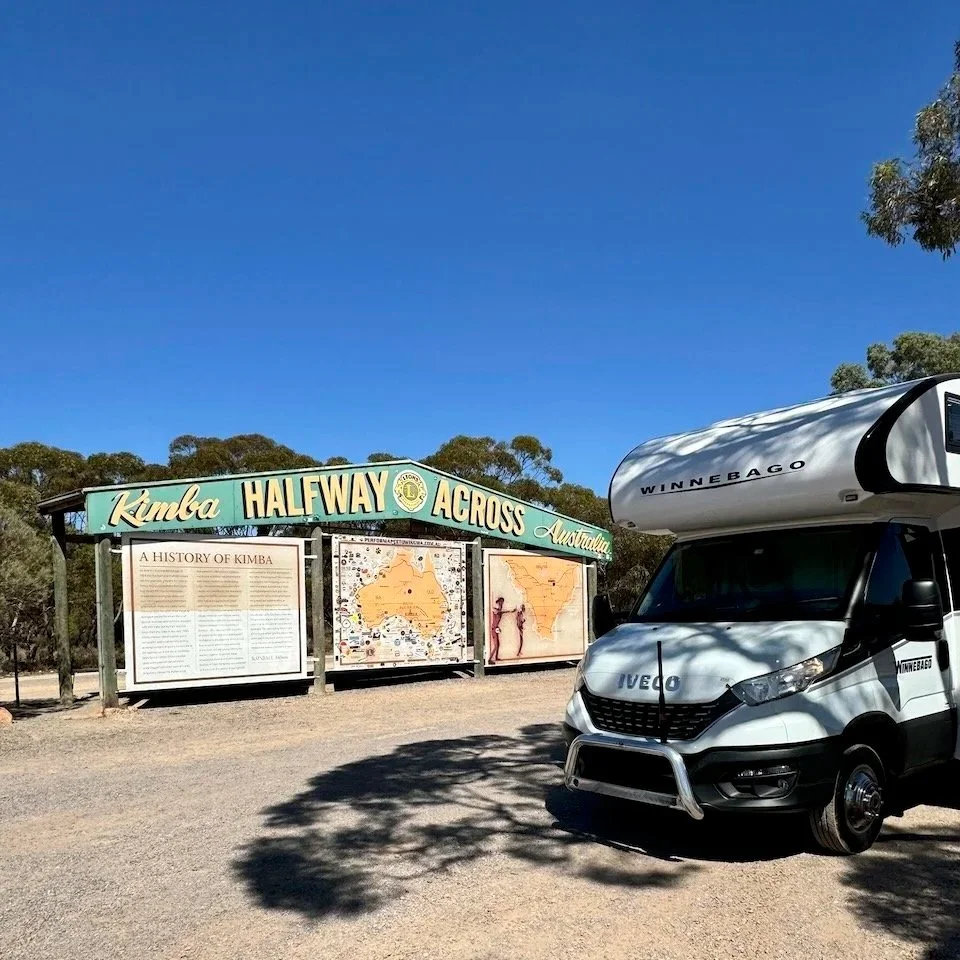
Kimba is a town that could have leaned hard into novelty and left it at that. Halfway across Australia. A sign you take a photo with and move on.
But Kimba has done something smarter.
We arrived expecting a quick stop and stayed longer than planned. Partly because it was convenient, but mostly because everything we needed was right there, and it all worked.
One of the places we kept coming back to was Workshop26. It isn’t a café in the usual sense, but a community workshop and creative space that plays a big role in town life. Built around shared skills, repair, and proper craftsmanship, it tells you a lot about a town’s priorities. Walking through, it was obvious this wasn’t a tourist add-on. It’s practical, well used, and genuinely embedded in the community.
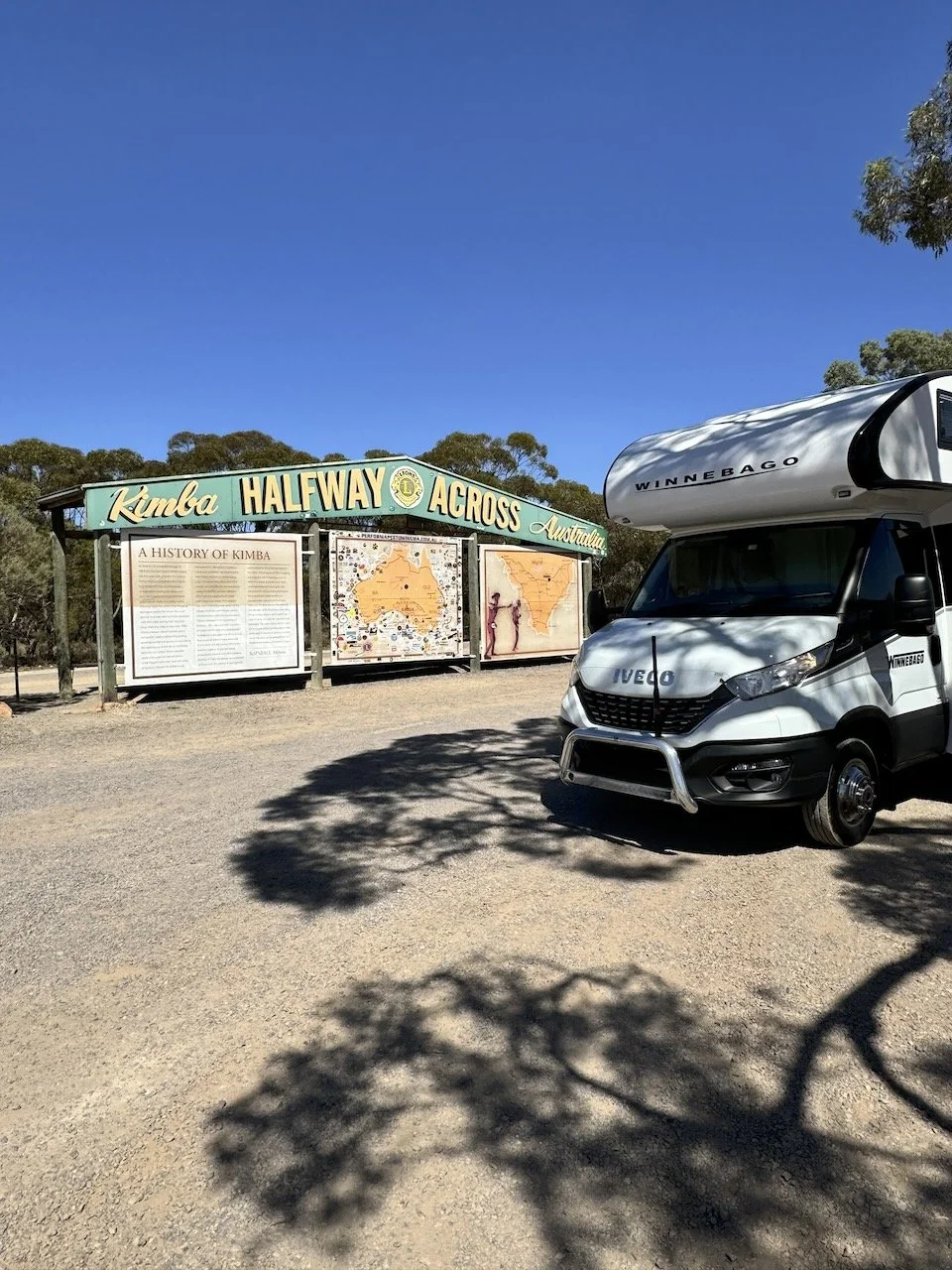
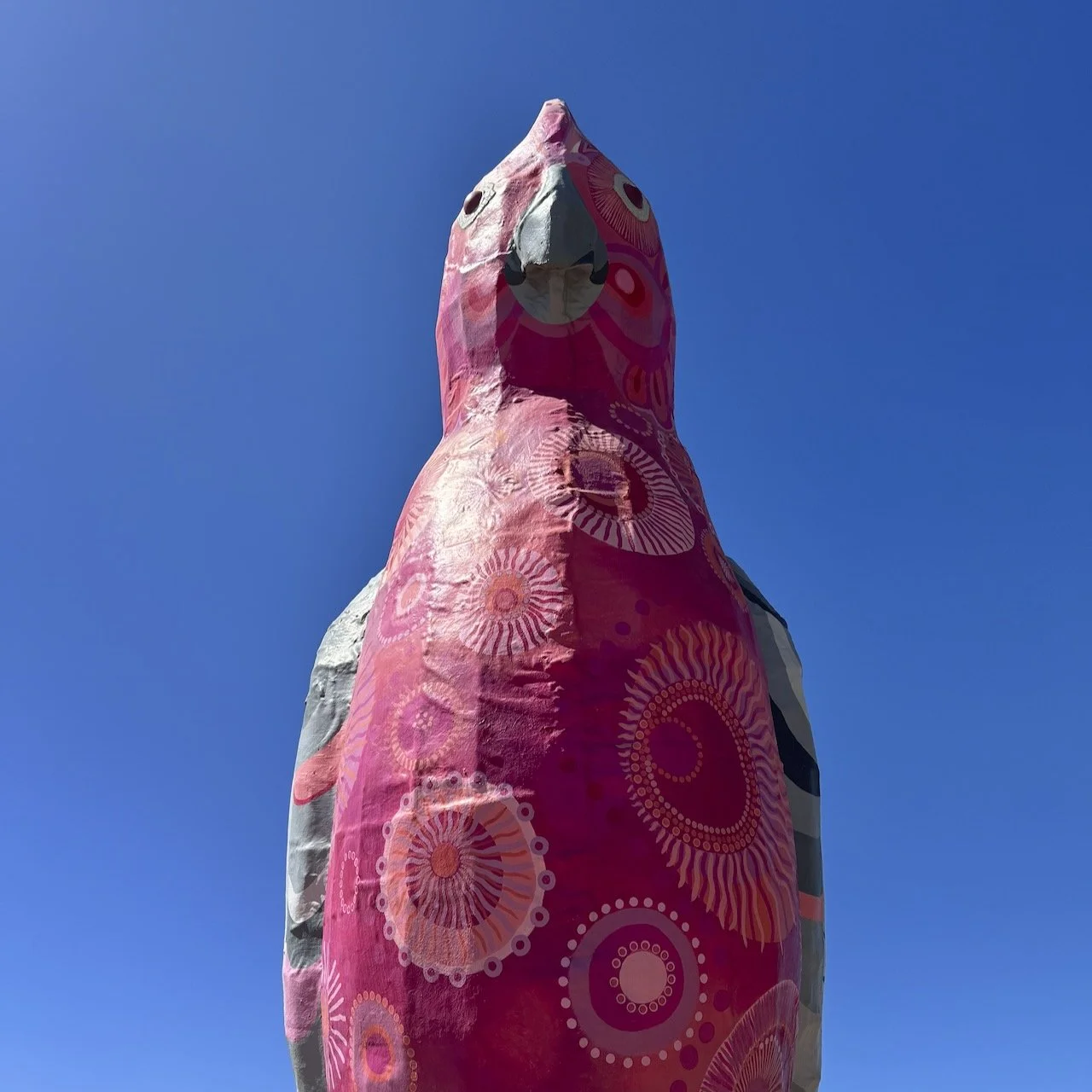
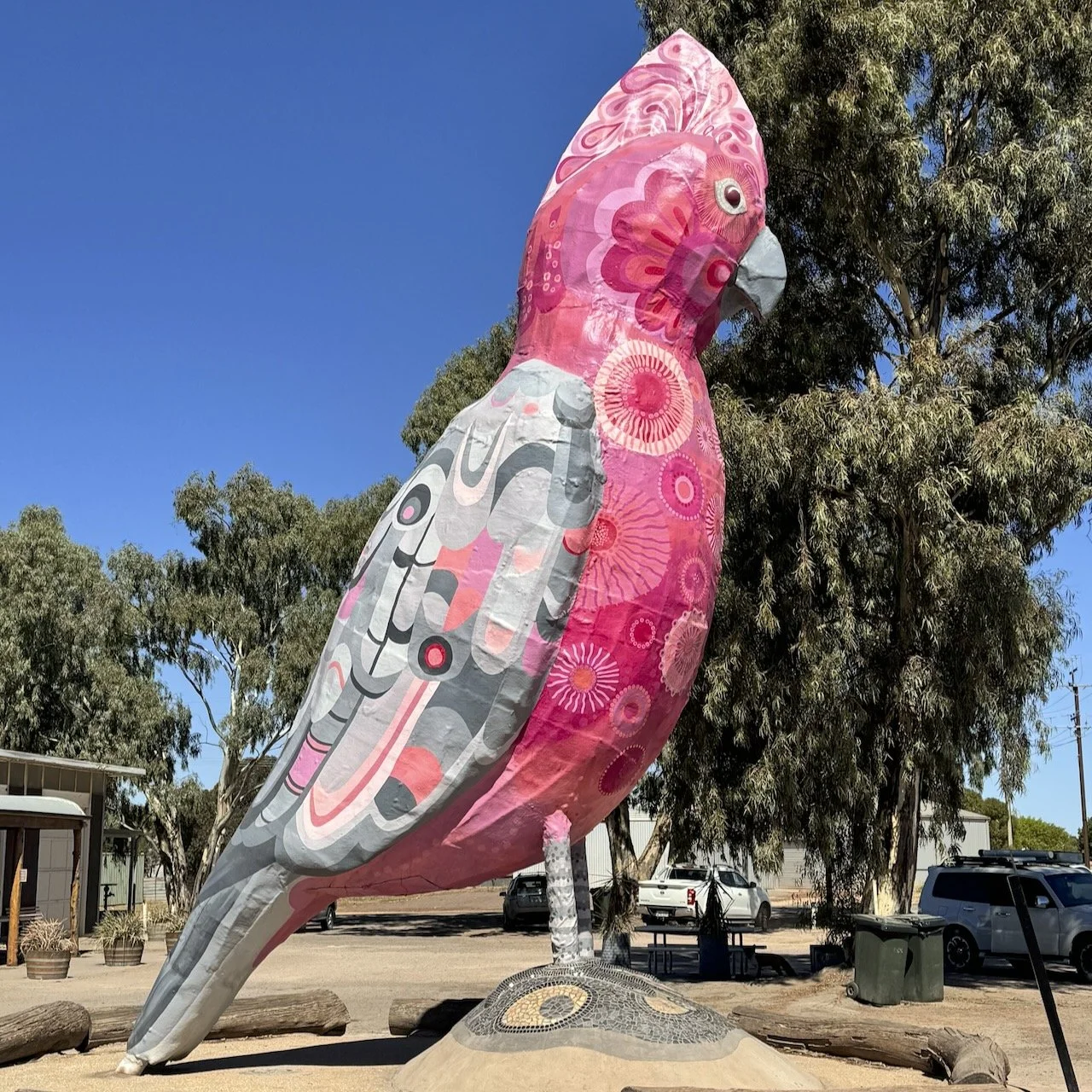
From there, we wandered through town properly. Kimba is compact and easy to walk, with wide streets and clear sightlines that make it feel open rather than sparse. The Giant Galah sits proudly near the centre of town, marking the halfway point across Australia. It’s playful, yes, but it also feels oddly accurate. Kimba really does sit at a crossroads, geographically and culturally.
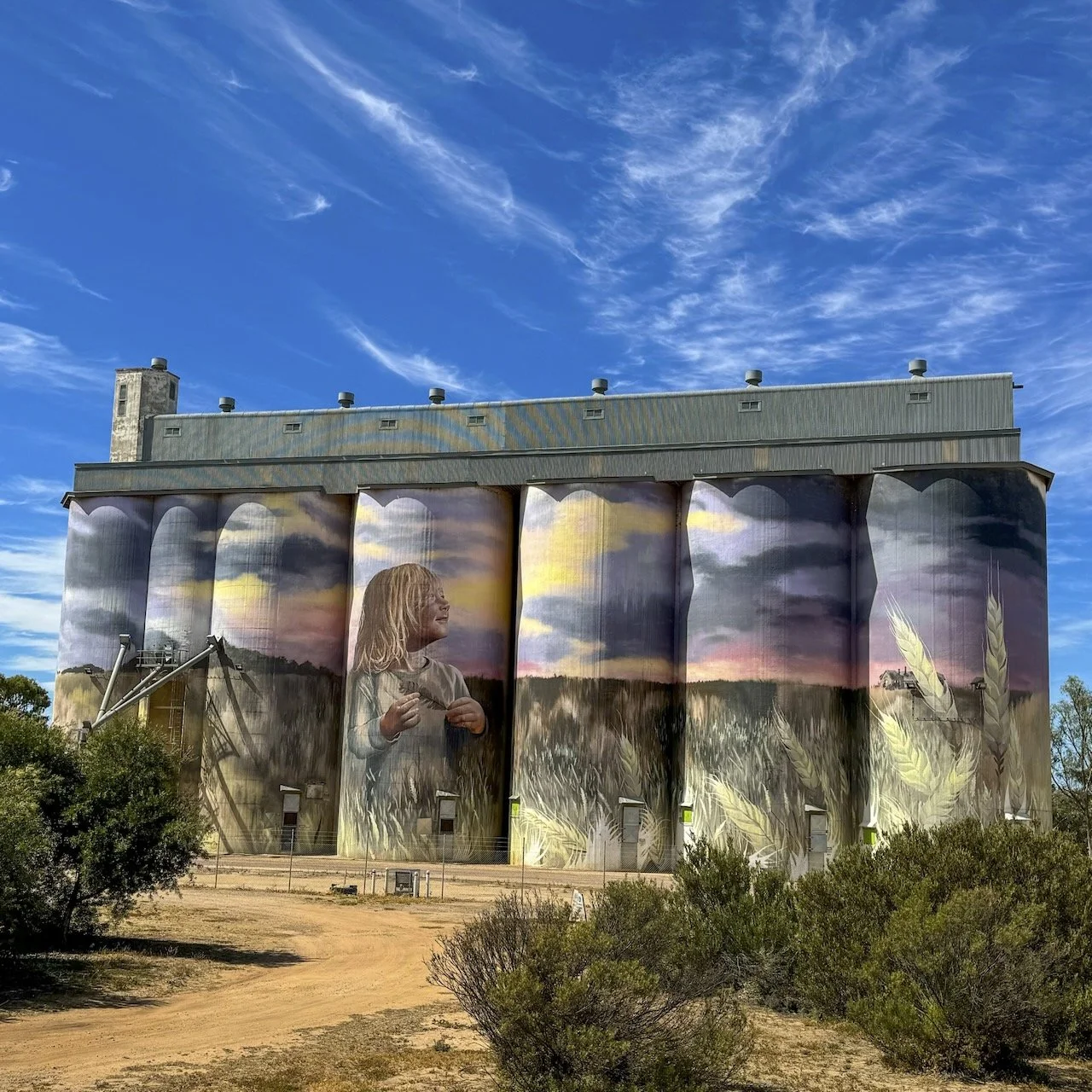
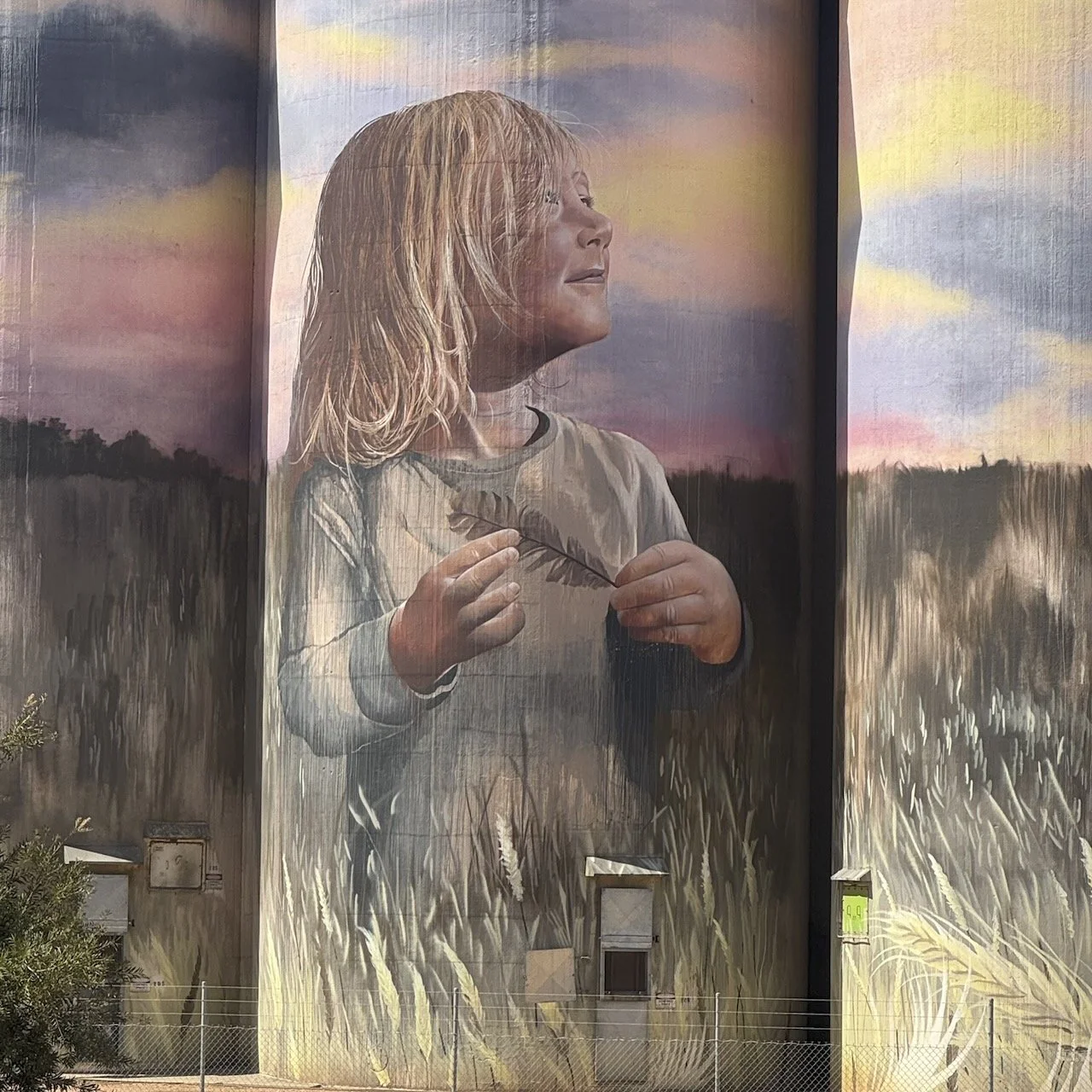
The Kimba Silo Art adds another layer. The artwork tells a local story without spelling everything out, and like good silo art, it slows people down just enough to make them look around. It gives the town texture rather than acting as a backdrop.
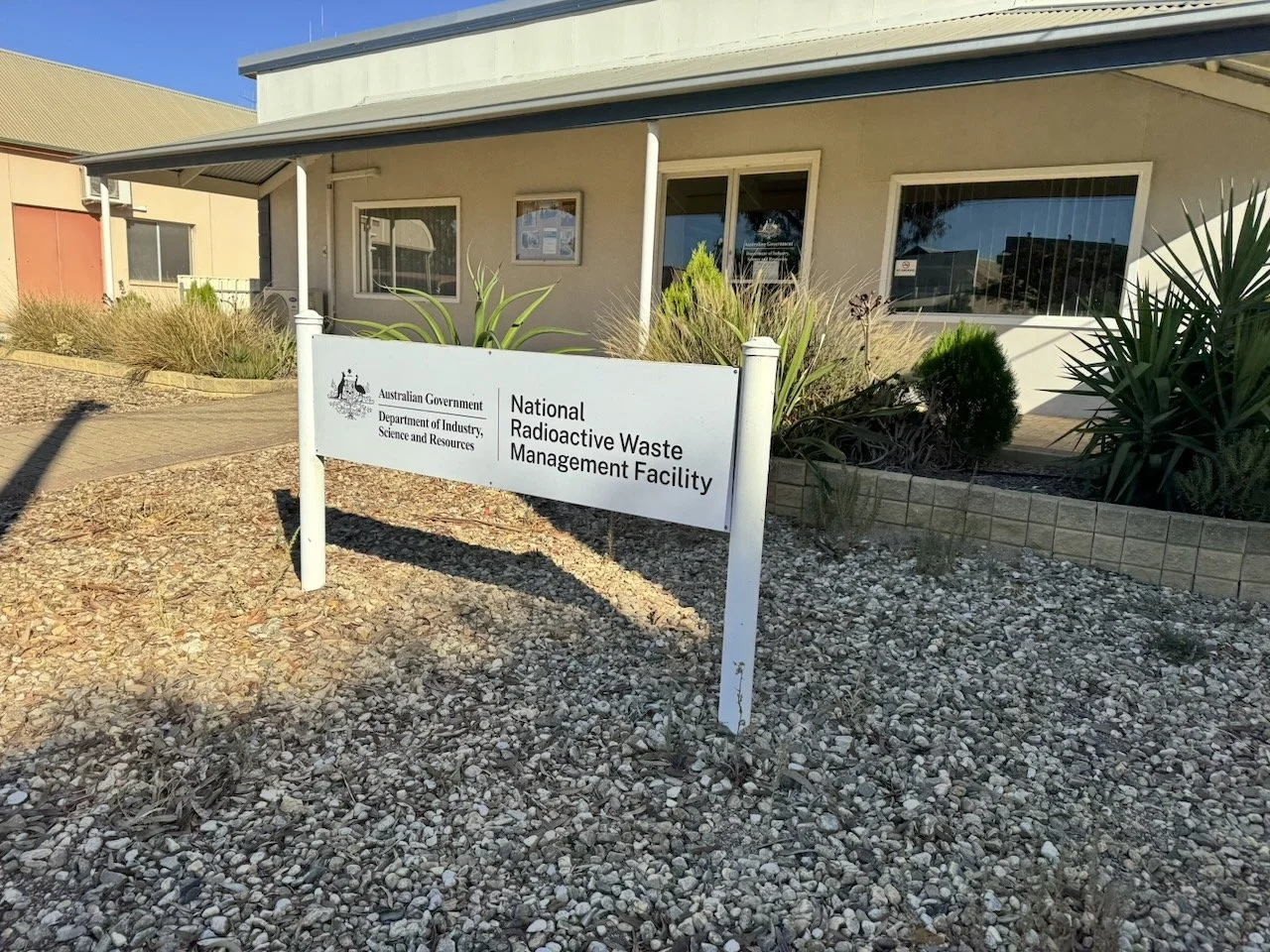
Another thing that caught our attention in Kimba was a sign for the National Radioactive Waste Management Facility. It felt unexpected in a town this size, and curiosity got the better of us.
For several years, Kimba was at the centre of a national debate after a local farming property was selected as the preferred site for a federal radioactive waste facility. The proposal attracted significant attention, both locally and nationally, and divided opinion within the community. Ultimately, the plan was abandoned, and the land was returned to the original farming family, bringing the long-running process to a close.
Standing in town now, there’s little outward sign of that chapter beyond a few references and local memory, but knowing the story adds another layer to Kimba. It’s a reminder that even very small towns can find themselves involved in decisions with national reach, and that those moments don’t always leave obvious physical traces once the headlines move on.
And then there’s the free camp.
We stayed at the Kimba Free Camp, and we’re calling it early: this is one of the best free camps in Australia. Big call, but justified. Plenty of space, good facilities, walking distance to town, and a setup that makes you feel genuinely welcome rather than tolerated. It’s the kind of place that encourages travellers to stay, spend locally, and leave things better than they found them.
Kimba doesn’t just cater to travellers. It understands them. And that makes all the difference.
We share towns like this quietly through our Travel Dispatch. If that sounds like your pace, Sign up here.
Kimba
Kimba is a small town on South Australia’s Eyre Peninsula, often described as the halfway point across Australia. It services surrounding farming communities and sits along the Eyre Highway, making it a natural stop for east–west travellers.
Rather than relying on a single attraction, Kimba has built a reputation around being genuinely traveller-friendly, with good facilities, local businesses, and a town layout that encourages people to stay awhile.
How to Get There
Kimba is located on the Eyre Highway, approximately 470 kilometres west of Adelaide. Access is fully sealed and suitable for caravans, motorhomes, and all vehicle types.
What to See / Tours / Activities
What we did:
Spent time at Workshop26, a community-run workshop and creative space in town.
Visited the Giant Galah and halfway-across-Australia sign.
Viewed the Kimba silo art.
Stayed at the Kimba Free Camp.
Other highlights nearby:
Local walking tracks and town murals.
Scenic drives through surrounding grain country.
Easy access to further Eyre Peninsula towns.
When to Visit
Kimba can be visited year-round. Spring and autumn offer the most comfortable conditions. Summer can be hot, while winter nights are cool but generally clear.
Final Thoughts
Kimba gets the balance right. It embraces its location without becoming a novelty and supports travellers without overdoing it. Some towns just work. Kimba is one of them.
What’s Nearby
Kimba sits well within an Eyre Peninsula crossing, pairing naturally with other peninsula towns and longer highway journeys. It works equally well as a planned stop or a decision made on the fly.
Fast Facts
Location: Eyre Peninsula, South Australia
Distance: Approx. 470 km west of Adelaide
Traditional Owners: Barngarla people
Access: Sealed highway
Facilities: Fuel, food, free camp, toilets, dump point
Walking Track: Town walks
Best Time to Visit: Spring and autumn
Dog Friendly: Yes (on lead)
Things That Could Kill You (Probably Won’t)
A semi-serious guide to surviving Australia. Mostly common sense, occasionally luck.
Highway fatigue: Long, straight stretches can dull attention. Take breaks.
Weather: Summer heat and winter winds can be intense on the open plain.
Overstaying: The free camp is very comfortable. You may lose track of time.
If this post helped, you can support our work here.
Other updates you may like…












With just one day in Adelaide, we crammed in all our favourites! Art, museums, botanic gardens and a market dash. North Terrace delivered its usual magic, reminding us why this city always feels good to return to.