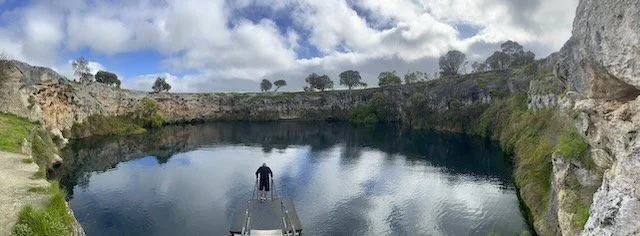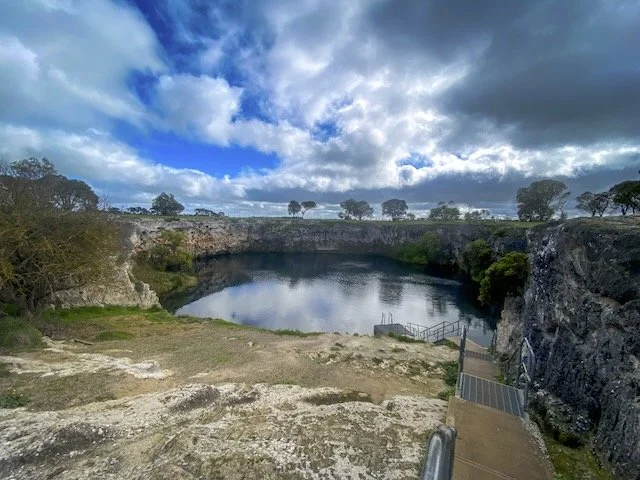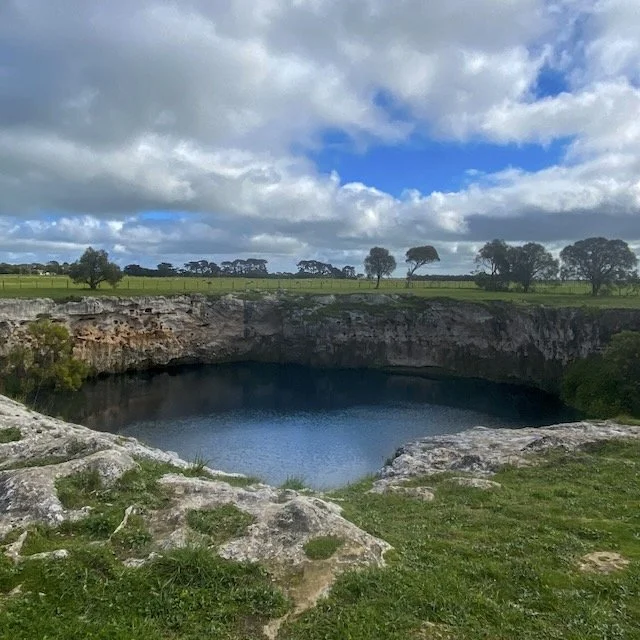
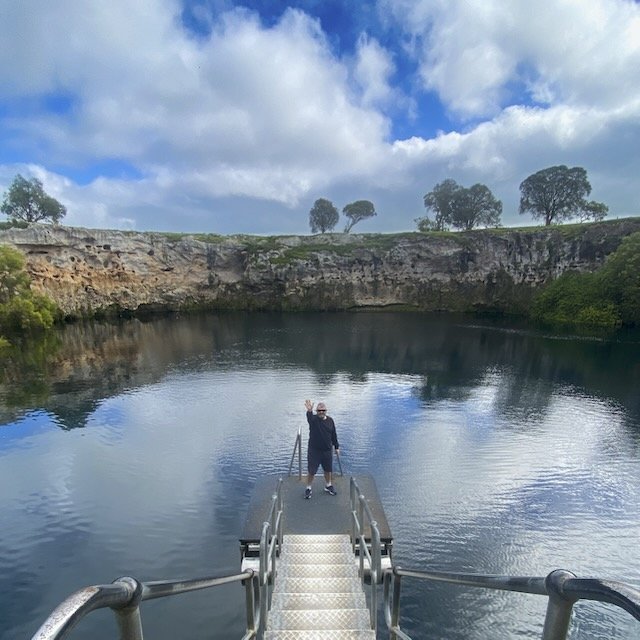
Little Blue Lake feels an almost accidental discovery. You turn off a quiet road, pass through open farmland, and suddenly there it is. A bright blue sinkhole sitting in the middle of a paddock, looking far more tropical than it has any right to.
We’d heard about it before arriving, mostly from photos that make it look calm, inviting, and very swimmable. Standing on the edge told a different story.
The water is clear in colour but not in depth. You can’t see the bottom, and the surface gives nothing away about just how cold it is. Very cold, as it turns out. Neil was intrigued. Cameron took one look, felt the temperature in the air, and decided that today was not the day to test personal limits.
Swimming aside, it’s a striking place to visit. The contrast between the vivid blue water and the surrounding farmland makes it feel oddly out of place, like someone dropped it there by mistake. We walked the edge, took photos, and watched others debate whether to get in. Most seemed to have the same internal conversation.
What makes Little Blue Lake even more surprising is how it came to be. This isn’t a lake that slowly filled a depression over time. It’s a sinkhole, created when volcanic activity and underground limestone interacted, leaving a void beneath the surface. Eventually, the ground above collapsed, exposing the deep cavity below.
Over time, groundwater filled the sinkhole, creating the lake we see today. The vivid blue colour comes from the water’s clarity and the way light reflects off the pale limestone walls beneath the surface. It looks inviting, almost tropical, but the depth drops away quickly, and the water stays cold year-round, fed by underground aquifers rather than surface runoff.
Little Blue Lake doesn’t need much time. It’s a full-day stop, and that’s fine. It’s a reminder that South Australia hides some very unexpected landscapes in very ordinary locations. Unfortunately, due to the cloud cover on the day we visited, the brilliant blue didn’t reveal itself in all its glory, but we caught glimpses of it between the clouds.
Join our newsletter for stories, secret spots, and off-the-main-road adventures that don’t make the guidebooks — delivered straight to your inbox. Sign up here.
Little Blue Lake
Little Blue Lake is a former sinkhole located near Mount Schank in South Australia’s Limestone Coast region. Like many features in the area, it was formed through volcanic activity and the collapse of underground limestone.
The lake is unfenced and sits within open farmland, giving it a distinctly informal feel. Despite its inviting colour, the water is consistently cold year-round and drops away quickly from the edges.
How to Get There
Little Blue Lake is located a short drive south of Mount Schank, near Mount Gambier. Access is via sealed roads with a short gravel section leading to a small parking area. Signage is limited but clear.
What to See / Tours / Activities
What we did:
Walked around the edge of the sinkhole.
Took photos from multiple angles to capture the colour contrast.
Decided swimming was not happening.
Other highlights nearby:
Blue Lake and Valley Lake in Mount Gambier.
Mount Schank crater walk.
Umpherston Sinkhole.
When to Visit
The lake can be visited year-round. Summer offers warmer air temperatures, but the water remains cold regardless of season. Early-morning and late-afternoon light bring out the strongest colour.
Final Thoughts
Little Blue Lake is best appreciated from the edge. It’s beautiful, unexpected, and slightly unsettling, as deep water often is. You don’t need to swim to enjoy it.
What’s Nearby
Little Blue Lake pairs well with other sinkholes and crater lakes around Mount Gambier, making it a straightforward addition to a Limestone Coast itinerary without extra driving.
Fast Facts
Location: Little Blue Lake,Limestone Coast, South Australia
Distance: Approx. 15 km south of Mount Gambier
Traditional Owners: Buandig people
Access: Sealed roads with short gravel section
Facilities: None
Walking Track: Informal walking around the edge
Best Time to Visit: Year-round
Dog Friendly: Yes (on lead)
Things That Could Kill You (Probably Won’t)
A semi-serious guide to surviving Australia. Mostly common sense, occasionally luck.
Cold water: The lake stays cold year-round. Cold shock is a real risk.
Depth: You can’t see the bottom, and the sides drop away quickly.
Edges: Uneven ground around the rim can be slippery after rain.
If this post helped, you can support our work here.
Other updates you may like…
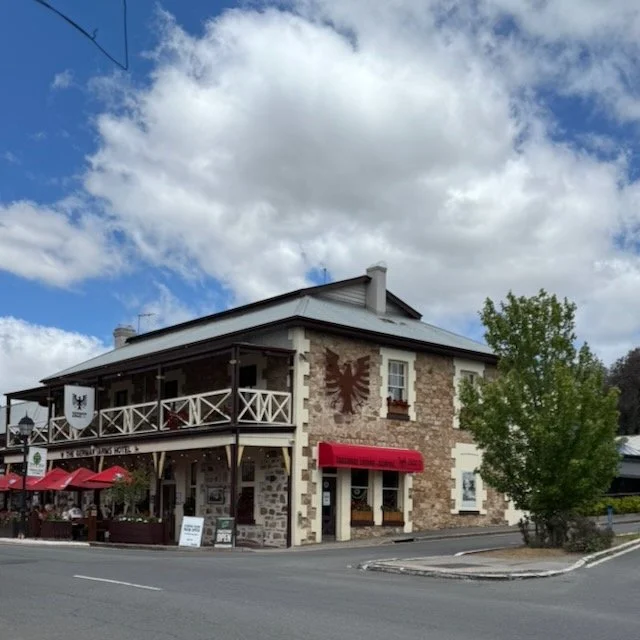
Hahndorf gave us a relaxed day of wandering, snacks and a few too many condiments from Beerenberg. Between gin tastings, strudel and leafy streets, this Adelaide Hills favourite is an easy, enjoyable stop with plenty to explore.
McLaren Vale became a favourite during our Port Willunga stay. Art at the Cube, pizza at Chalk Hill and a few essential Fruchocs for the road. A relaxed mix of wineries, food and rolling vineyard views.
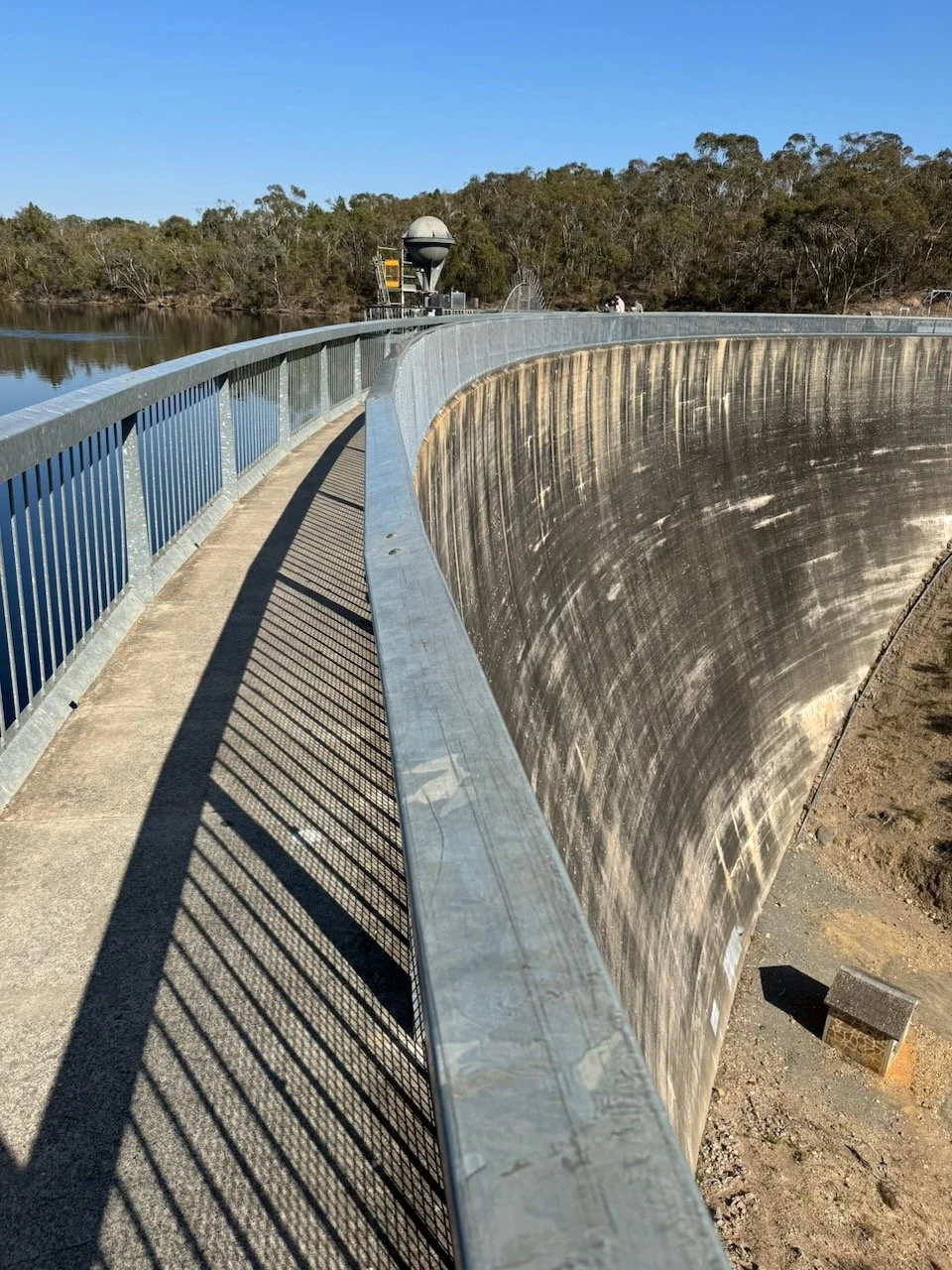
The Barossa Sculpture Park and Whispering Wall made for a simple, memorable stop between the valley and Adelaide — big views, strange acoustics and a few fun moments we’ll save for our next Top Secret Dispatch.
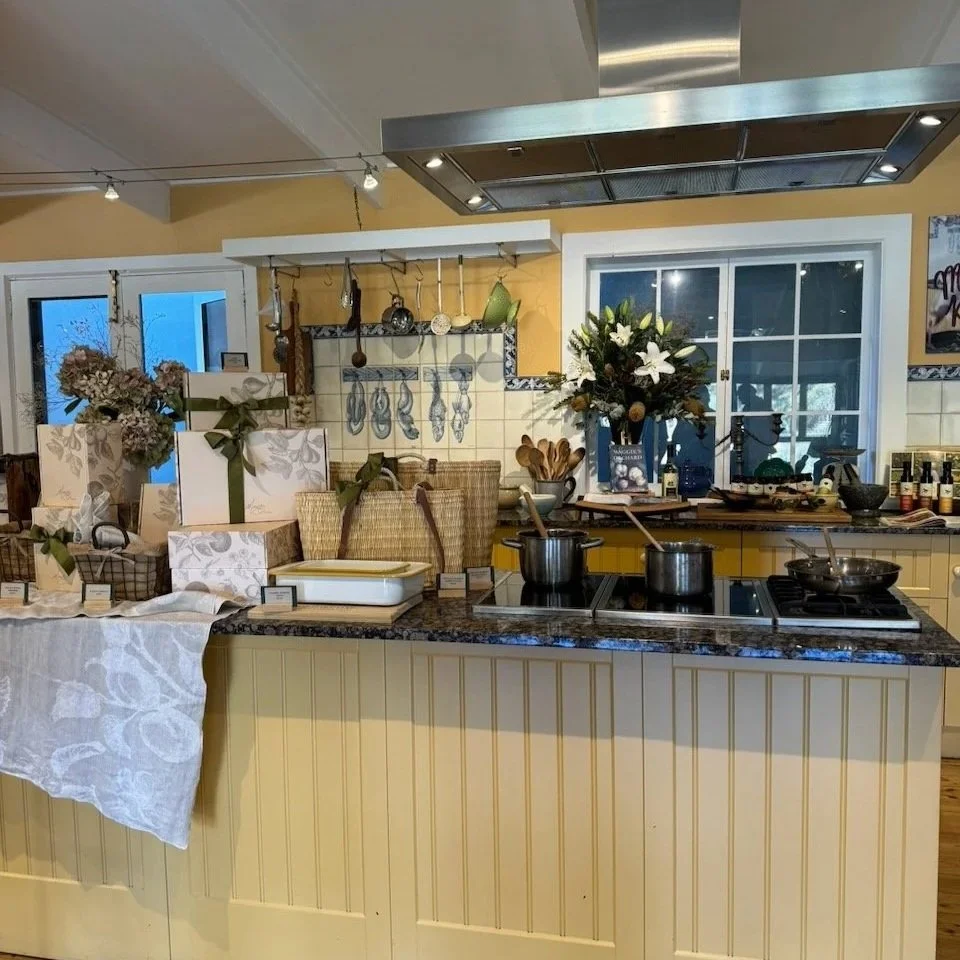
A relaxed Barossa morning at Maggie Beer’s Farm Shop gave us scones, lake views and a visit to the kitchen from The Cook and the Chef. Peaceful, friendly and a must-stop for Maggie fans.
Waikerie gave us ferry rides, silo art, bakery stops and an easy riverfront stay. A bright Riverland town with good food, calm paths and a few rituals we return to every time we pass through.
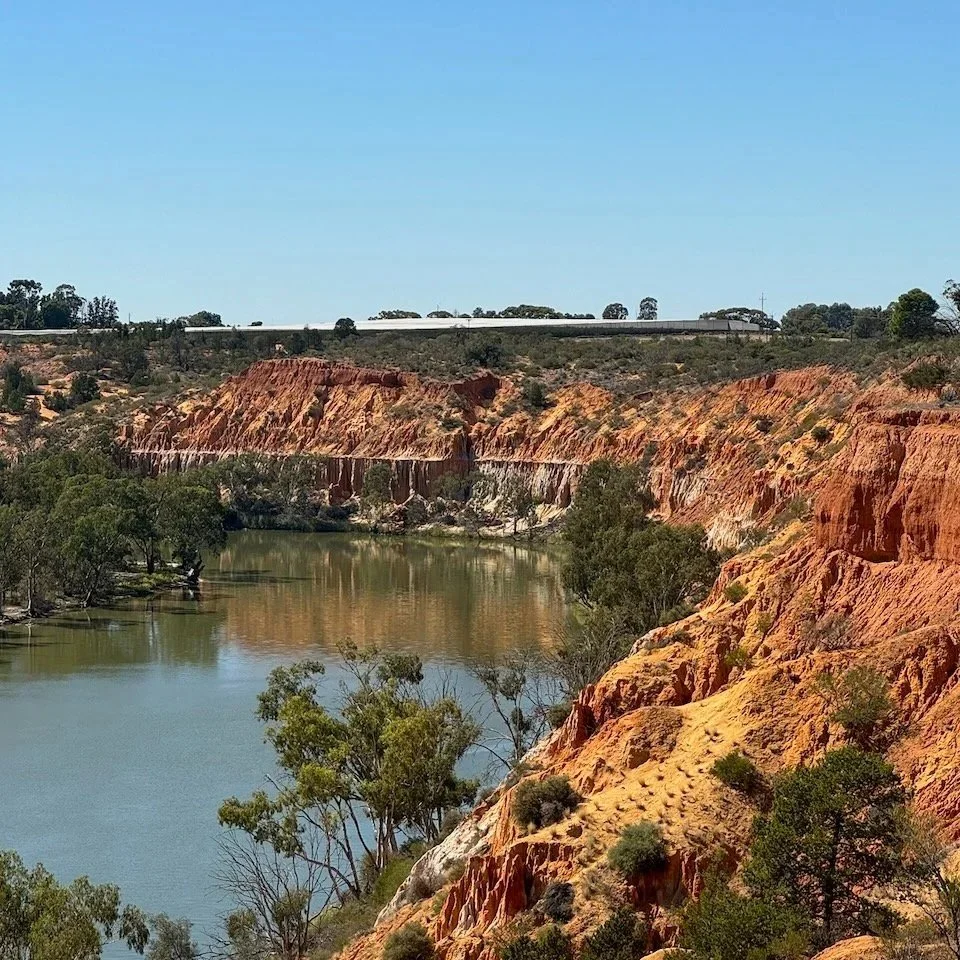
A relaxed day trip to Renmark gave us river cliffs, quiet tracks, a friendly pet café and a stop for chocolate almonds. A simple wander along the Murray with plenty to pause for.
A quick stop in Coober Pedy revealed a town unlike anywhere else. Homes carved from rock, sunsets over the Breakaways, and a lesson in how far people will go to outsmart the desert.
What started as a pebble-eating mishap near Uluru turned into a race across the outback to save our girl, Zoe. With expert care and plenty of love, she’s now on the mend in Adelaide.
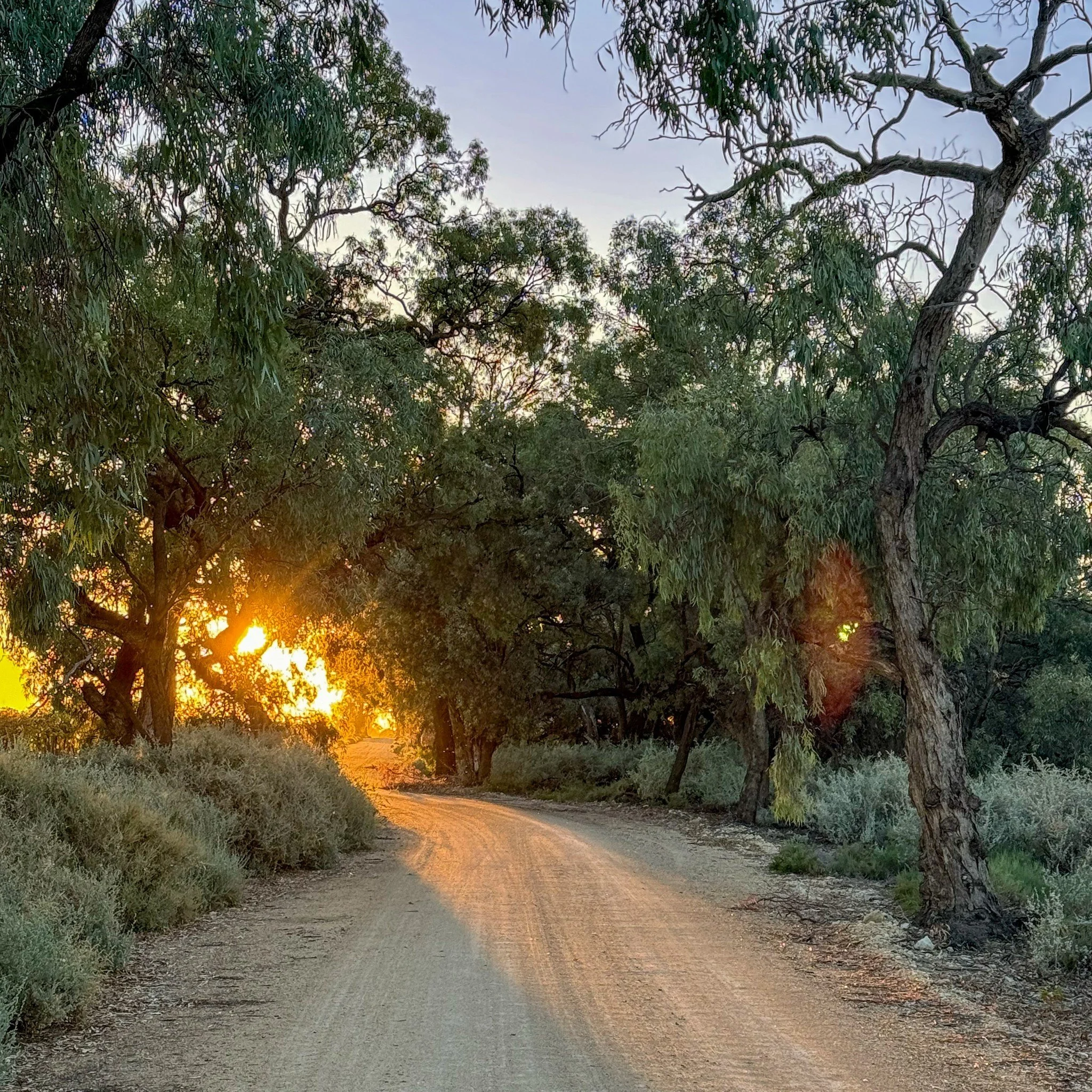
At Lake Bonney in Barmera, we slowed down beside the water, swam, explored the ruins, and watched the sky melt into colour. A perfect Riverland stop where nothing much happens.. in the best way possible.
Farrell Flat might be small, but it packs in plenty. A friendly country pub, striking silo art, and that easy South Australian charm that makes every stop feel like it’s exactly where you should be.
A relaxed tasting at Château Yaldara gave us bold Barossa reds, smooth fortified wines and a wander around one of the region’s most picturesque historic estates. A simple, worthwhile stop near Lyndoch.
Driving into Wirrabura, we immediately spotted the towering artwork, a stunning addition to South Australia’s Silo Art Trail.
Parachilna is a small outback stop anchored by the Prairie Hotel. We pulled in for lunch, tried the feral mixed grill, wandered the old railway siding, and enjoyed a quiet pause beneath the wide Flinders skies.
For us, Leigh Creek was a fascinating and slightly eerie stop. It’s a town that tells a story of industry, change, and resilience—worth visiting for anyone wanting to see a different side of the outback.
Carrieton and nearby Johnburg are quiet country towns in South Australia with a strong sense of history. There’s not much happening, but that’s what makes them worth the stop.
Just outside Port Augusta, we pulled into Nutbush Retreat, a working sheep station offering a unique outback stay.
Iron Knob is a former mining town in South Australia where Australia’s steel industry began. Raw, unpolished, and shaped by ore, it offers an honest look at how industry carved this landscape and the town beside it.
Climbing Mt Wudinna gave us sweeping views and sore calves, while nearby Polda Rock offered a quiet slice of history. We wrapped the day with stargazing, new mates, and moonlight — outback travel at its best.
We stopped in tiny Wirrulla to check out the world’s only inland jetty — a dry-land surprise with a great sense of humour. It’s quirky, quick, and worth the detour. The tide? Never coming in.
From bubblegum-pink waters to spinning giants of steel, Lake MacDonnell and Penong’s Windmill Museum gave us one of our most colourful days yet. A little off the main road — and totally worth it.
Ceduna on South Australia’s far-west coast. Foreshore walks, the local museum, quiet days by the sea and a gateway for future Maralinga adventures.
Swimming with a sea lion pup and a pod of dolphins in Baird Bay kicked off a magical stretch of coast. Fresh crabs, epic sunsets, and time to unwind made this leg one to remember.
We camped alone beside Murphy’s Haystacks, exploring the surreal boulders at both sunset and sunrise. With local honey for breakfast and sea-carved caves nearby, this quiet corner of the Eyre Peninsula left a lasting impression.
Stormy skies couldn’t dull the charm of Elliston. From windswept jetty walks to the quirky sculptures along the Great Ocean Drive, this coastal town served up wild weather, dramatic views, and creative surprises.
Coffin Bay is a slow, coastal stop built around seafood, still water, and calm days. We stayed at the campground, wandered the foreshore, tackled the oysters (well, Neil did), and explored the town at an easy pace.
Port Lincoln dished up an unforgettable day as Cameron took on a shark diving dare. No sharks, but the real thrill was facing the deep blue and walking away braver, and wetter than before.
Tumby Bay gave us quiet streets, bold murals and a calm start to the Eyre Peninsula. From jetty views to Yeldulknie Weir, it’s a slow, creative coastal stop worth pausing for along the way.
From steel and sea to small-town charm, Whyalla and Cowell capture the contrasts of the Eyre Peninsula. Circular jetties, lighthouse rides, and a dash of coastal humour. This leg surprised us in all the right ways.
Spear Creek gave us rugged trails, ancient rock formations and wide, empty skies on the edge of the Southern Flinders. Sunrise walks, quiet evenings and raw outback beauty made this remote station stay one to remember.
Cameron is a travel writer, photographer, and freelance copywriter with more than fourteen years of experience crafting stories that connect people and place. Based on the road in a motorhome with his partner, he documents Australia’s quieter corners through Off the Main Road, a travel journal devoted to the towns, landscapes, and characters often overlooked by the tourist trail.
His writing blends observation with lived experience, drawing on a professional background in brand storytelling. Blending visual storytelling with a writer’s eye for detail, Cameron captures moments that reveal the character of regional Australia—from weathered towns and open landscapes to the honest rhythm of life across Australia.
With just one day in Adelaide, we crammed in all our favourites! Art, museums, botanic gardens and a market dash. North Terrace delivered its usual magic, reminding us why this city always feels good to return to.